Summary
Editor's rating
Is it good value for money?
Design: made for slat walls, not for everything
Build quality and how solid it feels
Brightness, colors, and smart features in real use
Installation: OK on panels, annoying on plain walls
What you actually get in the box
Pros
- Sized and shaped to fit nicely in acoustic/wood slat wall grooves
- Decent RGB colors with app, RF remote, music sync, and voice control
- Aluminum bars feel reasonably solid and look clean once properly installed
Cons
- All six bars plug separately into one controller, causing visible cable mess if not hidden
- Adhesive backing is weak; screws or extra hardware are basically required
- Not very bright and the white mode leans blue, so not ideal as main lighting

Specifications
View full product page →| Brand | SHUNLEE |
RGB slat-wall lights that look good… if you install them right
I’ve been using these SHUNLEE 6-piece RGB Black Smart Acoustic Wall Panel Lights for a bit now on a wood slat wall in my living room. I went in with pretty normal expectations: I just wanted some background light behind the TV and along the acoustic panels, nothing fancy. Overall, they do the job, but there are a few details you really need to know before buying, especially around mounting and how the cables are handled.
The main thing to understand is that these are clearly designed for slat or acoustic panel walls. If you try to use them like a classic LED strip around the ceiling or across a plain wall, you can do it, but the result is not clean unless you are ready to hide cables and maybe drill a bit. The Amazon page hints at that, but in practice it’s more limiting than the pictures suggest.
On the positive side, you get pretty solid RGB colors, a decent app, and a remote that works even without Wi‑Fi. I had no big issues once everything was paired. They’re good for mood lighting around a TV, a gaming setup, or a feature wall. Just don’t expect them to light up a whole room or replace a proper ceiling light.
In short: they look nice when used as intended, they’re a bit annoying to install if you don’t like cable mess, and the adhesive is not the most reliable. If you’re okay with screwing in clips and hiding wires, they’re decent. If you want a clean plug-and-play strip for any wall, I’d look at something else.
Is it good value for money?
For the price bracket these usually sit in on Amazon, I’d say the value is pretty solid but not mind-blowing, with one big condition: you should actually have a slat or acoustic panel wall, or at least a wood surface where the dimensions and design make sense. In that situation, you get 6 rigid bars, app control, RF remote, music sync, voice control, and multiple sizes in one kit. That’s a fair amount of stuff for the money.
Where the value drops is if you try to use them like a classic LED strip for general accent lighting around the house. Other brands sell flexible strips with cleaner cable management, better white LEDs, and sometimes more polished apps for similar prices. If you just want something to run along the top of a wall or behind a TV, a standard LED strip might be simpler and give you more continuous light without the headache of six separate bars and a central hub.
Another factor: they’re rated efficiency F, so they’re not the most energy-efficient option on paper, but for accent lighting that you don’t run at full power all day, it’s not a huge deal. The Amazon rating of 4.5/5 with relatively few reviews (22 at the time of writing) seems fair: people who use them as intended are happy, those who try to improvise a different use case are more mixed.
In my opinion, if you have a feature wall with wood slats or acoustic panels and you want a simple way to add RGB behind them without custom aluminum channels and separate strips, the price is justified. If you’re just looking for generic RGB lighting and don’t care about the slat-wall fit, you can probably get better value and more flexible options elsewhere.
Design: made for slat walls, not for everything
The overall design is pretty straightforward: black aluminum profiles with a 12 mm luminous area and a 10 mm side profile. That 12 mm front matches common acoustic panel groove widths quite well. On my wood slat wall, they sit nicely in the gaps and look almost built-in once installed. During the day, the black body blends into the black gaps between the slats, and at night the white diffuser lights up evenly enough.
Where the design gets a bit less convincing is the cable layout. Each bar has a fairly long white/black cable that runs to the central junction box. If you’re actually using acoustic panels, you can route the cables behind the panels or in the gaps, and it looks okay. But if you’re installing on a plain wall or along the top of a partition, those cables quickly become an eyesore unless you’re willing to hide them in trunking or behind furniture.
The controller box itself has terminals on several sides, which is practical because you can spread the bars around a wall. But again, it encourages that “star” layout with cables going everywhere. For a feature wall where all the lights are close together, it’s fine. For a long run across rooms or along the ceiling, it looks messy. One reviewer on Amazon mentioned this clearly: they wanted to run them across the top of a wall, and the lack of end-to-end connection plus the long cables made it annoying.
In terms of looks, once lit, the RGB is even and the bars don’t show obvious LED dots, which I liked. They’re not premium design pieces, but they don’t look cheap either. I’d say the design is functional and focused on one use case: acoustic or slat walls. Outside of that, it’s a compromise.
Build quality and how solid it feels
The bars themselves are made of aluminum with a plastic diffuser. They feel light but not flimsy. I wouldn’t call them heavy-duty, but for indoor wall use they’re fine. When I handled them during installation, they didn’t bend or creak, and the finish on the black aluminum was clean with no sharp edges. So far, after some weeks on the wall, no warping, no discoloration, and the diffuser hasn’t yellowed or cracked.
The weak point in terms of durability is more around the adhesive and cable management than the bars. The peel-and-stick backing on the lights didn’t inspire much confidence. As soon as I saw one bar start to detach, I decided not to rely on it. Same for the small cable clips: they’re okay for holding lightweight cables along a smooth surface, but if you tug by mistake, they’ll come off before the cable does. So if you want a long-term setup, use the screws and maybe proper cable trunking or more solid clips.
The controller and remote feel like typical budget smart-light hardware. The plastic is basic, buttons on the remote are a bit spongy, but everything works. I haven’t had any disconnects or random resets so far. The Wi‑Fi connection has been stable once paired, and when the power goes out and comes back, the lights remember the last mode, which is good.
Since it’s corded and indoor-only, you don’t have to worry about batteries or weather resistance. I’d say durability is decent for indoor decorative lights. Just don’t expect industrial quality. If you install them once and don’t play with them every day, they should last a while. The main risk is more the adhesive failing and bars dropping if you don’t use screws.
Brightness, colors, and smart features in real use
Let’s be clear: these lights are mainly for ambient lighting, not for lighting up an entire room. The brightness is enough to give a nice glow behind a TV or along a wall, but if you switch off your main light, you’re not going to read a book comfortably with only these. A few users mention the same thing: range from bright to dim is quite short, and the “white” setting leans a bit blue, so don’t expect a proper warm white ceiling light effect.
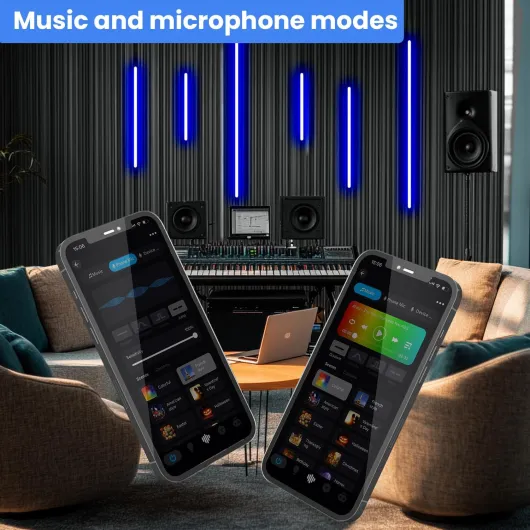
The RGB colors themselves are decent. Reds, greens, and blues look solid, and the dynamic modes (there are 40+ effects) are fun if you like cycling colors, breathing effects, or slow transitions. I tried the music sync mode: it reacts to ambient sound, but like most budget music modes, it’s not super precise. It’s okay for parties or when you have music on, but it reacts mostly to beats and loud sounds rather than subtle changes.
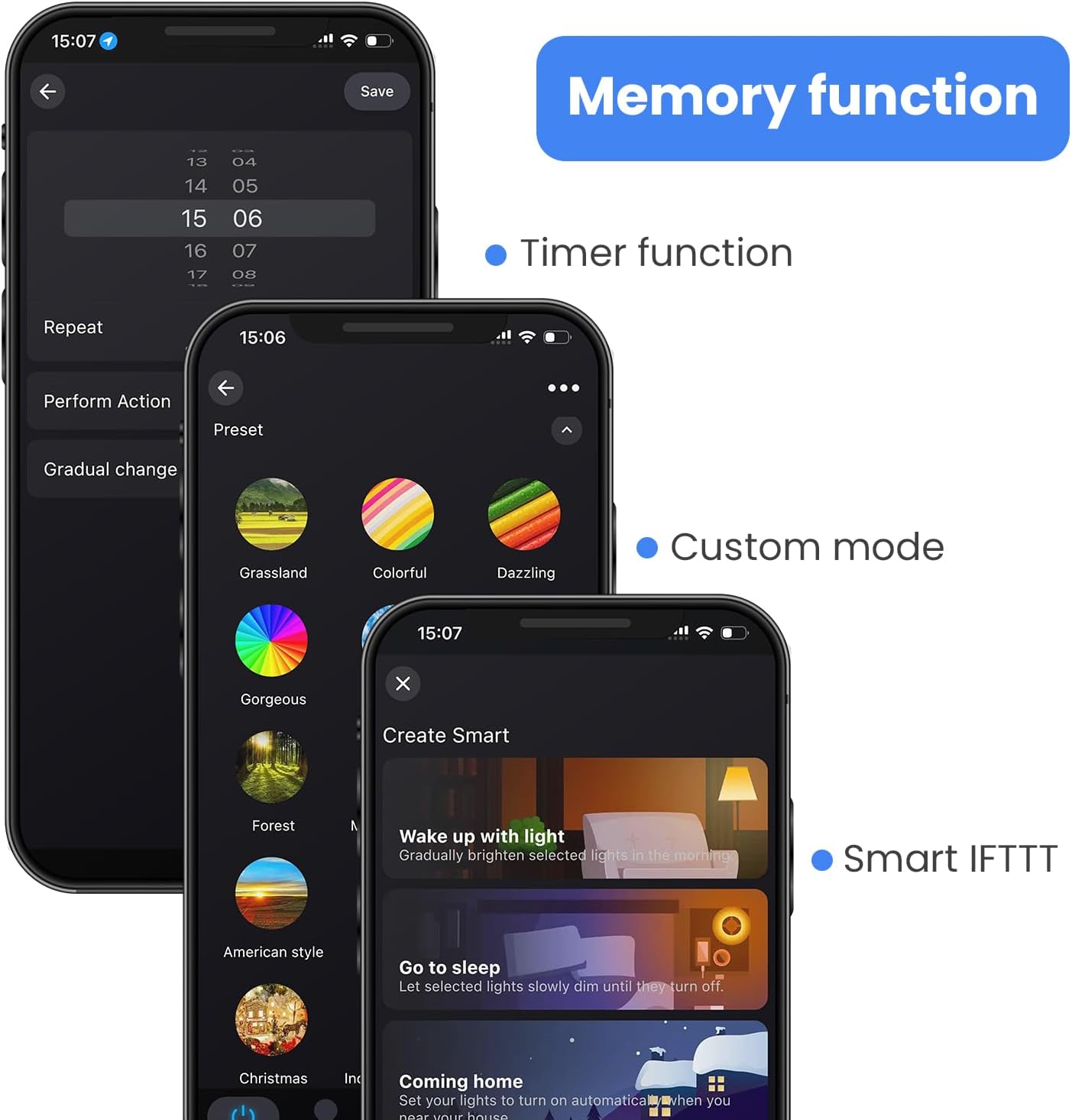
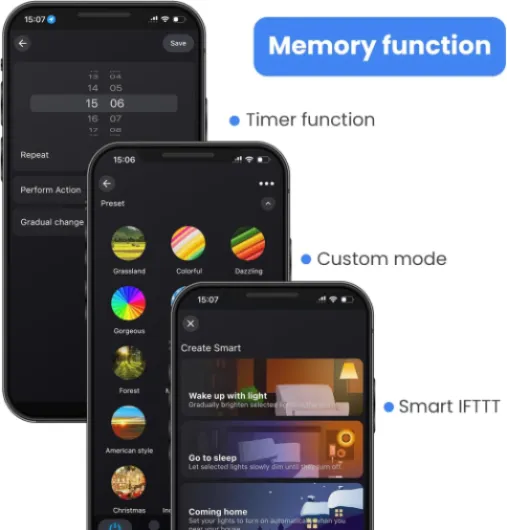
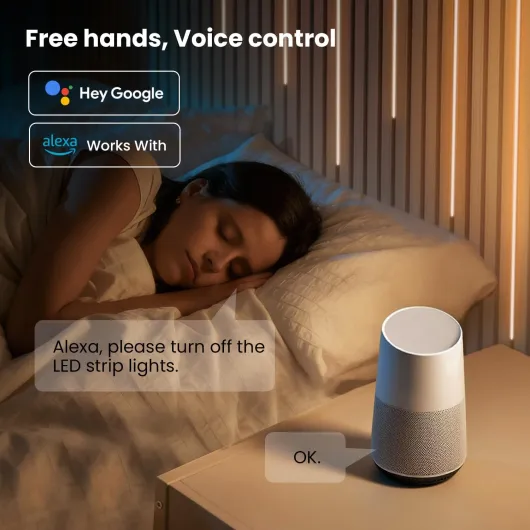
On the smart side, the Surplife app does what it promises. You can change colors, set scenes, control brightness, and create timers. The memory function is handy: it keeps the last color and mode after turning off and on, so you don’t have to reconfigure every time. Voice control with Alexa works, but there is a small delay between the command and the action. It’s acceptable, just don’t expect instant response like a local remote-controlled light.
The RF remote is actually one of the strengths. It works even without Wi‑Fi, and you can control multiple sets with one remote if you have more than one kit. For basic everyday use—on/off, color change, simple modes—it’s easier than opening the app. Overall performance: good enough for mood lighting, not great if you’re picky about color temperature or very bright output.
Installation: OK on panels, annoying on plain walls
Installation is where opinions will really split. If you already have acoustic or wood slat panels, the system makes sense. The bars are sized to fit in the grooves, and you can use either the adhesive backing or the metal clips with screws. On my slat wall, I ended up ignoring the adhesive after a quick test because one strip started to peel after about 20–30 minutes, which matches the Amazon review saying everything fell off in half an hour. I went straight for the clips and screws, and once fixed, nothing moved.
On a plain painted wall, it’s a different story. The adhesive might hold if your wall is perfectly clean and smooth, but I wouldn’t trust it long term, especially in warmer rooms. And if you screw them directly into drywall, you’ll probably want anchors, which are not included. The kit seems more aimed at being mounted on wood or paneling rather than fragile walls. The peel-and-stick cable clips are a nice idea, but they don’t fully solve the cable mess if you’re trying to run several bars far apart.
Another practical point: all six bars plug into the same controller. They don’t chain from one to another. That means you need to think in advance where you’ll place the controller so that the cables from each bar can reach it without stretching or hanging visibly. One reviewer mentioned the controller cable being short and the remote needing a clear line of sight for them (they didn’t use the app), which made their layout awkward. With RF I personally didn’t have to point the remote directly, but you still want the controller in a reachable place.
If you’re comfortable drilling a few holes, hiding cables behind panels, and spending a bit of time planning, the installation is manageable. If you want something you just stick and forget in 10 minutes, especially on a bare wall, you might get frustrated. For me, installation was average: not horrible, but not plug-and-play.
What you actually get in the box
When you open the box, you get 6 rigid LED bars: two at 40 cm, two at 60 cm, and two at 90 cm. They’re not flexible strips; they’re more like slim aluminum profiles with a white diffuser on the front and a black body. Each bar has a cable that plugs into a central controller box. That controller then plugs into the power adapter. So everything is wired like a star, not in a chain.
You also get a 2.4G RF remote, which is handy if you don’t want to use the app all the time. The remote works through walls, so you don’t have to point it directly at the controller like an old TV remote. In the box there are also some metal clips with screws if you want a more solid installation, plus some peel-and-stick cable organizers to try to keep the wires from looking too chaotic.
The app they use is Surplife, and the lights connect over 2.4 GHz Wi‑Fi. Once paired, you can control colors, brightness, dynamic modes, and set timers. It also links with Alexa and Google Assistant, and they claim IFTTT support for automations. In practice, it behaves like most budget smart strips I’ve tried: a bit fiddly to pair at first, then stable enough after that.
Important detail: all six bars plug into the same controller and they do not connect end-to-end. So if you were hoping to make one long continuous line around a room, that’s not how this kit is designed. It’s more for multiple vertical or horizontal accents on one wall, especially in the gaps of acoustic slats.
Pros
- Sized and shaped to fit nicely in acoustic/wood slat wall grooves
- Decent RGB colors with app, RF remote, music sync, and voice control
- Aluminum bars feel reasonably solid and look clean once properly installed
Cons
- All six bars plug separately into one controller, causing visible cable mess if not hidden
- Adhesive backing is weak; screws or extra hardware are basically required
- Not very bright and the white mode leans blue, so not ideal as main lighting
Conclusion
Editor's rating
Overall, these SHUNLEE acoustic wall panel lights are good at one thing: adding RGB accent lighting to slat or acoustic panel walls. In that context, the dimensions, black aluminum body, and central controller all make sense. Once installed with screws, they feel stable, the colors are decent, and the app and remote give you enough control for everyday use. For a TV wall, a gaming corner, or a home studio with slat panels, they’re a nice upgrade without going into DIY profiles and separate LED strips.
Where they fall short is versatility. The cables are long and messy if you don’t have a way to hide them, the lights don’t connect end-to-end, the adhesive is weak, and they’re not bright enough to act as main lighting. If you want clean continuous lines of light around a room, or if you hate seeing wires, you’ll probably end up annoyed or spending extra on cable trunking and anchors. Also, the white mode is more bluish than neutral, so this is really for color mood lighting, not for accurate white light.
If you: have slat/acoustic panels, like RGB mood lighting, and don’t mind a bit of installation work, they’re a reasonable buy. If you: want simple plug-and-play strips for any wall, need proper white light, or are very picky about cable management, I’d skip these and look for a more flexible LED strip kit.


![L510E Smart Bulb, Smart WiFi LED Light, E27, Works with Amazon Alexa(Echo and Echo Dot), Google Home, Dimmable Soft Warm White, No Hub Required [Energy Class F] 1 Pack](https://www.smart-light-guru.com/storage/939180/conversions/71WGq8rBN-L._AC_SL1500_-medium.webp)