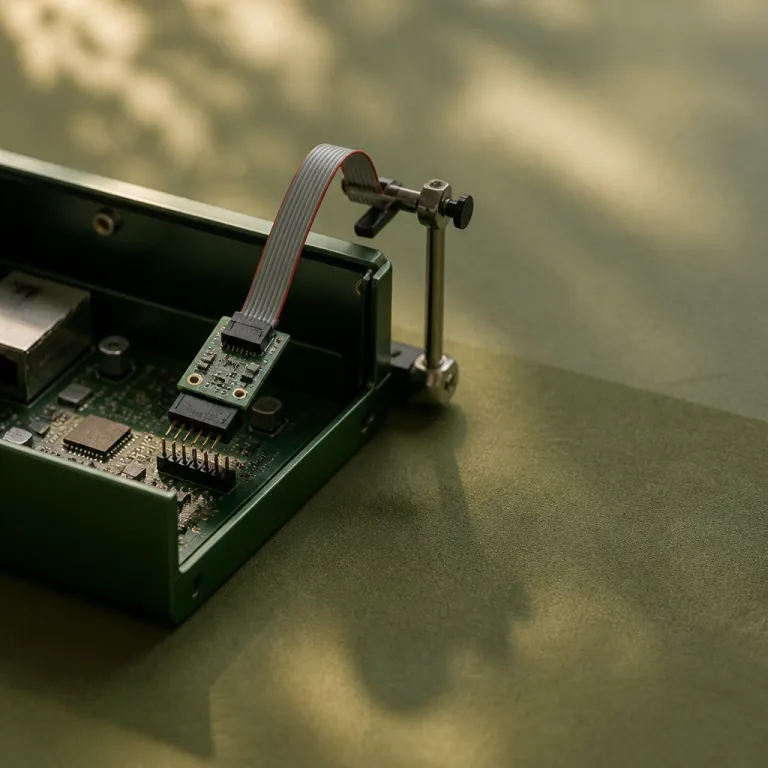
Why an efr32zg28 debugger matters for smart light hubs
Smart light hubs and bridges live or die by their wireless reliability. An efr32zg28 debugger gives engineers precise control over every EFR32-based radio event, which directly shapes how smoothly your bulbs, switches, and sensors respond. When a hub is carefully designed and tuned with this debugger, latency drops, pairing becomes predictable, and energy use across connected devices becomes easier to manage.
Inside many modern hubs you will find an EFR32 microcontroller that integrates a powerful 2.4 GHz BLE-capable radio and multiple protocols on a single board. The efr32zg28 debugger lets developers inspect how these protocols coexist, so a hub can juggle Zigbee-style mesh, 2.4 GHz BLE links, and proprietary protocols without collisions. That level of visibility is essential when the same wireless IoT gateway must coordinate dozens of IoT devices in a crowded 2.4 GHz band.
From a product perspective, the debugger is not just a lab tool but a quality insurance policy. By stepping through firmware on a radio board in real time, engineers can validate that dimming commands, scene recalls, and over-the-air updates behave correctly under stress. In internal Silicon Labs reference designs, for example, engineers routinely run multi-hour stress tests with hundreds of dimming events and repeated OTA cycles to confirm that error rates stay below one percent. For residents, that invisible work means fewer dropped bulbs, more stable scenes, and hubs that keep working even as new devices based on updated standards join the network.
Inside the silicon labs ecosystem that powers smart lighting
The efr32zg28 debugger sits at the center of a broader Silicon Labs development ecosystem. An EFR32 Explorer Kit or full EFR32 Pro Starter Kit typically includes a main STK board, plug-in radio boards, and software tools that all support development for smart light hubs. With this stack, a team can prototype a bridge that speaks multiple protocols, then refine it into a compact QFN-based module ready for mass production.
For apartment blocks and multi-unit buildings, this ecosystem matters more than it first appears. When a property manager deploys a smart living platform for lighting and access, the underlying wireless IoT infrastructure must scale from a few lamps to hundreds of IoT devices without rewiring. Platforms built on EFR32 2.4 GHz radios and tuned using the efr32zg28 debugger can coordinate corridor lights, lobby scenes, and parking sensors while keeping energy consumption predictable and maintenance visits rare.
Readers comparing hubs should pay attention to whether vendors mention EFR32-based 2.4 GHz designs and structured support development workflows. Products that emerge from a disciplined wireless development process, with repeatable tests on Explorer Kit hardware, usually ship with better firmware and longer update roadmaps. Over time, that translates into bridges that keep working with new bulbs, new apps, and new building management systems instead of becoming stranded hardware.
How hubs juggle ghz ble, mesh, and proprietary protocols
Every smart light hub is essentially a traffic controller for radio signals. It must arbitrate between 2.4 GHz BLE connections for quick phone pairing, long-lived mesh links for bulbs, and sometimes proprietary protocols for vendor-specific accessories. The efr32zg28 debugger allows engineers to watch these interactions frame by frame, so they can schedule airtime and avoid interference peaks.
In practice, a single EFR32 radio board can host multiple logical stacks, from standard BLE 0 dBm links to higher-power 20 dBm radio modes for extended range. Silicon Labs datasheets for EFR32 2.4 GHz parts document these output power levels, and Explorer Kit application notes show how duty-cycling at 0 dBm can cut average current draw by double-digit percentages compared with always-on 20 dBm operation. When developers profile these modes with the debugger, they can decide when to use low-power BLE for configuration and when to switch to stronger 2.4 GHz transmissions for outdoor fixtures or thick-walled basements. That balance keeps energy budgets under control while preserving reliable coverage across a property.
Hubs that also act as a Sidewalk wireless or similar long-range gateway face even tighter constraints. They must coordinate local 2.4 GHz BLE bulbs, remote sensors, and sometimes Bluetooth-style daylight sensors without saturating the spectrum. Engineering teams that rely on structured tools, including the EFR32 Explorer and Explorer Kit families, tend to ship hubs that feel boringly stable, which is exactly what you want for lighting that should simply work every evening.
From lab bench to living room: development workflows that shape your lights
Before a hub reaches your hallway, it spends months on a lab bench. Engineers plug an efr32zg28 debugger into a main STK and attach different radio boards to emulate real-world devices based on various lighting standards. They then run scripted tests that flood the network with dimming commands, firmware updates, and sensor events to see where timing breaks.
During these sessions, the debugger exposes how each kit configuration handles edge cases such as power loss, router failures, or noisy 2.4 GHz environments. Developers can inspect how quickly BLE connections re-establish, whether proprietary protocols recover gracefully, and how much extra energy the system burns while healing the mesh. In Silicon Labs application examples, recovery times under five seconds after a simulated router outage are treated as a baseline target for residential lighting. Those insights feed directly into firmware updates that later arrive on your hub through over-the-air packages.
Even commercial aspects like how products appear in an online cart are influenced by this process. Vendors who invest in thorough support development and structured testing can confidently label their hubs as compatible with a wide range of IoT devices and accessories. When you see a bridge marketed as a central brain for lamps, switches, and sensors, there is usually an EFR32-based 2.4 GHz design and a disciplined wireless development workflow behind that promise.
What the efr32zg28 debugger reveals about range, power, and form factor
Range and battery life are not marketing slogans but measurable trade-offs. With an efr32zg28 debugger attached, engineers can log how different dBm radio settings affect coverage in a concrete building versus a timber-framed home. Silicon Labs reference measurements on EFR32 Explorer Kits, for instance, show that moving from 0 dBm to 8 dBm can extend reliable indoor range by tens of meters at the cost of a noticeable increase in peak current. They can also track how much extra current each BLE dBm profile consumes when a hub talks to distant garden lights or garage fixtures.
Form factor choices such as QFN packages versus larger modules also show up clearly in these measurements. A compact QFN-based hub might fit neatly behind a wall plate, but it has less room for antennas and thermal management than a larger board in a dedicated enclosure. By correlating debugger traces with MHz channel usage and temperature data, designers can decide whether a slim bridge can still maintain reliable wireless IoT performance in a crowded switch box.
For consumers, these engineering decisions translate into practical questions about where to place a hub and how many devices based on the same protocols it can handle. A well-tuned EFR32 Pro-class design, validated with Explorer Kit hardware, will usually support more bulbs and sensors before performance degrades. Silicon Labs multi-node demo networks often use 40 to 60 endpoints per coordinator as a conservative design point, which aligns with many field deployments. When you plan a renovation or a new build, asking about tested device counts and recommended hub locations is more useful than focusing only on glossy app screenshots.
Buying and evaluating hubs: what technically curious readers should check
People who enjoy understanding the technology behind their homes can look beyond simple feature lists. When a vendor mentions an efr32zg28 debugger in their documentation or developer materials, it signals a commitment to deep protocol-level testing. That often correlates with better long-term firmware support and fewer unexplained glitches in daily use.
Product pages sometimes reveal even more if you read them carefully. References to an EFR32 Explorer, Explorer Kit, or main STK platform indicate that the hub was built on standard development hardware rather than improvised prototypes. Mentions of structured support development, Sidewalk wireless readiness, or compatibility with multiple protocols suggest that the engineering équipe has thought seriously about coexistence and future standards.
Even the way a hub is presented in an online cart can hint at its maturity. When you see clear technical specifications, realistic MSRP add pricing, and transparent options to add cart bundles with compatible bulbs and switches, you are usually looking at a product family that has been tested as a system. For a deeper dive into how a bridge integrates with wall switches and major voice assistants, you can study this detailed review of a Philips Hue smart wall switch module and bridge, which illustrates how careful engineering choices surface in everyday usability.
Key figures that shape smart light hubs and wireless debugging
- Typical smart light hubs operating in the 2.4 GHz band must coexist with Wi‑Fi channels 1, 6, and 11, which together can occupy more than half of the usable spectrum in dense apartments.
- Many BLE-based bulbs and sensors are designed to operate with transmit powers between 0 dBm and 8 dBm, while higher-power radio modes up to around 20 dBm are reserved for long-range outdoor or corridor applications.
- Mesh-based smart lighting systems can reduce per-device energy consumption by up to 30 percent compared with always-on legacy lighting, primarily through adaptive dimming and occupancy-based control.
- In large residential complexes, a single well-placed hub can often manage between 40 and 60 IoT devices reliably, but beyond that point engineers usually recommend adding extra bridges to maintain latency and reliability.
- Development kits such as an EFR32 Explorer Kit or main STK can shorten wireless IoT product development cycles by several months, because radio performance, MHz channel planning, and protocol stacks are pre-validated.
FAQ about efr32zg28 debuggers and smart light hubs
How does an efr32zg28 debugger improve my smart lighting experience ?
The efr32zg28 debugger helps engineers identify and fix wireless issues before products ship, which leads to hubs that pair faster, drop fewer devices, and handle firmware updates more reliably. By exposing detailed radio and protocol behavior, it allows teams to optimize range, latency, and energy use across bulbs and sensors. You benefit from that work as a smoother, more predictable lighting system.
Is ghz ble enough for a whole home smart lighting setup ?
2.4 GHz BLE is excellent for commissioning and short-range control, but most whole-home systems combine it with mesh protocols for coverage. Hubs built on EFR32 2.4 GHz radios can run BLE for setup while maintaining a separate mesh for routine commands. The efr32zg28 debugger lets developers tune both layers so they coexist without interference.
What should I look for in a hub if I plan to expand later ?
Check whether the hub supports multiple protocols, has clear device limits, and mentions structured development tools such as an Explorer Kit or main STK. Products based on EFR32 Pro-class designs usually have more headroom for future bulbs, switches, and sensors. Transparent firmware update policies and long-term support commitments are equally important.
Do compact qfn based hubs compromise wireless performance ?
Compact QFN-based hubs can perform very well if antenna design and thermal management are carefully engineered. Debugging tools such as the efr32zg28 debugger help teams validate performance in realistic enclosures and wall boxes. Problems arise mainly when vendors prioritize size over thorough radio testing.
How do sidewalk wireless and other long range options affect lighting ?
Sidewalk wireless and similar long-range networks extend connectivity to outdoor lights, garages, and shared spaces without extra cabling. Hubs that integrate these options alongside 2.4 GHz BLE and mesh protocols can manage a wider variety of IoT devices from a single point. Proper debugging ensures that long-range traffic does not degrade performance for indoor bulbs and switches.