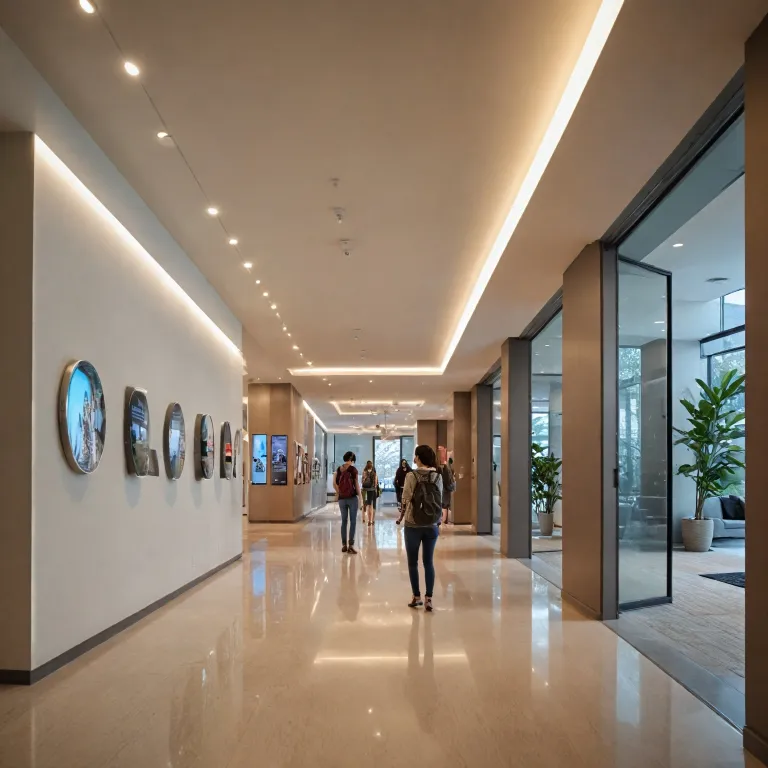
Smart lighting as the backbone of multi unit smart living
In a multi unit residential buildings smart living platform, smart lighting is often the quiet backbone. It shapes how every resident and property owner moves through the building, while linking devices, access and energy into one coherent smart building layer. When lighting is treated as infrastructure rather than decoration, the resident experience becomes smoother and more secure.
In a typical multifamily property, corridors, lobbies and dwelling units all use different lighting devices. A modern smart technology stack connects these fixtures into one managed system, allowing property managers to adjust scenes, schedules and energy targets from a single building technology dashboard. This creates a property wide view of lighting performance, faults and consumption in real time.
For residents, the same multi dwelling platform turns each apartment into a genuinely smart apartment. Individual resident control of dimming, color temperature and presence based automation makes units feel tailored, while still fitting into the wider community strategy. When hundreds of smart apartments share a unified platform, residents property data about usage and comfort can guide better management decisions.
Smart access and lighting also intersect at every entry point in an MDU. A resident arriving at the building can use smart access credentials to unlock doors, trigger hallway lighting and even pre light their unit before they reach the door. This tight integration of access control, smart devices and lighting solutions is what elevates a simple connected building into a true multi unit residential buildings smart living platform.
Designing resident centric lighting journeys in multifamily communities
Designing lighting journeys in multifamily smart communities starts with mapping how residents actually live. Each building has unique flows between parking, lobbies, lifts, amenities and private dwelling units, and a smart building platform should mirror these paths. When property managers align lighting scenes with these journeys, the result is a calmer, safer resident experience.
In practice, this means linking sensors, smart devices and access control events into coordinated responses. Motion in a stairwell can raise lighting to full brightness, while a resident using smart access at the main entrance can trigger a warm, low glare path toward their unit. Over time, real time analytics from the multi dwelling system help refine these scenes for different times, seasons and occupancy levels.
Smart apartment layouts also benefit from layered lighting that responds to context. Residents can set profiles for work, relaxation or sleep, while the platform optimizes energy by dimming unused zones and coordinating with smart thermostats. For property owners, this balance of comfort and efficiency supports higher perceived value without excessive operating costs.
Even guided tours for prospective residents can be orchestrated through the multi unit residential buildings smart living platform. Leasing teams can trigger pre defined lighting scenes in amenities and sample units, showcasing both technology and atmosphere in one gesture. For deeper technical readers, resources on the versatility of GU10 LED lamps in smart lighting schemes illustrate how fixture choice underpins these journeys.
Energy management, data and the role of smart drivers
Energy management is where a multi unit residential buildings smart living platform often proves its financial value. Smart lighting, when combined with occupancy data and daylight sensing, can cut consumption significantly across corridors, car parks and shared spaces. In individual units, residents gain fine grained control while the system quietly enforces sensible baselines.
Behind the scenes, smart devices such as drivers, sensors and switches feed building technology dashboards with detailed telemetry. Property managers and service providers can see which zones over consume, which dwelling units ignore schedules, and where maintenance is overdue. This turns lighting from a static asset into a managed, data rich component of the overall smart building strategy.
Reliable drivers are critical to this ecosystem, because they translate platform commands into stable, flicker free lighting. When drivers fail or underperform, both resident experience and energy savings suffer, especially in large multifamily properties. Technical overviews on the importance of replacement LED drivers in smart lighting highlight why proactive lifecycle management matters.
For property owners and property managers, these insights support long term planning and capital allocation. They can compare performance across multiple multi dwelling sites, benchmark residents property comfort scores and negotiate better contracts with service providers. In advanced deployments, real time data from lighting integrates with HVAC, lifts and access control, creating a holistic multi unit residential buildings smart living platform that continuously tunes itself.
Access control, safety and the psychology of light
Access control and lighting share a subtle psychological role in multi unit buildings. Residents judge safety and care from the moment they approach the property, long before they see any smart technology branding. Thoughtful lighting at entrances, mailrooms and lifts reassures residents and visitors that the community is actively managed.
Modern smart access systems link credentials, doors and lighting into one seamless flow. When a resident authenticates at the main entrance, corridor and lobby lighting can gently rise, while cameras and sensors quietly log events for security management. This integration of access control, smart devices and building technology reduces dark spots and manual overrides that often plague older multifamily properties.
Within dwelling units, smart locks and interior lighting work together to support daily routines. A resident can use smart access from a phone or fob, triggering a welcome scene that balances brightness, color temperature and even blinds. For multi dwelling communities, consistent patterns like this across many smart apartments reinforce a shared sense of safety and predictability.
Vendors such as RealPage Smart and other multifamily smart platforms emphasize this convergence of access, lighting and data. In some deployments, real time alerts notify property managers when critical areas remain dark or doors are propped open, enabling rapid intervention. Over time, these patterns help property owners refine policies, while residents experience a building that feels both smart and quietly attentive.
From single smart apartment to fully managed MDU ecosystem
The leap from a single smart apartment to a fully managed MDU ecosystem is primarily architectural. A standalone unit might use a few smart devices and a consumer hub, but a multi unit residential buildings smart living platform must coordinate hundreds of dwelling units and shared spaces. This demands robust building technology, clear governance and disciplined device management.
Platforms like IOTAS and STRATIS illustrate how multifamily smart deployments centralize control while preserving resident privacy. Each resident retains control of their own unit, yet property managers oversee property wide systems such as corridors, plant rooms and amenities. This separation of concerns allows owners to protect core infrastructure while still enabling rich resident experience features.
In one notable case, a director stated, “We are very happy with the end result of our bespoke Crestron home automation system deployed across these luxury towers.” That sentiment captures how a well executed smart building can align the interests of residents, property owners and service providers. When the system simply works, technology fades into the background and the community becomes the focus.
For operators evaluating solutions, it is important to assess interoperability, cybersecurity and lifecycle support. Real time monitoring, remote diagnostics and clear upgrade paths reduce operational risk in large multi dwelling portfolios. Detailed reviews of platforms and hardware, such as analyses of smart lighting setups that quietly work in the background, can inform these strategic decisions.
Practical steps for property managers implementing smart lighting platforms
Property managers approaching a multi unit residential buildings smart living platform should start with a structured audit. Mapping existing lighting, access and control systems across the property reveals quick wins and hidden constraints. This baseline helps align residents, property owners and service providers around realistic objectives.
Next, managers should define clear use cases for residents and staff, rather than chasing abstract smart technology trends. Typical priorities include corridor energy savings, safer car parks, smoother guided tours and better in unit control. By framing these goals in terms of resident experience and measurable outcomes, stakeholders can evaluate competing multifamily smart solutions more objectively.
Technical planning then focuses on network readiness, device selection and integration with existing building technology. Ensuring that smart devices support common protocols such as Zigbee or Z Wave reduces vendor lock in and simplifies future expansion. Careful commissioning, documentation and staff training are essential, because even the best smart building platform fails without disciplined management.
Finally, ongoing governance keeps the system aligned with community needs as residents change. Regular reviews of real time data, feedback from residents property surveys and coordination with property owners guide incremental improvements. Over several cycles, the multi dwelling environment evolves from a collection of connected units into a coherent, property wide smart living ecosystem where lighting, access and control feel naturally integrated.
Key statistics shaping smart lighting in multi unit buildings
- The global smart home market is projected to reach 79.2 billion USD, underscoring strong momentum behind smart devices and platforms.
- North America shows a smart home adoption rate of 32 percent, indicating growing familiarity among residents with smart apartment features.
- Europe records an adoption rate of 28 percent, which influences expectations for multi dwelling communities and smart building investments.
- In one energy scenario, smart thermostat implementation reduced annual consumption from 12 000 kWh to 9 600 kWh, a savings of 20 percent.
- A large scale deployment integrated 801 apartments on a unified platform, achieving a reported 100 percent resident adoption rate for the smart living system.
Frequently asked questions about smart lighting in multi unit platforms
How does smart lighting improve safety in multi unit residential buildings ?
Smart lighting improves safety by linking sensors, access control and schedules into coordinated responses across the property. Corridors, stairwells and entrances automatically brighten when residents approach, reducing dark zones and perceived risk. Integration with smart access and cameras also helps property managers investigate incidents more effectively.
What are the main benefits for residents in smart apartments ?
Residents gain precise control over lighting scenes, schedules and automation within their units. They can tailor brightness and color temperature to work, relaxation or sleep, while the platform optimizes energy in the background. Combined with smart access and other devices, this creates a more comfortable, convenient and responsive living environment.
How do property managers maintain large smart lighting deployments ?
Property managers rely on centralized dashboards that show device status, alerts and energy metrics in real time. They schedule firmware updates, manage access rights and coordinate maintenance visits based on data rather than complaints. Clear processes for onboarding new dwelling units and training staff keep the system stable over time.
Are smart lighting platforms compatible with existing building systems ?
Many smart building platforms are designed to integrate with existing HVAC, access control and metering systems through standardized protocols or APIs. A compatibility assessment at the planning stage identifies which legacy components can be retained and which require upgrades. This approach protects prior investments while enabling a gradual transition to a full multi unit residential buildings smart living platform.
How does smart lighting contribute to energy savings in MDUs ?
Smart lighting reduces energy use by dimming or switching off fixtures in unoccupied areas and by leveraging daylight where possible. Schedules, sensors and analytics ensure that lighting levels match actual needs rather than fixed assumptions. Over time, these adjustments can deliver substantial savings across large multifamily portfolios without compromising resident comfort.