Summary
Editor's rating
Value for money: worth it only if you’re actually going to use the Z-Wave features
Design: looks like a normal lock, in a good way
Battery life: can be good, but depends a lot on your setup
Build quality and long-term reliability
Performance and connectivity: solid once set up, but setup can be touchy
What the HomeConnect 620 actually offers (beyond the buzzwords)
Pros
- Works very well with Ring Alarm and other Z-Wave hubs once paired correctly
- SmartKey rekey feature lets you match existing Kwikset keys in seconds
- Back-lit keypad, auto-lock options, and up to 250 user codes cover most real-world needs
Cons
- Requires a separate Z-Wave hub; without it you lose most of the smart features
- Manual is unclear about pairing distance and auto-handing, which can cause setup issues
- Battery life and reliability depend heavily on having a solid Z-Wave network

Specifications
View full product page →| Brand | Kwikset |
A smart lock that feels made for people who already live in Z-Wave land
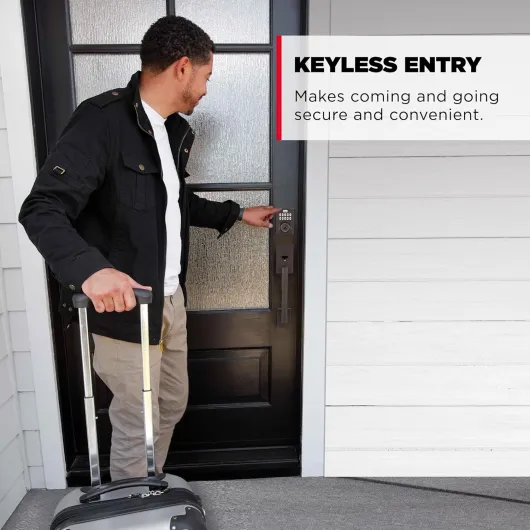
I’ve been using the Kwikset HomeConnect 620 on a side entry door that we use daily, and my quick takeaway is this: it’s a pretty solid smart lock if you already have a Z-Wave hub and you’re not scared of a bit of smart home tinkering. If you’re expecting a plug-and-play Wi‑Fi lock that works right out of the box with just an app, this is not it. You absolutely need a compatible hub (Ring, SmartThings, Home Assistant, etc.) or you’re basically paying for a keypad deadbolt with extra steps.
In day-to-day use, the lock itself is fairly boring in a good way: you punch in a code, it locks and unlocks, and it just works most of the time. Where it gets more interesting is the integration: things like auto-lock when you leave, alerts when someone unlocks the door, and being able to rekey it to match your existing Kwikset keys. That’s the stuff that made a difference for me versus a basic keypad lock.
It’s not perfect though. The documentation around pairing and the auto-handing process is confusing, and if your hub is far from the door, that first pairing can be a bit of a pain. Also, battery life seems to depend heavily on the hub and how your Z-Wave network is set up. Some people get around a year; others report draining batteries early on until they fix their setup.
If I sum it up: as a smart lock for a Z-Wave house, it’s decent and practical. As a first smart device for someone who doesn’t want to think about hubs and pairing distances, it feels a bit overkill and not the most user-friendly option out there.
Value for money: worth it only if you’re actually going to use the Z-Wave features
In terms of price, the HomeConnect 620 usually sits in the mid-range of smart locks: not the cheapest keypad deadbolt, but not the most expensive Wi‑Fi model either. For what you pay, you get: Z-Wave 700 Long Range, support for up to 250 codes, auto-lock, back-lit keypad, SmartKey rekeying, and compatibility with major hubs like Ring Alarm and SmartThings. If you already own a Ring system or a Z-Wave hub, the value is pretty solid because you’re actually using the main feature you’re paying for: integration.
If you don’t have a hub and don’t plan to buy one, then honestly, the value drops hard. You’d be better off with a simpler keypad deadbolt that doesn’t rely on Z-Wave. Without a hub, you’re basically paying extra for a radio you’ll never use. No remote control, no app-based code management, no automation like “lock when I leave.” In that case, this lock is just an overqualified keypad.
Compared to Wi‑Fi locks, the trade-off is this: Z-Wave models like this one often have better battery life and integrate more cleanly into a full smart home system, but they require that extra piece of hardware (the hub) and some patience during setup. Wi‑Fi locks are more direct (lock + app), but can be more power-hungry and sometimes less consistent if your Wi‑Fi coverage is weak at the door. So the 620 makes the most sense for people already invested in Z-Wave or Ring Alarm, or planning to build a more serious home automation setup.
So in my opinion, the value is good but niche. It’s a good buy if: you already have Ring/SmartThings/Home Assistant/Homeseer, you care about code management and automation, and you like the SmartKey rekey feature. It’s a mediocre buy if: you just want a simple keypad lock and don’t care about smart home integration. In that case, you’re paying for features you’ll never touch.
Design: looks like a normal lock, in a good way
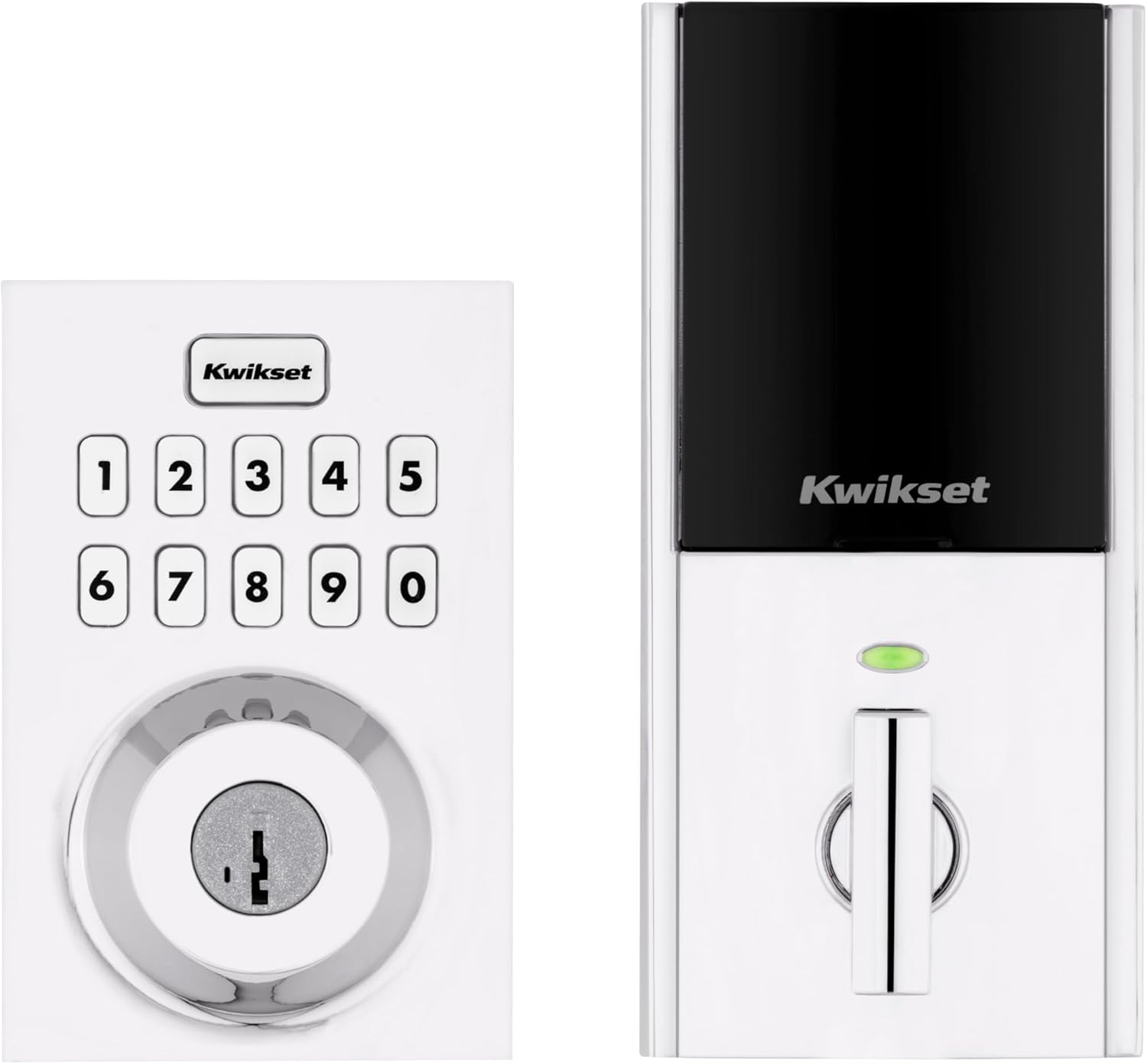
The version we’re talking about here is the polished chrome contemporary model. Visually, it’s not trying to be some sci‑fi gadget on your door. It looks like a modern deadbolt with a rectangular keypad on the outside and a fairly standard interior housing. If you already have chrome hardware in your house, it blends in fine. It’s shiny, so you will see fingerprints, but that’s the trade-off with polished finishes in general, not specific to this lock.
The keypad is back-lit, which is important in real life. In the dark, you tap it and the numbers light up clearly. The buttons are firm enough that you don’t accidentally hit the wrong one every time, and they register presses reliably. One user mentioned the keypad being responsive, and I’d agree: I haven’t had to stab at it repeatedly to get it to notice me. There’s also a one‑touch lock button, so leaving the house is basically: close door, press button, done.
Inside, the housing is a bit bulky but nothing out of the ordinary for a motorized deadbolt. If you’ve seen other Kwikset or Schlage smart locks, this is roughly in the same size range. It’s not pretty decor, but it’s not an eyesore either. It looks like what it is: a powered deadbolt with a battery compartment. The weight (around 3.5 pounds overall) gives it a decent feel; it doesn’t come across as flimsy or hollow.
Overall, the design is functional and discreet. If you want something that screams “high-tech gadget” every time you walk by the door, this probably won’t excite you. But if you want something that friends and family can figure out at a glance—punch in code, turn the handle—this design style actually helps rather than hurts.
Battery life: can be good, but depends a lot on your setup
Kwikset claims around 12 months of battery life on four AA alkaline batteries, and they include a set in the box. In reality, based on user feedback and my own use, battery life is all over the place depending on your hub, signal strength, and how your Z-Wave network is set up. One reviewer updated after about 1 year and 7 months of ownership and said they changed the batteries roughly once per year. Their second set was still at 62% after several months, which lines up pretty well with the marketing claim.
On the other hand, another user had a rough start: they burned through one set of batteries in just two months and the lock refused to activate, flashing orange. They later found out their hub setup and pairing process were not ideal, and after moving to an Aeotec Z‑Stick Gen5 with Home Assistant and pairing correctly, they started seeing around six months of battery life. That shows pretty clearly that the Z-Wave environment matters a lot. A poor signal or constant retries will drain batteries faster than any spec sheet suggests.
In my experience, with a decent Z-Wave mesh and not hammering the lock with constant status requests, the battery indicator drops slowly and feels in line with what I’d expect for a motorized deadbolt. Auto-lock timers and frequent remote commands will obviously use more power. The good news is that it uses standard AA batteries, not some odd proprietary pack, so swapping them is easy and cheap. You also get a battery indicator feature, so you’re not fully in the dark about when they’re dying, though I wouldn’t trust any smart lock to give perfect percentage readings.
Overall, I’d say: plan for 6–12 months per set of batteries in a normal home setup. If you’re seeing 1–2 months, something is likely wrong with your Z-Wave network or the pairing. It’s not the longest-lasting lock on the planet, but for four regular AAs, the runtime is acceptable as long as your smart home environment isn’t a mess.
Build quality and long-term reliability
Physically, the HomeConnect 620 feels like a typical mid-range metal smart lock. It’s not flimsy, the parts line up well, and nothing feels like cheap toy plastic. One reviewer mentioned needing to slightly enlarge the door’s deadbolt hole when replacing an older lock, which is pretty standard when swapping hardware brands or models. Once installed, they described it as commercial quality and reliable, with a stable Z-Wave connection on their Homeseer system.
I’ve had mine on a frequently used entry door and the mechanism still feels consistent: no grinding, no weird noises, and the thumb turn inside is still smooth. Another user mentioned their previous Kwikset smart lock lasted 7 years with constant use, and they replaced it with this one, which is a good sign for Kwikset’s overall track record. Obviously, this particular model hasn’t been out for a decade, but the brand’s hardware reputation is decent for normal residential use.
There was one negative report where the user thought the lock was basically “dead” after losing connection to SmartThings and then only showing up as an unknown node in Home Assistant. That could be a device failure, but it might also be a Z-Wave driver or inclusion issue. Hard to say from the outside. Still, it’s fair to note that smart locks add another potential failure point: the electronics and radio, not just the mechanical parts.
From a practical standpoint, if you install it correctly (no misaligned strike plate, door not sagging, etc.) and have a reasonable Z-Wave environment, I’d expect this lock to hold up fine for several years. The metal body and interior mechanism don’t feel fragile. Just remember: any motorized deadbolt will struggle or wear faster if your door doesn’t close cleanly. If you already have to yank your door to lock a basic deadbolt, fix that first before blaming the smart lock.
Performance and connectivity: solid once set up, but setup can be touchy
In day-to-day use, the lock’s basic performance is fine. It locks and unlocks quickly, the motor doesn’t sound like it’s dying, and the bolt lines up well as long as your door is properly aligned. With my setup, remote control through the hub has been reliable: I can lock/unlock from the app, check status, and get alerts when the door is left unlocked longer than a set time. Several reviewers on Amazon mention the same: once paired, the connection is stable and does what it’s supposed to.
Where things get a bit messy is the initial pairing and auto-handing. One user had trouble with the auto-handing process (where the lock figures out which way to turn the bolt). It didn’t work right away when they inserted the batteries, but then worked later when they locked the door through the app. Another reviewer pointed out that the manual is misleading about pairing distance: Kwikset support told them the controller needs to be within about 12 inches of the lock for the first pairing. After that, it’s fine at normal distances. That’s the kind of detail that should be clearly written in the manual, and it isn’t.
On the integration side, it seems to work best with Ring Alarm and modern Z-Wave setups (Home Assistant with a decent stick, Homeseer, etc.). One user had issues with Samsung SmartThings going offline and then moved to Home Assistant and got much better stability and battery life. Another user said Ring recognized it instantly and it integrated fully, including mode-based behavior. With SmartThings, code management lives under the “Smart Lock Guest Access” section, which is a bit hidden but functional once you find it.
So performance-wise: once the lock is properly paired, the experience is generally positive. The main downsides are the confusing documentation about pairing and auto-handing, and the fact that your experience will depend a lot on how healthy your Z-Wave network is. If you already run Z-Wave gear, this will feel familiar. If this is your first Z-Wave device, be ready to spend a bit of time learning the quirks.
What the HomeConnect 620 actually offers (beyond the buzzwords)
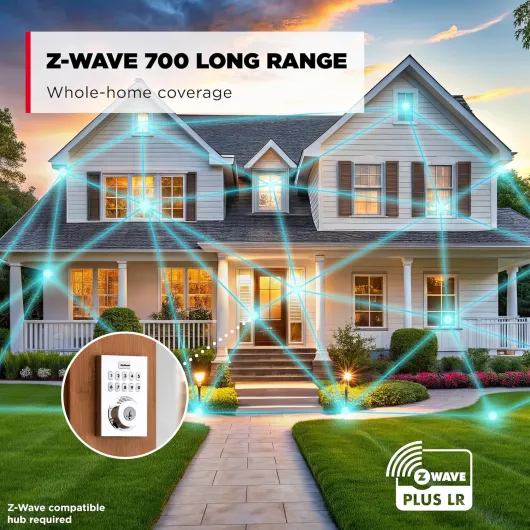
On paper, the Kwikset HomeConnect 620 checks a lot of boxes: Z-Wave 700 Long Range, up to 250 user codes, auto-lock from 30 seconds to 10 minutes, 12‑month claimed battery life, and compatibility with platforms like Ring Alarm and SmartThings (or any Z-Wave hub that handles door locks properly). In practice, it behaves like a standard motorized deadbolt with a keypad on the outside and a thumb turn on the inside, plus the whole smart home layer on top.
You control it mainly in three ways: keypad, physical key, and via your hub’s app (Ring, SmartThings, Home Assistant, Homeseer, etc.). With Ring, for example, you can manage codes in the app and tie it to alarm modes. With SmartThings, one user mentioned using the “Smart Lock Guest Access” section to add and delete codes instead of digging into the device settings directly. That part isn’t super intuitive but it works once you know where to tap.
The lock supports SmartKey rekeying, which is a big plus if your other doors are already on Kwikset cylinders. You use the little included tool, follow a simple procedure, and you can ditch the new keys and keep your old house key. That’s genuinely handy if you don’t want to carry yet another key or pay a locksmith. For me, being able to rekey it in a few seconds was one of the main reasons I’d pick this over some cheaper no-name keypad locks.
So as a whole, the HomeConnect 620 is basically: a keypad deadbolt + Z-Wave radio + SmartKey rekey system. No Wi‑Fi built in, no direct app without a hub, and no fancy fingerprint reader or anything like that. If you’re okay with that trade-off and you already have or plan to get a Z-Wave hub, the feature set is pretty balanced and covers the basics of what a smart lock should do.
Pros
- Works very well with Ring Alarm and other Z-Wave hubs once paired correctly
- SmartKey rekey feature lets you match existing Kwikset keys in seconds
- Back-lit keypad, auto-lock options, and up to 250 user codes cover most real-world needs
Cons
- Requires a separate Z-Wave hub; without it you lose most of the smart features
- Manual is unclear about pairing distance and auto-handing, which can cause setup issues
- Battery life and reliability depend heavily on having a solid Z-Wave network
Conclusion
Editor's rating
The Kwikset HomeConnect 620 is a solid, no-nonsense smart lock for people who already live in the Z-Wave or Ring ecosystem. The keypad works well, auto-lock is handy, and being able to rekey it to your existing Kwikset keys is genuinely useful. Once it’s properly paired with a good hub, performance is stable: you can lock/unlock remotely, manage codes, and tie it into automations without much fuss. Battery life, when the Z-Wave network is healthy, lands in the 6–12 month range, which is reasonable for four AA batteries.
It’s not all perfect. The documentation around pairing distance and the auto-handing process is confusing, and if your hub is far from the door or your Z-Wave mesh is weak, you can run into pairing and battery headaches. Also, this lock makes almost no sense if you don’t own a compatible hub; without that, it’s just an overpriced keypad deadbolt. There are cheaper, simpler options for people who only want PIN entry and don’t care about smart home features.
If you already use Ring Alarm, SmartThings, Home Assistant, or Homeseer and you want a dependable lock that fits into that ecosystem, the HomeConnect 620 is a pretty good fit. If you’re new to smart homes and just want something simple and direct, I’d look at a basic keypad lock or a Wi‑Fi model that doesn’t force you to buy and manage a separate hub.