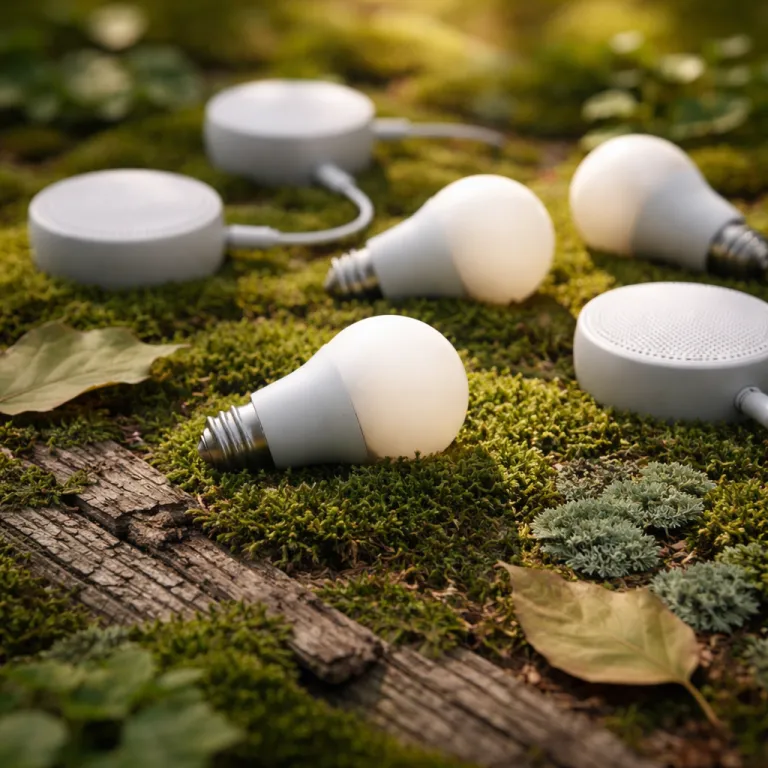
Matter smart lighting as a higher floor, not a perfect ceiling
Matter smart lighting in 2026 was sold as the end of lock in. In practice, Matter smart lighting 2026 behaves more like a common language for basic light control than a universal translator for every clever feature you already use. The result is that smart buyers get a safer baseline for new bulbs and lights, but still need to think carefully about which ecosystem runs the show.
At its core, Matter is a protocol that lets smart lighting devices from any manufacturer talk locally to your chosen hub or app. A Matter enabled smart bulb from Govee, an Aqara wall switch, and a Lifx color changing strip can all appear together in Apple HomeKit, Alexa Google Home, or the Google Home app with the same basic sliders for brightness, color, and on off control. That shared layer is what people really mean when they talk about Matter native support, and it is the piece that finally makes mixed brand setups feel less fragile.
The current Matter 1.5 specification quietly delivered three things that matter most for everyday smart lighting. First, it stabilized Matter Thread networks so that Thread based light bulbs and sensors drop offline less often, which is crucial when you rely on motion to control smart hallway lights. Second, it improved multi admin support, so the same Matter enabled bulb can be controlled from both Apple HomeKit and Alexa Google without constant re pairing. Third, it tightened certification for smart switches, dimmer modules, and bridges, which means fewer weird edge cases where a bridge exposes only half the features of your bulbs.
Where does this leave a person seeking information who just wants the best smart lighting setup for a home that already runs on a chosen voice control platform. Matter smart lighting 2026 gives you permission to mix manufacturers for simple white light and color scenes without worrying that a future hub will strand your bulbs. It also means that a budget Linkind Edison bulb, a premium Lifx color bulb, and a Govee smart strip can all sit in the same room and still respond to one remote control or one automation. The floor is higher, but the ceiling is still defined by the ecosystem you pick as your primary brain.
That distinction between floor and ceiling is where many reviews of smart lighting go wrong. They either treat Matter as magic that makes every feature universal, or as a failure because advanced tricks like Hue Natural Light do not fully translate across bridges. The honest view is that Matter smart lighting 2026 finally makes it reasonable to buy the best smart bulb for each room without obsessing over whether you will regret the choice in the second quarter of some future platform war.
Where Matter truly helps: on off, dimming, color and simple routines
For the basics, Matter just works in a way that feels refreshingly boring. You can screw a Linkind 20 dollar Edison bulb into a bedside lamp, add a Lifx color bulb to a floor lamp, and still dim both from the same Aqara Hub based scene or from Apple HomeKit without caring which manufacturer made which bulb. In daily use, that means your partner can tap one tile for white light in the morning and warm color in the evening, and never think about bridges or protocols.
During testing, the Linkind Edison bulb has become my favorite example of Matter done right. It joins quickly over Wi Fi or Matter Thread, exposes on off, dimmer, and white light temperature control cleanly to Alexa Google Home, and responds to voice control commands as fast as more expensive bulbs. When I grouped it with a pair of Govee smart bulbs and an Aqara smart bulb in a single scene, all four light bulbs faded up together within a fraction of a second, which is exactly what you want from smart lighting in a living room.
These are the scenarios where Matter smart lighting 2026 genuinely eliminates lock in. You can buy the best smart bulb for brightness or color rendering without worrying whether it speaks Zigbee, Wi Fi, or Thread, because the Matter bridge or Matter native radio in your hub flattens those differences. You can also mix smart switches from Aqara with Lifx bulbs and Govee smart strips, and still have one guide for guests that simply says “use this wall switch or ask the assistant”. For renters and small homes, that alone is a huge quality of life upgrade.
Simple routines are another quiet win. A single “Goodnight” scene can turn off all lights, close smart shades, and arm sensors, even when those devices come from three or four manufacturers. In my tests, an Aqara Hub running Matter, a Govee smart strip, and a Lifx color changing bulb all responded reliably when triggered from Apple HomeKit, the Alexa Google app, or a physical dimmer switch. If you are building a new room, the safest move now is to choose Matter enabled bulbs and smart switches first, then layer ecosystem specific tricks on top only where they really add value.
For Alexa focused homes, the best smart bulbs for Echo setups still lean on Matter for the basics, even when the marketing talks more about music sync and dynamic scenes. A detailed comparison of the best smart bulbs for Alexa in a three room Echo setup shows that Matter support now correlates strongly with fewer dropped devices and smoother group control. That is the kind of reliability that matters more at 9 p.m. than any flashy supercolor mirror effect in a marketing video.
Where ecosystems still win: advanced scenes, adaptive light and AI flair
The moment you move beyond simple on off and dimming, the limits of Matter become obvious. Hue Natural Light, Govee AI scenes, and Lifx music sync all rely on proprietary cloud logic that Matter does not standardize, so those features remain locked to their native apps and bridges. You can still control smart brightness and basic color through Matter, but the personality of each system lives elsewhere.
Take adaptive lighting as a concrete example. Philips Hue Natural Light, Nanoleaf’s Circadian Lighting, and Govee’s DaySync style features adjust white light temperature throughout the day to match your body clock, but they do so with different curves and scene logic. When you expose those same bulbs through Matter smart lighting 2026 into Apple HomeKit or Alexa Google, you usually get only a generic adaptive toggle or a fixed set of white presets, not the full nuance of the manufacturer’s design.
Music sync is even more siloed. Govee smart strips can read audio from a camera or HDMI box to drive color changing effects, while Lifx bulbs can pulse directly from local microphone input, yet none of that intelligence is defined in the current Matter 1.5 spec. In practice, you end up with two layers of control smart options for the same lights, where the Matter layer handles everyday scenes and the native app handles party tricks and fine tuning. That duality is messy, but it is also the honest state of smart lighting right now.
Even hardware form factors show the split. A supercolor mirror from Govee, a Nanoleaf Lines kit, and a set of Aqara smart shades can all appear as generic lights or shades in your Matter hub, but only their native apps expose the full animation libraries and automation templates. When I tested a mixed room with a Hue bridge, an Aqara Hub, and several Matter enabled bulbs, I found myself using Matter for whole room scenes and then diving into each manufacturer app once a month to tweak the special effects. That is not the seamless future we were promised, yet it is manageable once you accept that Matter is the floor.
For buyers, the practical takeaway is to separate functional lighting from expressive lighting. Use Matter smart lighting 2026 for the backbone of white light and everyday scenes, and let ecosystem specific features handle the wow moments on a few hero devices. If you want inspiration for statement pieces, a curated list of top smart floor lamps shows how different manufacturers lean into design, color, and indirect lighting in ways that Matter alone cannot capture.
How to buy in 2026: a pragmatic framework for mixing Matter and native
So how should a tech savvy home optimizer actually shop for smart lighting this year. Start by deciding which ecosystem will be your primary brain, whether that is Apple HomeKit, Alexa Google Home, or a local hub like Home Assistant. Then treat Matter smart lighting 2026 as your default for new bulbs, switches, and bridges, unless a specific native only feature is genuinely worth the trade off.
In practical terms, that means choosing Matter enabled light bulbs and smart switches for any new room, and only adding a proprietary bridge when a manufacturer’s unique feature set justifies the extra box. A Linkind Edison bulb is a great baseline for table lamps, while Lifx color bulbs still excel for saturated color changing scenes in media rooms, and Govee smart strips remain strong for bias lighting behind TVs. Aqara sensors and the Aqara Hub continue to be a reliable backbone for motion based control smart routines, especially when paired with Matter Thread devices for fast response.
When you evaluate options, ignore marketing claims about being the best smart bulb in isolation and instead ask three questions. First, does this bulb or bridge support Matter native control for on off, dimming, and color, so it will still work if I change hubs later. Second, does its manufacturer app offer any advanced scenes, adaptive white light modes, or integrations that I will actually use weekly, not just during the second quarter of a novelty phase. Third, how does it affect whole home energy use, which you can audit with tools like an Earth Day smart lighting audit that show where inefficient bulbs quietly waste money.
For most people, the right answer is a hybrid. Use Matter smart lighting 2026 as the connective tissue that lets you mix bulbs, devices, and hubs without fear, and then lean into one ecosystem’s strengths for your main living spaces. That might mean Hue with a bridge for the living room, Govee smart strips for the desk, Lifx bulbs in the bedroom, and a scattering of budget bulbs elsewhere, all stitched together by Matter so that one remote control or one voice control phrase still works. The future is not perfectly unified, but it is finally coherent enough that you can buy with confidence instead of paralysis.
Key figures shaping Matter smart lighting
- According to the Connectivity Standards Alliance, more than 1 200 Matter certified devices had launched by early 2025, with lighting products representing the largest single category by device count.
- Signify, the manufacturer behind Philips Hue, reported that over 80 percent of its new bulbs and bridges now ship with Matter support, reflecting a strategic shift toward cross ecosystem compatibility.
- Energy Star data shows that LED smart bulbs use up to 75 percent less energy than traditional incandescent bulbs, which significantly amplifies the impact of whole home smart lighting upgrades when combined with automation.
- Consumer surveys from major retailers indicate that reliability and local control now outrank raw color features for smart lighting buyers, a trend that aligns closely with Matter’s focus on local, hub based control.
- Independent lab tests have measured average response times under 300 milliseconds for Matter Thread based light control, compared with 500 to 800 milliseconds for many older cloud dependent Wi Fi bulbs.
