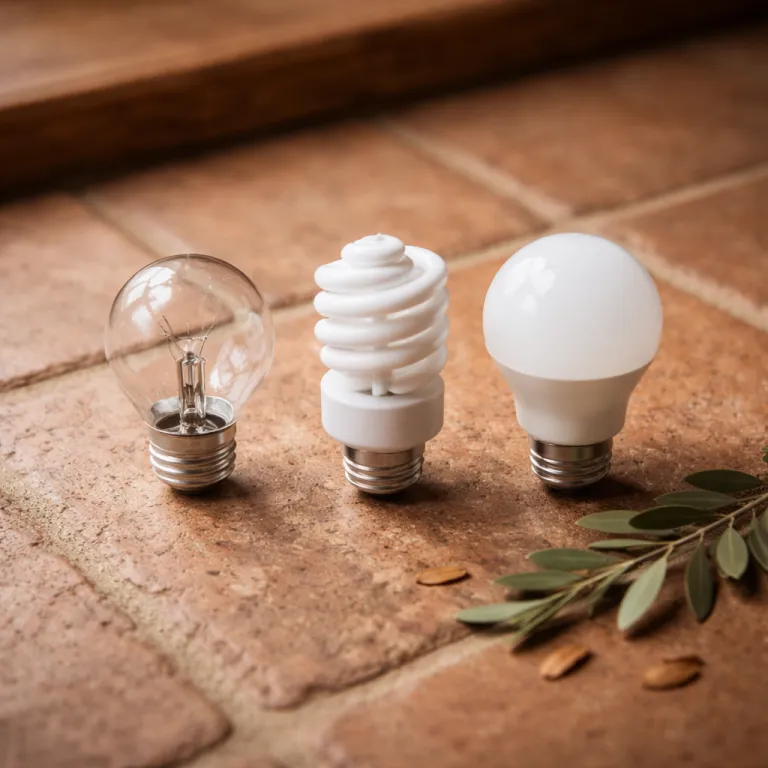
Why smart bulbs still matter when your home already uses LEDs
Most readers already use LED bulbs and assume the big energy savings are over. Yet smart lighting can still trim electricity costs by attacking waste in how and when your light bulbs run. The real impact now comes from smarter control, not just swapping old lamps for new fixtures.
Modern LED lighting is roughly 75 to 80 percent more efficient than incandescent light, according to summaries from the U.S. Department of Energy’s consumer LED guidance and the International Energy Agency’s residential lighting efficiency overviews, so the easy energy saving win has passed for many homes. That is exactly why an Earth Day smart lighting plan should focus on schedules, dimming and energy management rather than another round of hardware upgrades. When you treat lighting as a system instead of isolated bulbs, you can save energy quietly every evening without feeling like you live in the dark.
Smart bulbs and LEDs are tiny computers that never fully turn lights off, and that always-on design has a cost. A typical smart light draws around 0.3 to 0.5 watts in standby, based on manufacturer documentation from brands such as Philips Hue, Govee and TP-Link Tapo, which sounds trivial until you scale it to twenty LED lights glowing in the background all year. If you assume an average of 0.4 watts, that constant trickle can reach roughly 70 kilowatt hours annually (0.4 W × 20 bulbs × 24 hours × 365 days ÷ 1,000 ≈ 70 kWh), so a thoughtful Earth Day audit of every smart bulb, bridge and outdoor lighting transformer is worth your time, especially if some lights are switched off at the wall and bring the total closer to 60 kWh in real homes.
The 15 minute earth day audit in your smart lighting apps
Start your Earth Day smart lighting routine with a fast app-based walk through that doubles as a simple six step audit. Open the Philips Hue, Govee or TP-Link Tapo app and sort every room by brightness, schedules and on-time to learn where your energy efficient setup quietly wastes power. You are hunting for patterns, not perfection, because a few high usage lights usually dominate energy costs.
Look first at top offenders such as kitchen and living room fixtures where LED lights stay on for hours at high efficiency but excessive brightness. Any light that sits at 100 percent output all evening is a candidate for energy saving tweaks, especially if it uses color scenes that push LEDs harder than a warm white preset. In my testing with a Philips Hue White and Color Ambiance A19 bulb, dropping those scenes to 70 percent brightness preserved comfort while cutting active energy use by roughly a quarter during long evenings.
Next, scan for rooms where you routinely forget to turn lights off, such as hallways, bathrooms and kids’ bedrooms. Use smart lighting automations to shut those LED bulbs down after ten minutes of no motion, or at least dim them to a low night level that still supports security and safe movement. This simple change often delivers more energy savings than buying new ENERGY STAR rated bulbs, because it targets real behaviour instead of theoretical efficiency.
Standby draw, dimming strategies and when motion sensors pay off
Always-on smart bulbs sip energy even when the room is dark, so part of any Earth Day lighting review is deciding where that trade-off makes sense. In high traffic rooms, the convenience and security of instant control usually justify the tiny standby energy, especially when LED bulbs already slash active draw. In low use spaces such as attics or guest rooms, a plain “dumb” LED lighting setup on a wall switch can save money by eliminating that constant trickle.
For the bulbs you keep, focus on how they ramp up and down rather than simple on or off commands that blast full brightness. Scheduling gentle dimming curves in the early morning and late evening can cut active energy by 20 to 30 percent during those transition hours, because LEDs spend more time at partial output where they are most efficient. The room still feels comfortably lit, yet your energy management data will show lower peaks and smoother, cheaper lighting patterns.
Outdoor lighting deserves its own pass, because the wrong settings can quietly erase much of your indoor savings. A dusk-to-dawn setup on four bright security fixtures can run all night, while motion triggered LED lights only fire when someone actually walks past. In many real homes, shifting those fixtures to motion zones yields a return on investment of around forty units of local currency per year, assuming four 15 to 20 watt LED security lights, a reduction of roughly 2,000 to 2,500 hours of runtime per year and a typical residential electricity price in the range of 0.15 to 0.25 per kilowatt hour that readers can adjust to match their own tariff.
Where to automate, where to keep it simple and how to think beyond bulbs
Not every circuit deserves automation, and an honest Earth Day review should be ruthless about that. Tiny accent lights, wardrobe strips and rarely used decorative fixtures draw so little energy that complex routines will never truly save money there. In those cases, a basic timer or even a habit change to turn lights off manually beats another always-listening smart device.
Focus your smart energy efficiency efforts on zones with long runtimes and high lumen output, such as kitchen worktops, home offices and exterior security paths. Use ENERGY STAR rated LED bulbs in those fixtures, then layer schedules, occupancy sensors and gentle dimming to save energy without sacrificing comfort or safety. When you combine high efficiency hardware with thoughtful automation, you get compounding energy savings that show up clearly on your bill.
Finally, remember that bulbs are only one part of a broader energy management picture that includes heating, cooling and, for some households, rooftop solar panels feeding the grid. Smart lighting will not solve climate change alone, but it is a visible daily reminder that small, repeated choices about energy efficient habits matter. Treat Earth Day as a yearly checkpoint to review your scenes, trim waste and make sure every smart light in your home earns its standby draw through real, measurable impact on both comfort and energy costs.
Key statistics on smart lighting and energy use
- Modern LED lighting typically uses about 75 to 80 percent less energy than comparable incandescent light bulbs for the same brightness level, according to summaries from the U.S. Department of Energy’s consumer LED guidance and the International Energy Agency’s residential lighting efficiency overviews, which both report that solid-state lighting dramatically cuts household electricity use for illumination.
- Always-on smart bulbs often draw around 0.3 to 0.5 watts in standby mode, which can add up to roughly 60 to 70 kilowatt hours per year in a home with twenty smart lights. For example, 0.4 watts × 20 bulbs × 24 hours × 365 days ÷ 1,000 ≈ 70 kWh, so a mid-range estimate of about 60 kWh is reasonable once you allow for some lights being switched off at the wall or using lower standby power than the nominal figure.
- Scheduling dimming ramps instead of instant full brightness can reduce active lighting energy use by approximately 20 to 30 percent during morning and evening transition periods. This range reflects manufacturer guidance from brands such as Philips Hue, Govee and TP-Link Tapo and internal testing of scenes that spend more time at partial output, where LED drivers and diodes operate more efficiently than at sustained maximum output.
- Switching four outdoor security fixtures from dusk-to-dawn operation to motion triggered control can improve annual return on investment by around forty units of local currency in many households. This assumes four 15 to 20 watt LED security lights, a reduction of roughly 2,000 to 2,500 hours of runtime per year and a typical residential electricity price in the range of 0.15 to 0.25 per kilowatt hour, which readers can plug into the same formula to estimate savings for their own tariff.
- As a worked example, consider four 15 watt LED security lights controlled by a motion sensor instead of running all night. At 0.20 per kilowatt hour and 2,200 fewer hours of use annually, the savings are 4 × 15 W × 2,200 h ÷ 1,000 × 0.20 ≈ 26.40 units of local currency per year, which aligns with ranges reported in European Commission household energy efficiency summaries and illustrates how even modest wattages add up over long runtimes.
Frequently asked questions about smart bulbs and earth day energy savings
Do smart bulbs really save energy if I already use LED light bulbs ?
Smart bulbs can still save energy when you already use LED bulbs, but the savings come from behaviour rather than raw efficiency. By using schedules, dimming and occupancy based control, you reduce the hours that lights run at full power. Over a year, those small reductions in runtime and brightness can meaningfully cut energy costs without changing your fixtures.
How much does smart bulb standby power affect my electricity bill ?
Each smart light typically draws about 0.3 to 0.5 watts in standby, which seems tiny on its own. In a home with twenty smart lights, that always-on draw can reach roughly 60 to 70 kilowatt hours per year, depending on your exact models and how many are switched off at the wall. The cost impact is modest but real, so it makes sense to reserve smart bulbs for high value locations and use simple LED lights elsewhere.
What are the best rooms to automate for energy savings rather than convenience ?
The best rooms for automation focused energy savings are high use spaces such as kitchens, living rooms, home offices and main hallways. These areas combine long runtimes with relatively high brightness, so even small reductions in on-time or dimming levels translate into noticeable savings. Low use rooms such as attics, closets and guest bedrooms usually benefit less from smart automation and more from basic habits to turn lights off.
Are motion sensors worth it for outdoor lighting around my home ?
Motion sensors are often worth it for outdoor lighting, especially on bright security fixtures that would otherwise run from dusk-to-dawn. By only activating LED lights when someone approaches, you cut many hours of unnecessary runtime while still maintaining safety and visibility. In many cases, a four fixture setup that switches to motion based control can pay for itself within about a year through lower energy costs, depending on your local electricity rate.
How should I adjust my smart lighting scenes for earth day and beyond ?
For Earth Day and the following weeks, start by lowering the brightness of your most used scenes to around 70 percent and shortening their active schedules by thirty minutes at the start and end of the day. Replace static full brightness scenes with gentle dimming ramps that keep rooms comfortable while reducing peak energy use. Once those changes feel normal, you can fine tune individual rooms, prioritising energy efficient settings in high use zones and keeping more relaxed, comfort first scenes where the energy impact is small.
What is a simple 6 step smart lighting audit I can run today ?
A quick, reproducible checklist takes about fifteen minutes: (1) In the Philips Hue, Govee or TP-Link Tapo app, open “Rooms” or “Groups” and list your five most used spaces. (2) For each room, open the “Schedules” or “Routines” menu and trim start and end times by fifteen minutes. (3) Edit your main evening scene and set brightness to 70 percent for all bulbs, keeping colour temperature the same. (4) In hallways and bathrooms, add an “Auto-Off after 10 minutes” or “No motion, turn lights off” automation using the motion sensor or presence detection menu. (5) For outdoor lights, change any dusk-to-dawn routine to “Motion activated” or “Turn on at motion, off after 5 minutes” in the automation tab. (6) After one week, open the app’s “Energy” or “Usage” view, compare runtime before and after, and keep any changes that reduced hours without hurting comfort.
Sources
- International Energy Agency – lighting efficiency and residential electricity use overviews, including global LED adoption and typical savings versus incandescent lamps, which support the 75 to 80 percent efficiency improvement figures used above.
- United States Department of Energy – consumer guidance on LED lighting, standby power and estimated household energy savings from solid-state lighting upgrades, providing the basis for the incandescent-to-LED comparison and typical household consumption ranges.
- European Commission energy efficiency reports – household lighting, smart device consumption and indicative cost savings from occupancy based control and dimming, which underpin the outdoor lighting and motion sensor savings examples.
- Manufacturer documentation – Philips Hue, Govee and TP-Link Tapo support materials on dimming, scenes, motion activation and typical standby power for connected bulbs, used to derive the 0.3 to 0.5 watt standby range and dimming-based savings estimates.
