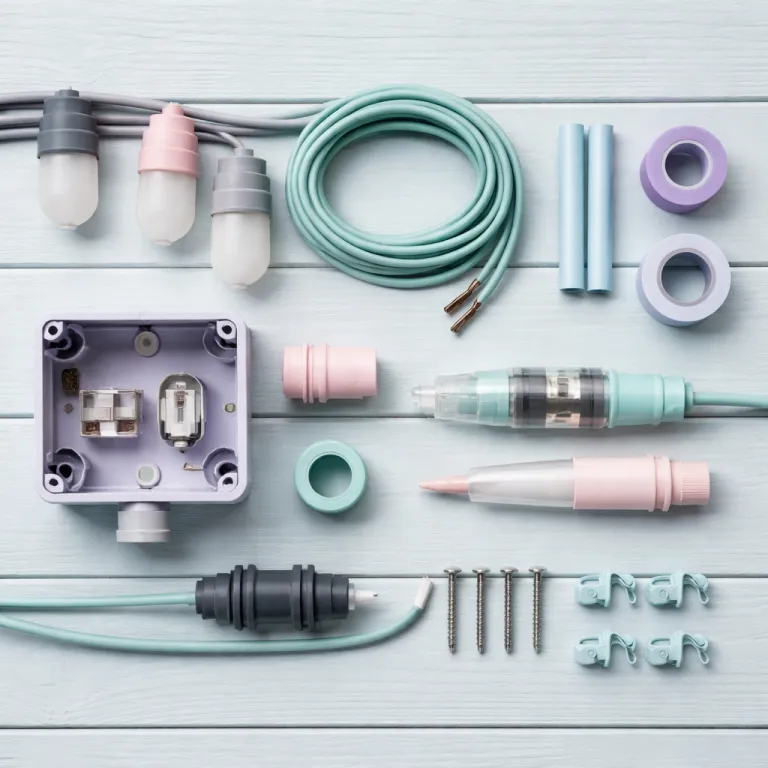
Planning an outdoor patio smart lighting summer install that will not fail in rain
Most outdoor patio smart lighting projects fail at the planning stage. People focus on pretty lights and color options, while the real problems come from water, wind and your electrical panel. If you want connected lights that keep your patio and backyard bright through an August thunderstorm, you must design the whole exterior area as a weather system, not a showroom.
Start by mapping every path, garden edge, fire pit zone and outdoor dining area where you need light. Then decide which areas truly require wired outdoor smart fixtures and which can rely on solar path lights, especially along a long walkway far from outlets. Treat your patio, covered patio and adjacent living space as one connected outdoor zone, so the string lights and pathway lighting work together instead of fighting for power and Wi‑Fi.
For a reliable summer installation, match every fixture to its real exposure. Use IP65 outdoor string lights or any robust weatherproof strand over open patio zones where soaking rain and wind are normal. Reserve IP44 rated lights for a covered patio or under deep eaves, because those lights tolerate splashes but not direct, driving rain that can leave your patio dark at the worst moment, as shown in typical IP rating tables from major lighting manufacturers.
IP ratings, GFCI trips and the wiring details that keep lights on
IP ratings look like dry technical jargon, yet they decide whether your outdoor patio smart lighting summer install survives the first storm. IP65 string lights and outdoor smart fixtures handle dust and low pressure water jets, which means they are safe for exposed pergolas and open patio beams. IP67 path lights near a pool or garden border can survive brief submersion in puddles, making them the best option for low spots along a path where water collects, as shown in typical manufacturer datasheets for IP67 landscape fixtures.
By contrast, IP44 rated lights belong only on a covered patio or under a balcony, where rain hits the ground but not the fixture. Many homeowners mount IP44 string lights across an uncovered patio, then blame the smart lighting when the GFCI outlet trips after every storm. The real failure is mismatched protection, not the light itself, and a careful layout avoids that trap.
The GFCI trip problem deserves more attention than any glossy advertisement for new lights. Most outdoor circuits share loads with pumps, outdoor furniture outlets and even garage tools, so a single surge or bit of moisture can darken your entire outdoor space. A dedicated outdoor circuit, weather rated in‑use covers and proper drip loops on every string light connection dramatically reduce nuisance trips and keep your white light or warm white scenes stable during heavy rain, as explained in National Electrical Code (NEC) Article 210.8 on GFCI protection and Article 314 on weatherproof boxes, and summarized in many electrician training guides.

String lights, mounting hardware and wireless protocols that survive summer storms
Once the wiring is safe, the next weak point in any outdoor patio smart lighting summer install is how you hang the string lights. Staples driven straight into wood look tidy on day one, but they cut into the insulation of each string light and create tiny water entry points that grow with every storm. A better method is to run a stainless steel cable across the patio or backyard, then attach each outdoor string light with UV resistant zip ties that flex in the wind.
This cable‑first approach keeps mechanical stress off the electrical conductors, so your lights and smart controllers last more than one summer. It also lets you adjust spacing, add extra string lights or swap in a different color temperature or white light option without re‑drilling the entire patio structure. For a mixed layout, run one line of warm white outdoor string lights over the outdoor dining table, another line of color capable smart lighting over the fire pit, and a third subtle line of white light along the garden edge to frame the outdoor space.
Wireless control matters as much as mounting when storms roll through. Wi‑Fi based outdoor smart bulbs reach far across a backyard with a good mesh router, but 5 GHz signals attenuate more quickly through walls and foliage than 2.4 GHz, especially in large lots, according to vendor range tests from major router manufacturers. Zigbee based path lights and pathway lights, especially when paired with a dedicated outdoor hub and repeaters, form a mesh that usually outperforms Wi‑Fi for reliability, and you can compare several top smart outdoor lights in curated roundups such as this expert selection of outdoor smart lighting.
Solar, schedules and fail safe automation for a storm ready patio
Solar lights tempt many buyers during an outdoor patio smart lighting summer install, because the idea of free energy feels like the best option. In practice, solar pathway lights work well along open garden borders and the far end of a path, where direct sun hits the panel for most of the day. They perform poorly under trees, next to tall outdoor furniture or deep in a covered patio, where shade keeps the battery from charging and leaves your path dark just when guests arrive.
Use solar only where the panel sees clear sky and where you do not depend on precise schedules for outdoor dining or security. For critical zones such as the main patio, the fire pit seating area and the transition from indoor living space to outdoor space, hard wired or low voltage energy efficient lights controlled by a smart hub remain the top choice. Pair them with voice control through Alexa or Google style assistants, but never rely solely on voice for safety lighting ideas.
The final layer is automation that fails safe instead of failing silently. Program your outdoor smart system so that if routines or cloud services fail, every key path light and essential string light defaults to turning on at dusk for at least one hour. That way, even if a thunderstorm knocks out Wi‑Fi or a cloud scene, your patio, garden and backyard stay safely lit in warm white or neutral white light, and you can still enjoy the evening while more advanced features such as color scenes wait for calmer weather, with more detail on robust bulb choices in resources like this in depth smart bulb comparison.
FAQ
How do I choose the right IP rating for patio lights ?
Match the IP rating to the real exposure of each light. Use IP65 or higher for exposed string lights and outdoor smart fixtures that see direct rain and wind. Reserve IP44 for a covered patio or sheltered outdoor dining area where water only splashes, never pours directly onto the housing, following typical guidance from IP rating charts in lighting manufacturer catalogs.
Why do my outdoor smart lights keep tripping the GFCI during storms ?
Frequent GFCI trips usually point to moisture in connections or an overloaded shared circuit. Check every plug, extension and string light junction for proper weatherproof covers and drip loops that route water away from outlets. If trips continue, ask an electrician about a dedicated outdoor circuit for your patio and path lights, installed in line with NEC requirements for outdoor branch circuits.
Are solar lights good enough for main patio lighting in summer ?
Solar lights work best for secondary tasks such as marking a garden edge or outlining a path far from power. For a main patio, especially where you host outdoor dining or gather around a fire pit, solar often underperforms after cloudy days. Hard wired or low voltage energy efficient fixtures provide more consistent white light or warm white illumination for real entertaining.
Should I use Wi-Fi or Zigbee for outdoor smart lighting control ?
Wi‑Fi smart bulbs are simple to set up and can reach across a small backyard with a strong router. In larger outdoor spaces or where structures and trees block higher‑frequency signals, Zigbee path lights and string lights connected through a hub usually offer more stable control. A mixed approach works well, with Zigbee for always‑on path lights and Wi‑Fi for decorative color scenes.
How can I keep my patio from going dark if automations fail ?
Set a backup schedule inside your smart lighting app that turns key lights on at dusk, even if cloud routines fail. Prioritize every path light, the main patio string lights and fixtures near doors for this fail safe rule. This way, your outdoor space remains usable and safe during a thunderstorm, even when advanced scenes or voice control misbehave.