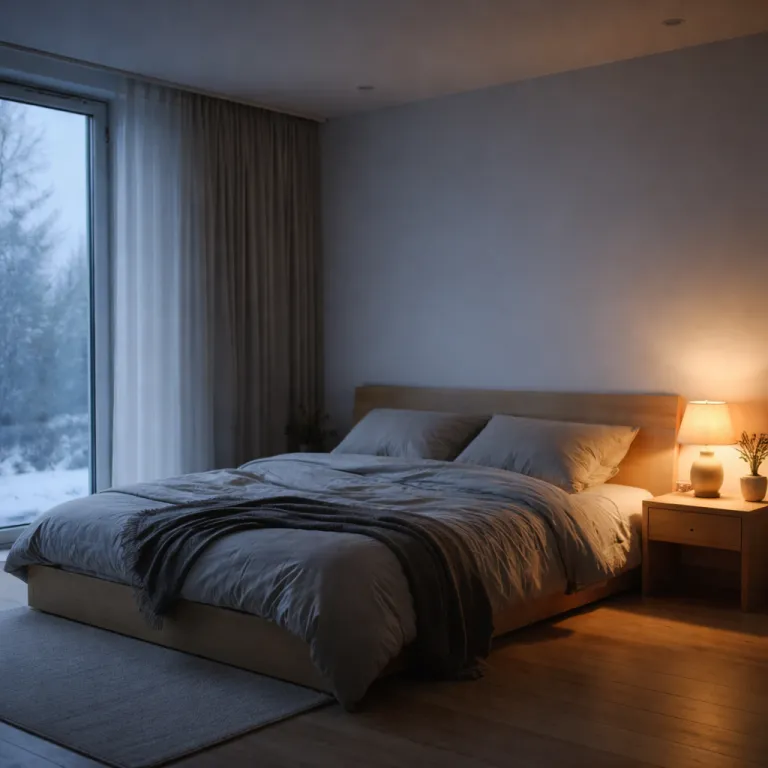
Why circadian lighting smart bulbs matter for real sleep
Most people buy a smart bulb for convenience, not for sleep. Yet the same smart light that responds to your voice can quietly reshape your circadian rhythm and change how quickly your body winds down at night. When you treat lighting as part of a wellness-focused system instead of a gadget, the benefits for sleep and evening relaxation become much more tangible.
Melatonin suppression is the key concept behind circadian-friendly smart lighting for sleep, and it describes how much a given light level and color temperature delay your body’s natural release of the sleep hormone. Laboratory work from Harvard and other groups shows that bright, cool white light in the evening can suppress melatonin by 30–50% compared with dim, warm light at the same time. In practical terms, a typical cool LED bulb around 5700 K at several hundred lux at eye level can noticeably reduce melatonin compared with very warm amber light near 2100 K kept below roughly 30 lux, which has a far smaller effect. That is why a bright white light bulb in the bedroom at the wrong time can keep you mentally “on” long after your day should be over.
For a tech-savvy buyer in the United States running Alexa, Google, or another voice assistant, the practical question is not whether circadian lighting works, but how to use smart bulbs and smart LED strips to get most of the benefit without rebuilding the whole house. The answer is to focus on a few high-impact rooms, then use smart lighting control to change color and intensity automatically instead of relying on willpower. Treat your bedroom and living room as the best test beds, because those are where blue light exposure from screens and bright white light bulbs most often collides with your intended sleep schedule.
The three daily settings that do most of the circadian work
You do not need a lab-grade lighting system to support your circadian rhythm. In practice, three simple smart light scenes handle most of what your body needs from circadian lighting smart bulbs sleep routines. Think of them as morning focus, afternoon cruise, and evening wind down, each with its own color temperature and intensity target.
Right after you wake up, aim for a bright, neutral white light around 4500 K from your smart bulbs, which tells your body that the day has started and helps shut down residual melatonin. Many sleep researchers suggest at least 250–500 lux at eye level in the first hours after waking, which you can roughly check with a free lux meter app by holding your phone at face height. By early afternoon, shifting your smart LED bulbs to roughly 3500 K keeps you alert without the harshness of office-style white light, especially if you work from home and sit under the same light bulb for many hours. After about 20.00, most adults sleep better when their smart lighting drifts into the 2200 to 2700 K range, which feels like warm candlelight and dramatically cuts blue light content while keeping melanopic lux low enough that melatonin can rise.
Modern smart bulb apps make these three scenes easy to program, whether you buy from Amazon or a specialist retailer. Philips Hue Natural Light and Govee DaySync both promise adaptive circadian lighting, but you can manually recreate their core behavior with fixed scenes and simple time-based control. If you want to go deeper into wellness-oriented smart lighting, pairing these scenes with targeted light therapy tools such as bright white light panels or even niche options like specialized LED smart lighting experiences can fine-tune your day, though they are optional for most households.
Adaptive circadian modes versus fixed scenes in real homes
Adaptive circadian lighting sounds magical when you read the marketing copy. Systems such as Philips Hue Natural Light and Govee DaySync promise to track the sun, shift color temperature automatically, and keep your body aligned with the natural day–night cycle. In practice, fixed tunable white scenes usually beat these adaptive modes for most busy households.
The reason is simple: your schedule rarely matches the theoretical solar curve that many smart lighting systems try to follow. If you work late, travel across the United States, or share a living room with gamers who blast full-color scenes at night, a slow automatic drift in color will not protect your sleep. Clear, time-boxed scenes that snap your smart bulbs from cool white light to warm amber at specific times give your circadian rhythm a stronger, more predictable signal.
Adaptive modes still have a place, especially in home offices where LED bulbs stay on all day and you want gentle shifts in color temperature without thinking about it. I have run Hue Natural Light on a desk lamp and a ceiling smart bulb for months, and the gradual change in lighting intensity feels pleasant, though I still override it with a dedicated evening scene for strict blue light control. If you are curious about more advanced layouts, track-based smart lighting with tunable white light bulbs, as explained in this guide to bulb track lighting for smart homes, can layer task light, ambient light, and circadian-friendly scenes in the same room.
Practical setup: two automations, three scenes, and the right hardware
Building a circadian lighting smart bulbs sleep setup over a weekend is realistic if you keep the design simple. Start by choosing a reliable smart bulb ecosystem that supports tunable white and, ideally, full color for flexibility, whether that is Philips Hue, Govee, Nanoleaf, or another brand with a mature app. Prioritize LED bulbs rated for at least 800 lumens so your morning and day scenes can reach sufficient intensity without pushing the lighting system to its limits.
Next, create three core scenes in your smart lighting app: morning at 4500 K with high brightness, afternoon at 3500 K with medium intensity, and evening at 2200 to 2700 K with low brightness and minimal blue light. Then add just two automations per room, one that turns on the morning scene at your usual wake time and another that forces the evening scene after your chosen cutoff, even if someone has set a bright full-color party mode. This simple control pattern works well with voice assistants such as Alexa, Google, because you can still call up ad hoc scenes, but the system always snaps back to sleep-friendly lighting at the right time.
Hardware placement matters as much as the smart features, so put your most circadian-critical smart bulbs in fixtures that shine directly into your field of view during the evening. A ceiling light bulb in the bedroom, a floor lamp behind the sofa, and a desk lamp in the home office usually cover the main exposure points for your body. If outside light still floods the room even with warm bulbs on, that is a sign to add blackout curtains or at least heavier blinds so your eyes see a consistently dark, low-lux environment. If you later want more advanced options like panel-based smart light with both white light and color effects, products similar to the Datura smart panel described in this square smart panel light review can slot into the same circadian lighting plan.
Limits of circadian smart bulbs and who should skip complex setups
Even the best circadian lighting smart bulbs sleep configuration cannot fix everything that sabotages your rest. Bright phone screens, late caffeine, street light leaking around thin curtains, and irregular bedtimes all push against the same circadian rhythm that your smart LED bulbs are trying to support. Think of smart lighting as one tool in a broader light therapy and sleep hygiene toolkit, not as a cure-all.
Shift workers and households with chaotic schedules often do better with a very simple rule: warm amber light after a chosen cutoff, regardless of the clock or the sun. In those cases, a fixed 2200 K scene on every smart bulb used after dark gives your body a consistent signal, even if your day starts at 3.00 in the morning. Adaptive circadian lighting modes that track local sunrise and sunset can actually confuse your internal clock when your sleep window floats across the calendar.
There are also aesthetic and comfort limits, because not everyone enjoys extremely warm color temperatures in living spaces. Some people prefer a slightly cooler white light in kitchens and bathrooms, then rely on bedroom smart bulbs for the most aggressive blue light reduction. When you balance design preferences, app complexity, and real-world behavior, the goal is not perfect biological alignment but a lighting system that quietly nudges you toward better sleep while still feeling like your home, not a lab full of LED smart fixtures and clinical light bulbs.
FAQ: circadian lighting smart bulbs and sleep
How do circadian smart bulbs actually improve sleep quality ?
Circadian smart bulbs improve sleep by changing color temperature and intensity across the day to better match your body’s internal clock. Cooler, brighter light in the morning suppresses melatonin and helps you feel alert, while warmer, dimmer light in the evening reduces blue light and lets melatonin rise. Controlled studies on light timing and color have linked this kind of circadian lighting to measurable improvements in sleep quality, especially when combined with consistent bedtimes and reduced late-night screen exposure.
Do I need full color smart bulbs, or are tunable white bulbs enough ?
Tunable white smart bulbs that shift between cool and warm white light are enough for most circadian lighting smart bulbs sleep setups. Full-color bulbs add flexibility for entertainment scenes and accent lighting, but they do not inherently improve your circadian rhythm beyond what a good warm white evening scene already provides. If you are on a budget, prioritize reliable tunable white LED bulbs in key fixtures before adding decorative full-color smart light elsewhere.
Can circadian lighting replace blackout curtains or screen limits ?
No, circadian lighting cannot compensate for strong external light sources or heavy late-night screen use. Smart lighting helps by reducing indoor blue light exposure from light bulbs, but your phone, tablet, and street lighting still reach your eyes and influence your body clock. For the best results, combine warm evening smart bulbs with blackout curtains and reduced screen brightness or blue light filters in the last hour before bed.
Which rooms should I prioritize for circadian smart bulbs ?
Start with the bedroom, then the main evening living space such as a living room or den. These are the rooms where your body spends the most time under artificial light in the hours before sleep, so circadian lighting changes have the biggest impact. Home offices and kitchens come next, especially if you work late or rely on bright LED bulbs there during the early morning and evening.
Are adaptive circadian modes worth paying extra for ?
Adaptive modes such as Philips Hue Natural Light and Govee DaySync are worth paying for if you value automatic, gradual shifts and do not want to manage scenes manually. They shine in spaces where lights stay on all day, like home offices, and where a smooth change in color temperature feels more natural than abrupt scene changes. However, many households get similar sleep benefits from simple fixed scenes and two time-based automations per room, using more affordable smart bulbs.
