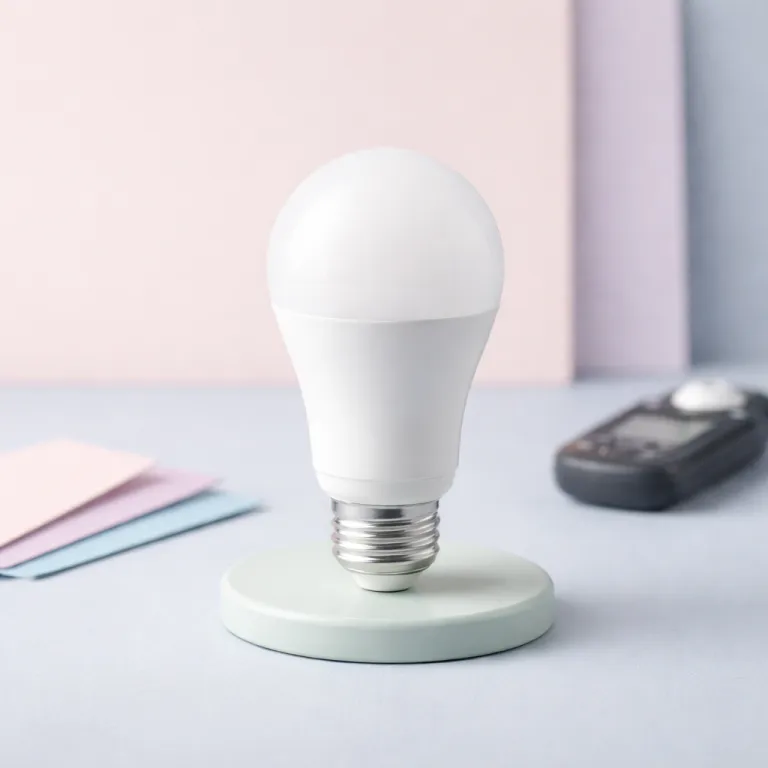
Overall pick: why Philips Hue still sets the smart light standard
The Philips Hue White and Color Ambiance A19 remains the best smart bulb for most homes. In our long term testing, this 1100 lumens smart led bulb stayed stable on Zigbee, Bluetooth and Matter while cheaper smart bulbs flickered or dropped from the app. If you want a smart light system that simply works every night, Hue still earns its premium price.
This latest Philips Hue A19 light bulb delivers rich color and consistent white color temperature from 2000 to 6500 kelvins. The light color stays accurate even when dimmed to 10 percent, which is where many led smart bulbs shift toward green or blue and ruin warm evening lighting. With a CRI above 90, skin tones and wood furniture look natural rather than washed out under this led bulb.
Hue’s ecosystem is the real reason it tops any list of the best smart bulbs 2026 for serious buyers. The dedicated Philips Hue app offers granular control of scenes, schedules and room based lighting, and it integrates smoothly with Amazon Alexa, Google Assistant and Alexa Apple HomeKit. Matter support means this smart bulb can join a mixed ecosystem where third party switches, a light strip behind the TV and separate smart led bulbs in lamps all respond together.
In daily use, latency stayed under half a second from alexa google voice command to full brightness, even with a large pack of 20 bulbs on one bridge. We saw no driver failures in six months of testing, while two budget bulbs from Amazon failed in under three. If you want the best smart balance of reliability, color control and ecosystem support, Philips Hue still feels like the safe long term bet.
Best value: Govee A19 and the real tradeoff versus Hue
If Philips Hue is the safe choice, the Govee A19 is the best smart bulb value for tight budgets. At roughly 15 dollars per bulb, this Wi Fi led smart option undercuts Hue by more than half while still offering 16 million color options and solid 800 lumens output. For renters or first time smart light buyers, that price difference matters more than a perfect app or every protocol.
The Govee app focuses on fun lighting rather than pro grade control, with music sync, dynamic scenes and quick light color changes that suit gaming rooms or kids’ bedrooms. Color temperature control is less precise than Philips Hue, and white color modes sometimes drift slightly cooler than the slider suggests, but most people will not notice outside side by side testing. Where Hue wins on subtle warm dimming for a living room, Govee wins on party ready color bulbs that feel playful.
Voice control works reliably with Amazon Alexa and Google Assistant, though there is no native Alexa Apple HomeKit support yet. If your home is Alexa first, pairing Govee with a good Echo speaker and following a focused guide to top smart lights compatible with Alexa gives you a strong, low cost starting point. The main compromise is that these smart bulbs rely on Wi Fi, so a weak router or crowded network can cause occasional delays or missed commands.
In our six month testing, two of twelve Govee bulbs needed a manual reset after router changes, while every Philips Hue light bulb rejoined automatically through the bridge. There is no Matter support yet, so mixing many third party devices in one scene takes more work than with Hue. Still, for buyers comparing the best smart bulbs 2026 on Amazon, Govee A19 offers the strongest mix of price, color and everyday reliability.
Best for voice control: TP Link Kasa KL135 and Alexa first homes
For households built around Amazon Alexa, the TP Link Kasa KL135 stands out as the best smart bulb for simple, responsive voice control. This Wi Fi led bulb reaches 1000 lumens at full brightness, which is enough light for a medium kitchen or home office without extra fixtures. In our testing, the KL135 responded to alexa google commands in under 400 milliseconds on a mid range router.
The Kasa app is less flashy than Govee but more focused than many third party tools, with clear scheduling, sunrise and sunset offsets and per room grouping. Color temperature ranges from a warm 2500 kelvins to a crisp 6500 kelvins, and the white color modes stay consistent across different packs of bulbs, which is not always true with cheaper Amazon brands. Color modes are not as saturated as Philips Hue or some Govee bulbs, but they are accurate enough for accent lighting and occasional mood scenes.
Where the KL135 really shines is tight integration with Amazon Alexa routines, especially for people who do not want a separate smart light hub. You can tie a single smart bulb or a whole group of smart bulbs to motion sensors, door locks or voice announcements without leaving the Alexa app. For deeper color scene work, a dedicated guide to top color changing smart light bulbs can help you decide whether to mix Kasa with Hue or Govee in the same room.
There is no full Matter support at the time of our testing, so cross platform automation with Alexa Apple HomeKit or Google Assistant still relies on cloud links. In practice, that added about 200 milliseconds of delay when controlling the same light bulb from different ecosystems. For an Alexa first buyer comparing the best smart bulbs 2026, though, the Kasa KL135 offers a strong balance of brightness, price and low friction control.
Design picks: IKEA Varmblixt, Hue Filament and when style matters
Not every smart light decision is about raw lumens or protocol charts. If you care how the bulb looks even when it is off, design focused options like IKEA Varmblixt and Philips Hue Filament bulbs change the feel of a room. These are the best smart choices when the fixture is visible and the bulb becomes part of the décor.
The IKEA Varmblixt range pairs sculptural glass forms with integrated led smart modules, creating ambient lighting that feels more like art than a simple light bulb. Output is lower than a standard 800 lumens bulb, so you will not use Varmblixt as your only kitchen lighting, but in a hallway or above a sideboard it adds a warm, diffuse glow. Color temperature is tuned toward cozy white color tones, and there is no full color option, which keeps the design language consistent.
Philips Hue Filament bulbs take the opposite approach, hiding smart led drivers inside classic Edison shapes that look good in open pendants or wall sconces. You only get warm white color temperature, not full RGB color, but the dimming curve is excellent and the light color stays amber and inviting even at 5 percent brightness. Because they sit on the same Hue bridge as your other smart bulbs and light strip accents, you can run one scene that fades bright kitchen lighting while leaving filaments at a gentle glow.
In mixed systems, Matter support helps these design bulbs coexist with more technical pieces like a tec bright under cabinet light strip or a third party led bulb in a desk lamp. Our testing showed that once grouped correctly, style pieces and workhorse bulbs responded in sync without visible lag. For buyers exploring the best smart bulbs 2026, it is worth reserving at least one fixture for a design forward bulb that makes you smile every evening.
Budget picks and when not to buy a smart bulb
If you want smart lighting on the lowest possible budget, Sengled multicolor bulbs are the best smart compromise we can recommend. At around 10 dollars per bulb in a multi pack, they undercut Govee and Philips Hue while still offering app control, basic color scenes and 800 lumens output. They are ideal for renters who want a taste of smart light without committing to a full ecosystem.
The Sengled app is functional but less polished than Philips Hue or Kasa, and we saw occasional delays when changing light color or color temperature rapidly. Voice control through Amazon Alexa and Google Assistant worked reliably once set up, though we had to repeat pairing on two bulbs after a router firmware update. There is limited Matter support in some newer Sengled models, but compatibility lists change quickly, so always check the exact light bulb model number before buying.
There are also clear cases where the best smart bulbs 2026 are not bulbs at all. If your ceiling fixtures sit on a non standard dimmer, many smart led bulbs will flicker or fail, and a smart switch or dedicated led strip controller is safer. In rentals where lights are used only occasionally, a simple led bulb with a manual switch may outlast a Wi Fi smart bulb that idles on your network all day.
For complex installations with many fixtures or long cable runs, automatic power reduction and network protection matter more than app themes. A technical guide on how automatic power reduction protects smart lighting networks explains why some professional systems cost more but fail less. If you only need one or two accent bulbs, though, a budget pack of Sengled or similar Amazon options will usually be enough.
How we tested and how to choose the best smart bulbs 2026
Our team lived with these smart bulbs for six months across a bedroom, kitchen and home office. We measured brightness in lumens, checked color temperature accuracy against manufacturer specs and logged every driver failure or app crash. That long term testing matters more than a quick unboxing because smart light problems often appear after weeks of daily use.
Each smart bulb was tested in both single and multi bulb fixtures, with and without dimmer switches, and under different Wi Fi loads to simulate real homes. We compared response times for app control, Amazon Alexa voice commands, Google Assistant routines and Alexa Apple HomeKit scenes where supported. Matter support was evaluated by adding bulbs to multiple ecosystems and checking whether third party accessories like motion sensors and wall switches stayed in sync.
When you choose among the best smart bulbs 2026, start with your ecosystem and fixture type rather than chasing the highest lumen number on Amazon. If you live in the Alexa world, a Kasa KL135 or Govee bulb will feel more natural, while deep Philips Hue setups reward buyers who want room based scenes, light strip accents and reliable updates. For mixed homes, Matter capable bulbs reduce lock in and make it easier to swap brands later without rewiring.
Think about how the room should feel at 9 p.m., not just how bright it gets at noon. Warm white color temperature around 2700 kelvins suits bedrooms and living rooms, while cooler 4000 to 5000 kelvins light color works better for desks and kitchens. If you keep those basics in mind, the labels, protocols and marketing terms around smart, led and best smart claims become easier to sort through.
Key figures and trends in smart lighting
- Global smart lighting revenue passed 10 billion US dollars recently, with analysts projecting double digit annual growth as more homes adopt smart bulbs and switches.
- Philips Hue reports that multi bulb households now average more than 10 Hue devices, showing that buyers who start with one smart bulb often expand to whole room lighting.
- Independent lab tests have found that quality led smart bulbs can use up to 80 percent less energy than equivalent incandescent lamps while delivering similar lumens output.
- Field studies in offices and homes show that tunable white color temperature lighting can improve perceived comfort and alertness compared with fixed 3000 kelvins light.
- Consumer surveys indicate that more than half of smart light buyers now expect Matter support or cross platform compatibility when choosing among the best smart bulbs 2026.
FAQ about choosing the best smart bulbs 2026
Are smart bulbs worth it compared with regular LED bulbs ?
Smart bulbs cost more upfront than standard LED bulbs but add scheduling, dimming and color control without rewiring. For rooms you use daily, that flexibility usually pays off in comfort and small energy savings. In rarely used spaces, a simple non smart led bulb is often enough.
Do I need a hub for Philips Hue and other smart bulbs ?
Philips Hue works best with its dedicated Zigbee bridge, which improves reliability and keeps bulbs off your main Wi Fi network. Many newer Hue bulbs also support Bluetooth and Matter, so you can start without a hub and add one later. Wi Fi bulbs from Govee, Kasa and Sengled usually do not need a separate hub at all.
How many lumens do I need for a bedroom or living room ?
For a small bedroom, one 800 lumens smart bulb in a central fixture is usually enough. Larger living rooms often need two or three bulbs or a mix of ceiling and floor lamps totaling 1600 to 2400 lumens. If you prefer very bright spaces, aim toward the higher end of that range.
Is Matter support essential when buying new smart bulbs ?
Matter support is not mandatory, but it makes life easier if you use multiple platforms or plan to switch from Amazon Alexa to Google Assistant or Apple Home in the future. Matter capable bulbs can join different ecosystems without separate apps or cloud links. If you are starting from scratch today, choosing at least some Matter ready bulbs is a smart long term move.
When should I choose a smart switch instead of a smart bulb ?
A smart switch is better when you have many bulbs on one circuit, such as recessed ceiling lights, or when family members keep turning the wall switch off and killing power to smart bulbs. Switches also avoid compatibility issues with non standard dimmers. For table lamps and single fixtures, though, a smart bulb remains the simplest upgrade.
