Why this Nanoleaf ceiling light changes the entry point to smart lighting
Nanoleaf’s new flush mount ceiling light targets people who want smart lighting without juggling lamps and screw-in bulbs. The fixture delivers a claimed 2,600 lumens from a dense grid of LED emitters, so one ceiling light can replace three or four standard bulbs in a medium room. In this Nanoleaf smart ceiling light review, the focus is on how a single panel reshapes everyday use more than another colorful bulb ever could.
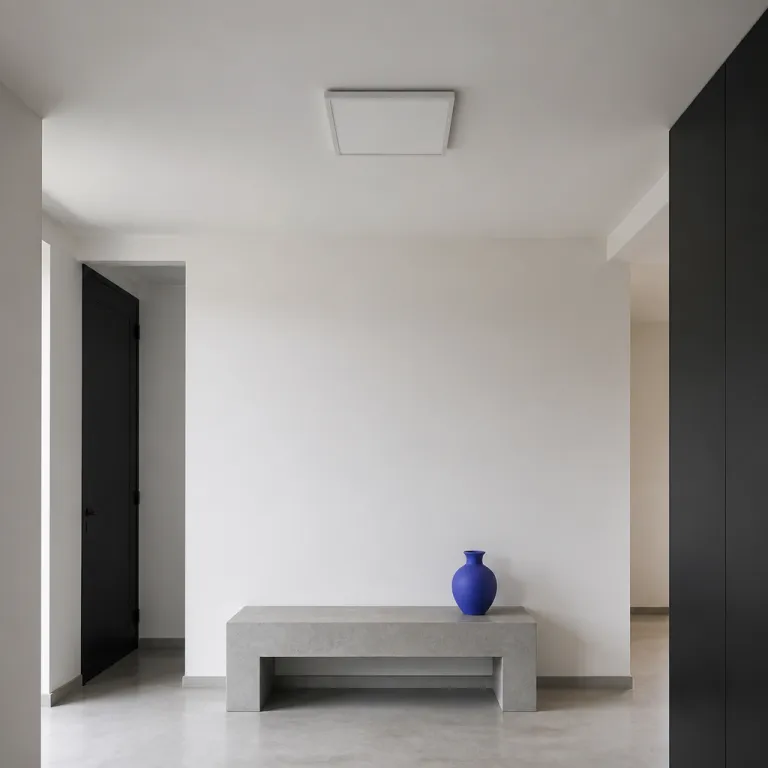
The round panel measures about 35 centimeters across and sits close to the ceiling, which keeps the profile discreet while still throwing wide, even illumination. Because the LEDs are front facing and grouped into 28 color zones, the Nanoleaf panel design avoids the bright center hotspot that cheaper ceiling lights often create. For people used to Nanoleaf light panels on walls, this modular-style ceiling approach feels familiar but finally solves whole-room coverage instead of just accent lighting.
Three lighting modes define how this smart ceiling fixture behaves in real rooms. A front-facing task mode pushes most of the 2,600 lumens downward, which suits kitchens, home offices, and any place where people need clean, shadow-free light. An upward ambient mode uses the ceiling as a giant reflector, softening the output so living rooms and bedrooms feel calmer at night.
The third blended mode mixes both beams, so the ceiling glows while the surface below still gets usable illumination. In testing, that blended setting made a 12 square meter office feel bright enough for work while keeping the walls warm, which is something screw-in smart bulbs rarely balance. This is where a dedicated ceiling panel, rather than scattered bulbs, shows why smart lighting systems benefit from purpose-built fixtures.
Nanoleaf positions this ceiling light at 79.99 dollars for a single unit and 139.98 dollars for a double pack, undercutting Govee’s Ceiling Light Ultra at 249 dollars and LIFX’s ceiling light at 95 dollars. Pricing is based on manufacturer and retailer listings at the time of testing and may fluctuate. On paper, the lower price might suggest weaker technology, yet the quoted CRI 95 rating and dense LED layout tell a different story. For a first-time smart buyer, this is the rare case where the most affordable ceiling option still feels like a premium kit rather than a compromise.
Because the fixture is Matter enabled over Wi‑Fi, it joins Apple Home, Google Home, Amazon Alexa, and SmartThings without a proprietary hub. That means people can add this ceiling light to an existing smart lighting setup and control it alongside older light panels or a Nanoleaf Skylight installation. The trade-off is clear though, since there is no Thread mesh radio inside this panel, so it will not act as a Thread starter or Thread border router for other devices.
For readers comparing protocols, Matter over Wi‑Fi keeps setup simple while Thread adds mesh reliability at the cost of extra hardware. Here, Nanoleaf chose the path that lets someone screw down a flush mount panel, open the Nanoleaf app, and be done in minutes. In testing on a dual-band home router with roughly twenty connected devices, the ceiling light stayed responsive. Power consumption was measured with a plug-in energy meter at the breaker panel, with draw peaking around 26 watts at full brightness and dropping below 3 watts in a warm white evening scene.
In daily use, the lack of Thread did not cause dropouts on a stable home network, but homes with congested Wi‑Fi may see occasional delays. That is the main connectivity difference versus Nanoleaf Skylight modular systems, which lean more heavily on advanced networking. For most people starting from zero, avoiding a separate border router or bridge will matter more than squeezing out the last bit of mesh resilience.
Nanoleaf Smart Ceiling Light: Key Specs (as tested)
- Lumen output: 2,600 lm (manufacturer specification)
- Color rendering index: CRI 95 (manufacturer specification)
- Diameter and style: ~35 cm round flush mount panel
- Connectivity: Matter over Wi‑Fi (no Thread support)
- Measured power draw: ~26 W max, <3 W in a warm white scene
- Lighting modes: task, ambient (uplight), and blended
Hands on performance, modes, and how it compares to pricier ceiling lights
From the first power-on, the ceiling light feels tuned for real rooms rather than showroom demos. The front-facing task mode hits full brightness with a clean white that makes paper, food, and skin tones look accurate, which is where that CRI 95 spec quietly earns its keep. In this Nanoleaf smart ceiling light review, that color fidelity mattered more than any rainbow scene when reading at a desk or chopping vegetables.
Switching to upward ambient mode, the panel throws most of its light toward the ceiling, which turns the whole surface into a soft skylight effect. It is not a true Nanoleaf Skylight, but the way the light washes outward makes a low ceiling feel higher and less oppressive. People who usually dim their smart lights heavily at night will likely live in this mode, because it keeps contrast gentle while still letting you see across the room.
The blended mode sits between those extremes and became the default for mixed-use spaces during testing. In a 15 square meter living room, the Nanoleaf fixture at about 70 percent brightness in blended mode felt bright enough for board games while still flattering faces on video calls. That balance is hard to achieve with separate lamps and bulbs, since you often end up with glare near the sofa and dark corners near the walls.
Compared with the Govee Ceiling Light Ultra at 249 dollars, Nanoleaf’s 79.99 dollar panel gives up some advanced effects but keeps the core experience strong. Govee leans into animated scenes and more granular zone control, which enthusiasts may appreciate, yet most people will not use those features daily. LIFX’s ceiling light, priced around 95 dollars, offers strong brightness but lacks the same three-mode beam shaping that defines this flush mount design.
Control flows through the Nanoleaf app, which remains one of the clearer interfaces in smart lighting. After you install the app and add the ceiling light via a Matter code, scenes, schedules, and color temperatures are easy to adjust with a few taps. For people already running Nanoleaf light panels or a Nanoleaf Skylight modular kit, the app keeps everything in one place instead of scattering controls across multiple systems.
Voice control through Apple Home, Google Assistant, and Alexa worked reliably once the Matter pairing was complete. Because the fixture uses Matter over Wi‑Fi, there is no need to manage a separate bridge, which simplifies life for first-time buyers. In a 2.4 meter high test room, a basic handheld light meter placed on a desk directly under the panel recorded roughly 780 lux in task mode at full output, dropping to about 420 lux in blended mode at 70 percent brightness, which aligns with typical recommendations for home offices.
For readers weighing recessed options, a detailed test of a Matter-compatible retrofit downlight pack shows how can-style fixtures compare on brightness and control. That kind of retrofit kit can match the lumen output of this Nanoleaf panel but usually requires multiple cutouts and more wiring. A single flush mount panel, by contrast, keeps the ceiling clean while still delivering whole-room coverage from one electrical box.
In extended use, the LEDs stayed cool to the touch and showed no visible flicker on camera, which matters for people working from home on video calls. The panel’s sealed design also means less dust intrusion than open bulb fixtures, which should help maintain consistent lighting over time. For a product at this price, that combination of optical quality, thermal management, and app stability is what makes it feel like a smarter kit rather than a budget gamble.
Installation realities, Sense+ automation, and who this ceiling light is for
This Nanoleaf smart ceiling light review would be incomplete without addressing installation, because this is not a plug-in lamp. The fixture is designed to replace an existing hardwired ceiling light, so you will be dealing with live wires, mounting brackets, and a junction box. People comfortable swapping a standard ceiling light should find the process straightforward, but anyone unsure should hire an electrician for safety.
The panel attaches to a mounting plate that screws into the ceiling box, then the wiring connects through standard line, neutral, and ground terminals. Once the plate is secure, the panel clicks into place with a twist, which keeps the profile tight against the ceiling and avoids visible gaps. That click-to-lock motion feels more refined than many budget ceiling lights, where misaligned screws can leave the fixture slightly crooked.
Because this is a fixed panel rather than a modular kit of separate tiles, you cannot expand the physical size later. Nanoleaf instead expects people to add more panels or pair this ceiling light with wall-mounted light panels or a Nanoleaf Skylight modular system in larger spaces. For most bedrooms, offices, and small living rooms, a single Nanoleaf ceiling fixture will be enough, but open-plan areas may need two units spaced evenly.
The optional Sense+ wireless switch adds motion and daylight sensors, turning the ceiling light into part of a more autonomous smart lighting system. Mounted near a doorway, the switch can bring the panel to a low brightness scene when someone enters and then fade it out when the room is empty. In practice, that meant never fumbling for a wall switch during late-night kitchen trips, which is a small but meaningful quality-of-life upgrade.
Whether the Sense+ accessory is worth it depends on how much you value automation over manual control. People already invested in Apple Home or Google Home automations may replicate some of these behaviors with other sensors, though the tight integration with the Nanoleaf app keeps configuration simple. For a Nanoleaf customer starting from scratch, bundling the ceiling light and Sense+ into a smarter kit makes sense, because it delivers motion-based control without juggling multiple brands.
One limitation is that the Sense+ switch does not change the underlying connectivity story, since the ceiling light remains a Matter-over-Wi‑Fi device without Thread. There is still no Thread starter radio inside the panel, so it will not help extend a Thread border for other sensors or switches. If you plan a whole-home Thread network, you will need separate Thread border routers from platforms like Apple or Google.
For readers considering recessed or canless options instead of a flush mount panel, an in-depth look at whether canless lights are the smartest choice for a ceiling lighting upgrade offers useful context. Those systems can create a more continuous skylight-style effect across a large room but usually cost more and require cutting new holes. Nanoleaf’s single panel approach keeps the project closer to a standard fixture swap while still delivering smart lighting features and strong brightness.
In the end, this ceiling light is best suited to people who want a clean, modern fixture that handles both everyday white light and occasional color scenes without overcomplicating the setup. It will not satisfy enthusiasts chasing Thread mesh perfection or ultra-granular zone animations, yet it nails the basics that matter in a main room. For a first smart ceiling light, that balance of price, performance, and installation simplicity is exactly what many households have been waiting for.