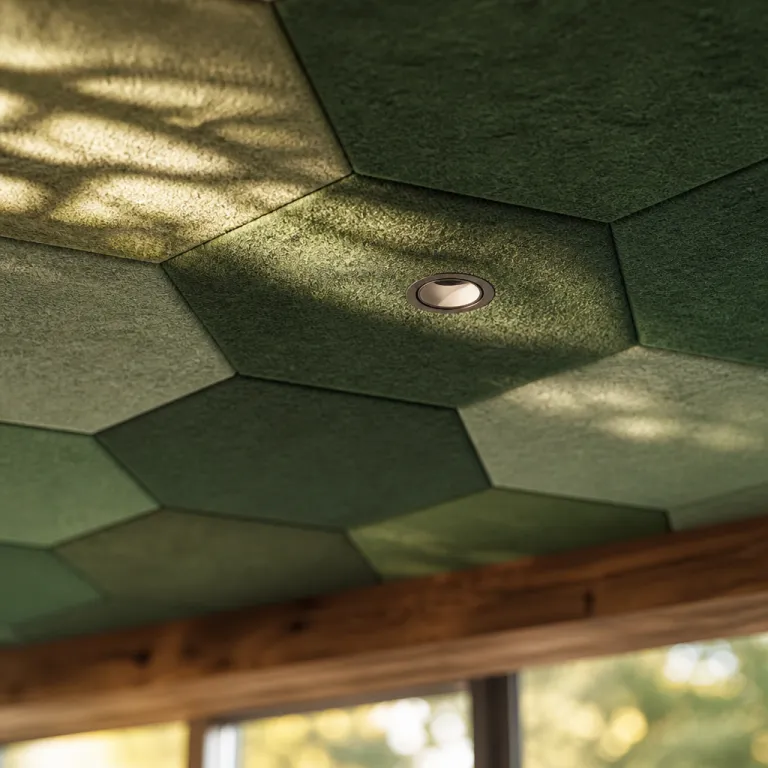
What canless lights really are in modern smart ceilings
Canless lights are ultra-thin integrated LED downlight modules that sit directly in the ceiling plasterboard or drywall. These low-profile recessed fixtures replace the traditional recessed light can and separate trim, giving you a slim appearance and simpler installation with fewer components. A canless light uses an external junction box instead of a bulky metal housing, which makes the overall assembly lighter and easier to position between joists or around ductwork.
In a smart home, canless lights usually mean canless LED downlight modules that connect to dimmers, occupancy sensors, or wireless controls. These compact recessed luminaires often support correlated color temperature (CCT) adjustment, so you can tune the color temperature of the LED lighting from warm to cool without changing the fixture. Because the LED light engine is sealed and many models are IC rated for direct contact with insulation, a canless recessed light can maintain high energy efficiency while helping keep the ceiling air barrier tight.
Most canless lights are sold as slim recessed kits in nominal 3 inch (about 7.5 centimetre), 4 inch (about 10 centimetre), or 6 inch (about 15 centimetre) sizes. The slim LED body clips into a simple cutout, while the junction box sits above the ceiling and connects to the mains wiring. For smart lighting layouts, this compact canless LED format leaves more room for sensors, wireless receivers, or future upgrades inside the ceiling void without crowding the structure.
How canless lights compare with traditional recessed lighting
Traditional recessed lighting relies on a metal can that houses the lamp and trim inside the ceiling cavity. By contrast, canless lights integrate the LED array, trim, and baffle into a single slim recessed module, which reduces parts and simplifies the overall lighting layout. A canless recessed product usually offers higher efficacy than a retrofit LED lamp in an old recessed can, because the LED package, optics, and driver are engineered together as one system.
When you compare a modern canless LED downlight with a legacy halogen recessed light, the difference in brightness per watt is striking. A typical 4 inch slim LED downlight rated around 700–900 lumens can match or exceed the light output of a 60 watt halogen recessed lamp while using roughly 9–12 watts, which significantly lowers running costs over the rated lifetime. Manufacturer datasheets from brands such as Lithonia Lighting and Halo list similar lumen packages and wattages for residential slim downlights, aligning with performance ranges summarized in U.S. Department of Energy (DOE) residential LED fact sheets.
Smart ceiling fixtures such as the Govee ceiling light Ultra illustrate how far integrated LED lighting has progressed. That type of product uses a dense array of LEDs on a flat panel to create broad ambient illumination, while canless lights use fewer but more focused slim modules to create precise downlight beams. For task areas, a grid of dimmable canless recessed lights can complement a large smart ceiling panel, giving layered lighting that balances wide ambient light with targeted brightness over work surfaces and circulation paths.
Design choices that matter with canless smart ceiling lights
Designing with canless lights starts with choosing the right trim and baffle style for each room. A smooth trim gives a clean modern look, while a baffle trim with concentric grooves helps reduce glare from each recessed light and softens the lighting effect. Many canless recessed products offer interchangeable trim rings, so you can switch from white to black or brushed metal without replacing the entire luminaire.
Ceiling height and room size determine how many canless lights you need and which diameter to select. In a typical 2.4 metre ceiling, 4 inch (10 centimetre) slim recessed downlights spaced about 1.5 to 2 metres apart give even LED lighting without harsh hotspots, while higher ceilings may benefit from larger 6 inch (15 centimetre) canless LED modules for more brightness. For accent zones, a smaller 3 inch light format can highlight artwork or architectural details without overwhelming the space or creating excessive glare.
Smart ceilings also benefit from mixing different lighting layers rather than relying on a single grid of recessed lights. You might pair ceiling canless downlights with smart mini cylinder fixtures, as explained in many guides about how mini cylinder ceiling lights elevate smart ceilings in every room. In kitchens, a combination of canless lights and focused under cabinet LED strips or bars can create a balanced lighting scheme that supports both detailed cooking tasks and relaxed dining.
Technical features that define quality in canless lights
Several technical specifications separate a high quality canless light from a budget option that disappoints. First, look at the rated lumen output and efficacy (lumens per watt), which show how much brightness you get for each watt of LED power. A good canless LED downlight in the 4 inch class typically delivers around 600–900 lumens at 8–12 watts and should provide consistent light output across its dimmable range, without visible flicker or noticeable color shift.
Color selectable and CCT adjustable features are now common in canless lights, and they matter more than many buyers expect. A color selectable canless recessed product often lets you choose between preset CCT values such as 2700 K, 3000 K, 3500 K, 4000 K, and 5000 K using a small switch on the junction box or light body. This flexibility is especially useful when you combine canless lights with other smart fixtures, because you can match the LED lighting tone across the entire ceiling and adapt it if wall colors or furnishings change.
Dimming performance depends heavily on the driver design and triac dimmer compatibility of the canless lights you choose. Some selectable dimmable models are rated only for specific leading-edge triac dimmers, while others support a wider range of wall controls, including trailing-edge electronic dimmers and smart dimmer modules from brands such as Lutron or Leviton. For smart kitchens or bathrooms where steam and splashes are common, always check that your canless recessed lights are wet rated and that the junction box is sealed properly, similar to how robust smart kitchen under cabinet lighting is designed to survive steam and rough daily use.
Installation, safety, and cost considerations for canless recessed lighting
From an installer’s perspective, canless lights simplify many of the headaches associated with traditional recessed lighting. Because the canless recessed module is slim and uses spring clips, it can often fit where a full-depth recessed can would clash with ductwork, plumbing, or joists in the ceiling. The separate junction box allows the electrician to make secure connections outside the cutout, then slide the box through and rest it on the plasterboard or attach it to nearby framing according to local code.
Safety ratings are critical when you select any recessed lights, and canless lights are no exception. Look for IC rated and air tight (AT) rated markings on the product label or datasheet, which indicate that the canless LED module can be in contact with insulation without overheating and that it limits air leakage through the ceiling. In bathrooms, laundry rooms, or covered porches, choose canless lights that are wet rated or at least damp rated, and confirm that the assembly includes gaskets where needed to maintain the enclosure rating.
Price varies widely between basic canless LED kits and advanced smart selectable dimmable models with wireless control. A simple non smart slim recessed downlight may cost only a modest amount per light, while a high end smart canless lighting system with tunable CCT and app control can be several times that price. Over time, the lower energy use of LED lights and the long rated lifetime usually offset the initial cost, especially when you replace halogen recessed lights that consumed far more power and generated more heat.
Smart control, dimming, and everyday use of canless lights
Smart control turns ordinary canless lights into a responsive part of your daily routines. Many canless LED products now pair with smart switches or wireless modules that sit near the junction box, allowing app based dimming, scheduling, and scene control without changing the visible trim. In open plan spaces, grouping several dimmable canless recessed lights into scenes lets you shift from bright task lighting to soft evening light with a single tap or voice command.
For the best experience, match your lighting controls to the electrical characteristics of the canless lights you install. Some slim LED downlights are designed for leading-edge triac dimmers, while others work better with trailing-edge or 0–10 V smart electronic dimmers, and using the wrong type can cause flicker, audible buzzing, or reduced brightness. When you choose selectable dimmable and color selectable fixtures, you can fine tune both light level and CCT for reading, cooking, or relaxing, which makes the ceiling layout feel tailored to each activity and time of day.
Everyday maintenance is minimal with quality canless lights, because the LED light source is sealed and typically rated for long service life, often 25 000 to 50 000 operating hours to L70 under standard test conditions. DOE and manufacturer reliability studies on integrated LED downlights report similar L70 targets, and many residential slim recessed kits from major brands publish comparable lifetime claims in their datasheets. If a product does fail, the integrated design means you replace the entire canless recessed module, which is usually as simple as releasing the spring clips and unplugging the connector from the junction box.
Key statistics about canless lights and smart ceiling lighting
- According to the International Energy Agency’s Global Status Report for Buildings and Construction and related lighting efficiency briefs, LED lighting now accounts for more than half of global lighting sales, and integrated LED downlights, including canless models, are a major driver of residential ceiling upgrades.
- Data from the U.S. Department of Energy’s Solid-State Lighting program and Residential Lighting End-Use Consumption studies indicates that LED recessed lights typically use around 75 percent less energy than comparable halogen recessed fixtures, which significantly reduces electricity bills over the rated lifetime of canless lights.
- Market research from firms such as Grand View Research, including their smart lighting and residential LED fixture outlooks, shows that smart lighting, including smart canless recessed products, is growing at a double digit compound annual growth rate, driven by demand for dimmable and color selectable ceiling solutions in homes and small businesses.
- Testing summarized in DOE CALiPER evaluations and manufacturer reliability studies has found that many modern slim recessed LED downlights are designed to maintain at least 70 percent of their initial brightness (L70) after 25 000 operating hours or more, which translates to many years of typical household use when lights run a few hours per day.
FAQ about canless lights and smart ceilings
Are canless lights safe to use with insulation in the ceiling
Most modern canless lights are available in IC rated versions, which means they are tested to operate safely in contact with insulation in the ceiling cavity. Always confirm that the specific canless recessed product you buy is both IC rated and air tight rated if you plan to bury the junction box and light under insulation. Using non rated recessed lights in such conditions can lead to overheating, reduced lifetime, or code violations.
How many canless recessed lights do I need in a typical room
The number of canless lights depends on room size, ceiling height, surface reflectance, and desired brightness. A common rule of thumb is to space 4 inch (10 centimetre) slim recessed downlights about 1.5 to 2 metres apart, starting around half a metre from the walls, but higher ceilings or darker finishes may require more fixtures. Lighting designers often calculate total lumen requirements based on room area and target lux levels, then divide by the lumen output of each canless LED light to determine the quantity.
Can I dim canless LED lights with my existing wall dimmer
Many canless LED products are dimmable, but compatibility with existing triac dimmers is not guaranteed. Check the manufacturer’s list of approved dimmers for each dimmable recessed light, because some LED drivers work best with specific leading-edge or trailing-edge models or with smart electronic dimmers. If your current dimmer is not compatible, replacing it with a matched dimmer usually solves flicker, drop-out at low levels, or limited dimming range.
What is the difference between color selectable and fixed CCT canless lights
A fixed CCT canless light emits a single color temperature, such as warm white at 2700 K or cool white at 4000 K, while a color selectable model lets you choose between several preset CCT options using a switch on the junction box or the light body. Color selectable canless recessed fixtures are useful when you are unsure which CCT will look best in a space or when you want consistent product flexibility across multiple rooms. In smart homes, combining selectable dimmable and color selectable features gives you fine control over both brightness and ambiance from the same family of fixtures.
Are canless lights worth the higher price compared with traditional bulbs
Although the upfront price of a canless LED downlight is higher than a simple bulb, the long rated lifetime and much lower energy use usually make them cost effective over time. Replacing halogen recessed lights with efficient canless lights can cut lighting electricity consumption dramatically, especially in rooms where lights run for many hours each day. The slim recessed design, improved safety ratings, and compatibility with smart controls add further value that traditional bulb based fixtures and legacy recessed cans cannot match.
References
- International Energy Agency – Global Status Report for Buildings and Construction and technology briefs on solid-state lighting that document LED market share and efficiency trends.
- U.S. Department of Energy – Solid-State Lighting program, CALiPER testing summaries, and residential lighting fact sheets describing LED recessed downlight performance, L70 lifetime expectations, and energy savings versus halogen.
- Grand View Research – Market analysis on smart lighting systems and residential LED fixtures, including growth projections for connected luminaires and canless recessed products.