Summary
Editor's rating
Value for money: worth it or not?
Design: basic look, decent brightness
Durability and reliability: any issues so far?
Performance: app control, voice commands, and real-world quirks
What you actually get in the box
Effectiveness: do they actually make life easier?
Pros
- Easy setup with no hub required; connects directly to Wi‑Fi and app
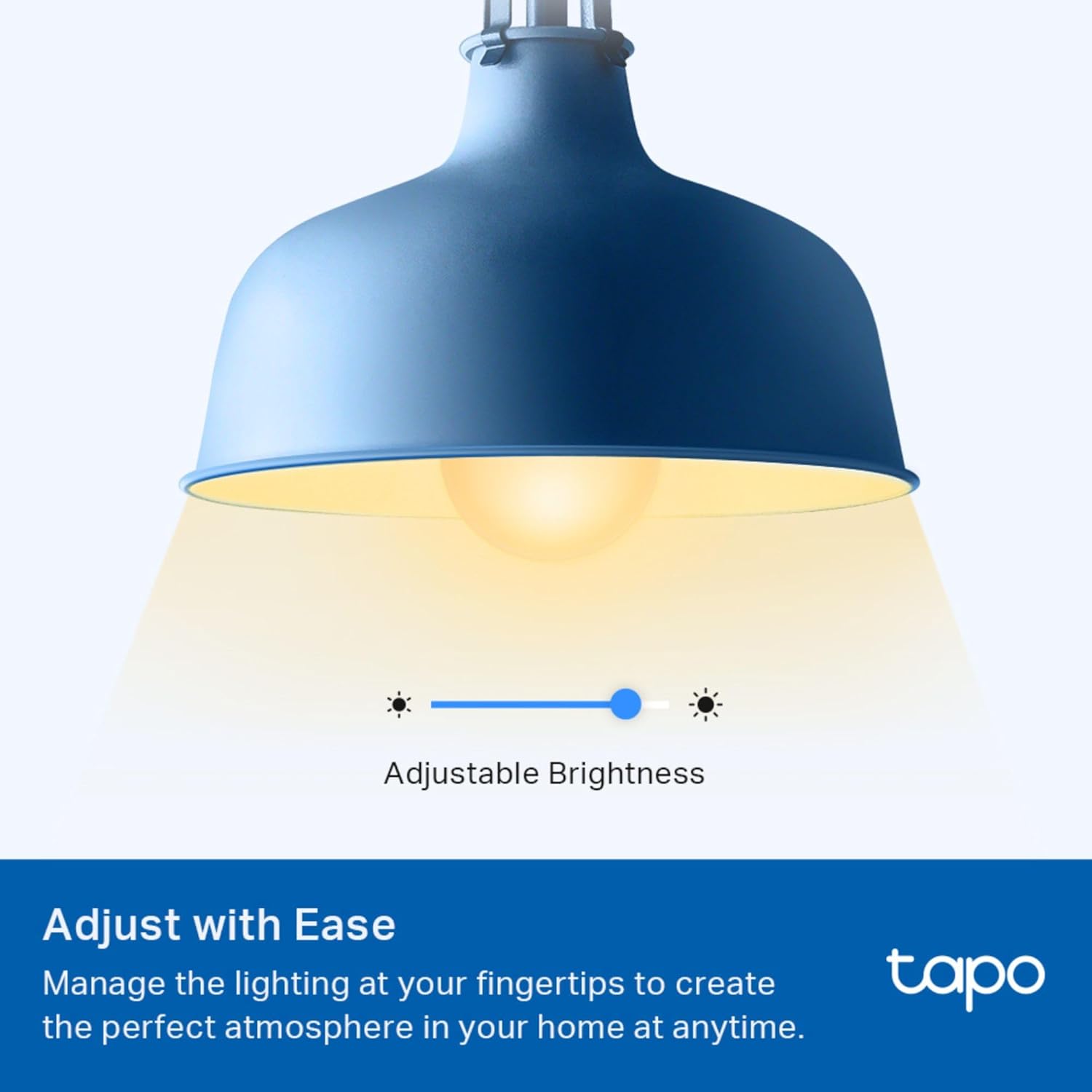
- Good brightness and smooth dimming for typical rooms
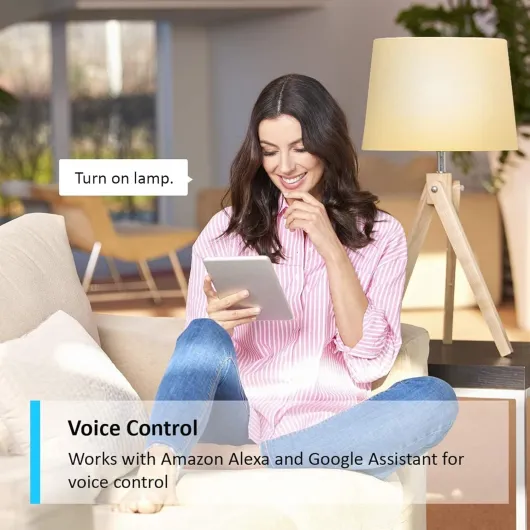
- Solid integration with Alexa and Google Assistant for voice control
Cons
- Warm-white only, no colour or tunable white options
- Tapo app can feel a bit sluggish and occasionally shows bulbs as offline

Specifications
View full product page →| Brand | Tapo |
Simple smart bulbs that actually behave
I’ve been using the Tapo L510B B22 bulbs for a few weeks now, in a pretty standard UK flat setup: one in the living room ceiling, one in a bedroom. I’m not a smart-home geek with a rack of hubs; I just wanted lights I can dim from the sofa and shout at through Alexa. In that sense, these bulbs are very much in the "normal person" category: Wi‑Fi built in, no hub, just an app and your router.
The first thing that struck me is how straightforward they are. Screw them in, open the Tapo app, follow the steps, done. I’ve had other smart bulbs where you spend half an hour fighting pairing modes and mystery error codes; this was more like five to ten minutes per bulb, including a firmware update. Nothing glamorous, just reasonably smooth.
In day-to-day use, they’ve mostly behaved like regular warm-white bulbs that happen to listen to your phone and voice. No rainbow colours, no fancy scenes beyond brightness control and scheduling. If you want coloured party lights, this isn’t that product. These are plain 2700K warm white, so think standard cosy living room light, just adjustable from pretty dim to full brightness.
Overall, my first impression is that they’re practical, not flashy. They do what the box says: dimmable, app control, Alexa/Google support, some basic energy monitoring, and a couple of automation tricks like Away Mode. Not perfect, but for the price and the lack of extra hub, they feel like a decent entry into smart lighting rather than a big investment.
Value for money: worth it or not?
For what they cost as a 2-pack, I’d say these Tapo L510B bulbs are good value if you just want basic smart control without going into a full ecosystem like Hue. You’re getting two 60W-equivalent warm-white smart bulbs with dimming, app control, voice support, and some energy monitoring, for about the price of one higher-end smart bulb from bigger names. If you’re testing the waters with smart lighting, that’s attractive.
Compared to more premium options, here’s the trade-off: you don’t get multiple white temperatures, no colours, and the app is a bit more barebones. There are fewer fancy automations and no physical smart switches in the box. On the other hand, you also don’t need a hub, you don’t pay a premium for colour features you might never use, and setup is simpler. For someone who just wants to say “Alexa, dim the living room to 30%” and be done, this hits the sweet spot between cheap and usable.
From an energy point of view, 8.7–9W for roughly 800 lumens is standard LED efficiency, so you’re not saving more power than any other decent LED bulb, but you are saving compared to old halogens or incandescents. The energy monitoring helps you be a bit more aware, but honestly the main saving here is just “it’s LED, not halogen.” If you’re upgrading from regular LED bulbs, the real value is in convenience, not electricity.
So overall, I’d call the value pretty solid: not the cheapest dumb bulbs, obviously, but for smart bulbs with no hub and stable performance, the price feels fair. If you only want one room smart, this two-pack is enough. If you want to convert an entire house, costs will add up, and at that point you might start comparing with other ecosystems. But for a small flat or a couple of key rooms, these are a sensible, budget-friendly option.
Design: basic look, decent brightness
Design-wise, these bulbs are very plain, which for me is good. They look like normal white LED bulbs with a slightly chunky base because of the Wi‑Fi electronics. If you’re putting them in a ceiling fitting or a lamp with a shade, you’re not going to see them anyway, so I don’t care that they’re not pretty. The B22 bayonet connector locks in tightly; I didn’t have any wobble or loose feeling in the fittings I tried.
The bulb shape is A19 with a 6 cm diameter and about 11.4 cm height. That’s basically standard size, so they fit into my ceiling rose and a small desk lamp without clearance issues. If you have some weird narrow shade or an enclosed fixture with very little space, you might want to measure, but for regular UK fittings they’re fine. The weight is light enough that they don’t drag on the fitting or feel top-heavy.
In terms of light output, the 800–806 lumens rating feels accurate. At full brightness they’re absolutely enough for a small to medium room. My living room has one main ceiling light, and one of these at 100% is bright enough for reading or working on a laptop. In the bedroom I rarely go past 60–70% because 100% is a bit harsh for winding down. The colour temperature is fixed at 2700K warm white, so you’re not getting cool white or daylight options. If you like that soft, yellowish living room look, you’ll be happy; if you’re into bright white “office” light, these won’t give you that.
The dimming range is from 1% to 100%. Realistically, the bottom end doesn’t feel like a true 1%—it’s still visible in a dark room, but it does get nice and low for watching TV without the room being pitch black. The transition when dimming through the app or voice is smooth, no visible steps or flicker in my case. So from a design and light-performance angle, they’re boring to look at but they behave how you’d expect a modern LED smart bulb to behave.
Durability and reliability: any issues so far?
The bulbs are rated for about 25,000 hours of life, which on paper is many years of normal use. I obviously haven’t hit that yet, but after several weeks of daily use (a few hours each evening plus morning schedules), there’s no visible drop in brightness, no colour shift, and no weird noises. They stay slightly warm to the touch when on, which is normal for LEDs with built-in electronics, but nothing alarming.
Build quality feels decent for the price. The glass/plastic dome is firmly attached, and the metal bayonet base doesn’t flex or feel cheap when you push and twist it into the fitting. I’ve swapped them between fixtures a few times just to test, and they’ve handled that fine. No looseness, no cracking sounds, nothing that screams “this will fall apart in a year.”
Reliability on the software side has been okay, but not perfect. Out of a few weeks, I had maybe two instances where one bulb showed as offline in the app for a minute or two. It still worked from the wall switch and came back online without me doing anything. I’m pretty sure that was just my Wi‑Fi having a moment. Voice commands through Alexa kept working even when the Tapo app was acting a bit slow, which is what I care about most in daily use.
The brand offers a 2-year manufacturer warranty, which is reassuring. For budget smart bulbs, that’s a decent safety net if one fails early. Obviously we’ll only know in a year or two how they hold up long term, but based on how they’re built and how they’ve behaved so far, I’d say they feel more like “budget but reliable” rather than cheap throwaways. If you’re worried about constantly replacing them, my impression so far is that they should last like any other decent LED bulb, with the usual caveat that electronics plus heat can always surprise you.
Performance: app control, voice commands, and real-world quirks
Day-to-day performance has been mostly solid. The bulbs turn on and off quickly from the wall switch like any normal bulb. From the Tapo app, there’s usually a delay of about half a second to a second between tapping and the light changing, which is fine for me. Voice control with Alexa is similar: I say “Alexa, turn off bedroom light,” and it reacts fast enough that I don’t feel like I’m waiting. It’s not instant like a physical switch, but it’s close enough.
Where it gets more interesting is the schedules and timers. I set a schedule for the bedroom bulb to turn on at 7am at 20% brightness on weekdays, then ramp up to 60% after 10 minutes. That has worked reliably so far—no random misses. I also tested Away Mode for a weekend, and it did randomly switch the living room light on and off in the evening. It’s basic, but if you’re away and want the place to look occupied, it’s a nice extra.
The energy monitoring is there, but don’t expect lab-grade precision. It gives you a rough view of how long the bulb has been on and an estimate of power usage over time. If you’re trying to shave a few pennies off the bill, it’s handy to see which light you leave on the most. But it’s more of a curiosity than a serious analytics tool. Still, for the price, having any energy stats at all is a bonus.
On the downside, the app can feel a bit sluggish at times. Opening it and having it refresh the status of the bulbs sometimes takes a couple of seconds, and occasionally one bulb shows as “offline” for a moment even though it still responds to Alexa. I didn’t get flickering or buzzing, which is good, but Wi‑Fi reliability will depend a bit on how strong your router signal is in that room. If your Wi‑Fi is weak in the ceiling area, you might see more disconnects. For me, with a decent router in a small flat, performance has been stable enough that I don’t think about it most of the time.
What you actually get in the box
Out of the box, it’s pretty barebones: you get two bulbs and a small user manual. That’s it. The bulbs are standard A19 size with a B22 bayonet base, so they’ll fit most UK ceiling fittings and table lamps that still use bayonet. No extra hardware, no hub, nothing fancy. Personally, I like that. Less clutter, less stuff to plug in and hide behind the TV.
The manual is short but clear enough. It walks you through downloading the Tapo app, adding a new device, and getting the bulbs on Wi‑Fi. It’s not the kind of manual you sit and read with a coffee, but it covers the steps and the tiny troubleshooting bits like “make sure your phone is on 2.4 GHz Wi‑Fi” and “flip the switch off and on to reset.” If you’ve set up any Wi‑Fi gadget before, you won’t struggle.
Feature-wise, on paper you get quite a lot: dimmable warm white, schedules and timers, Away Mode (random on/off to fake presence), energy monitoring, device sharing with family, and voice control via Alexa or Google Assistant. No hub required, just your home Wi‑Fi. The rated brightness is around 800 lumens (60W equivalent), 2700K warm white, and about 8.7–9W power draw, which is pretty standard for an LED smart bulb at this brightness.
In practice, the feature list matches reality for the most part. The bulbs show up in the app quickly, the energy monitoring gives a rough idea of usage, and sharing control with someone else in the house works as long as they install the Tapo app and you link accounts. It’s not some huge ecosystem like Philips Hue, but for a two-pack of cheap Wi‑Fi bulbs, the presentation and feature set are pretty solid and straightforward.
Effectiveness: do they actually make life easier?
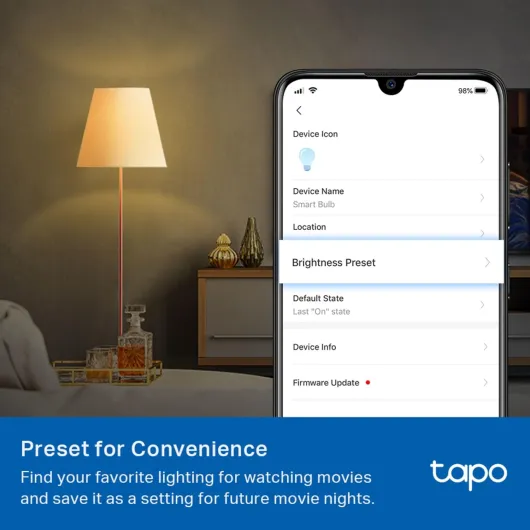
In terms of “does this actually change how I use my lights,” the answer is yes, but in a low-key way. Before these, I had regular LED bulbs and either they were on or off, full brightness. Now I actually use dimming a lot. For example, in the evening I drop the living room to around 30–40% while watching TV, and it’s just more comfortable on the eyes. In the bedroom, I set a low brightness when I’m getting ready for bed, so I’m not blasted by full light right before sleep.
Voice control is where they feel most useful. Walking into a dark room with your hands full and saying “Alexa, turn on the light” is the kind of small convenience you quickly get used to. Same when you’re already in bed and realise you left the light on in another room. Instead of getting up, you just tell the assistant to switch it off. It’s not life-changing, but it’s the kind of lazy comfort that makes smart bulbs worth having.
The scheduling also does its job. I like having the bedroom light come on gradually rather than a phone alarm in total darkness. It’s not a true sunrise simulator because the colour temperature doesn’t shift, but the gradual brightness change is still nicer than going from pitch black to full blast. Timers are handy too—if I’m working at my desk and want a reminder, I’ll set the lamp to turn off in an hour so I know it’s time to stop.
Where they’re less effective is if you want a full-blown smart home system with complex automations and colour scenes. These are warm-white only, and while the Tapo ecosystem can sync with other Tapo devices, it’s nowhere near as deep as something like Philips Hue with motion sensors, switches, and loads of integrations. So for basic everyday convenience, they’re effective. For heavy automation nerds, they’ll feel a bit limited, but that’s kind of expected at this price point.
Pros
- Easy setup with no hub required; connects directly to Wi‑Fi and app
- Good brightness and smooth dimming for typical rooms
- Solid integration with Alexa and Google Assistant for voice control
Cons
- Warm-white only, no colour or tunable white options
- Tapo app can feel a bit sluggish and occasionally shows bulbs as offline
Conclusion
Editor's rating
After living with the Tapo L510B B22 bulbs for a while, my overall take is: they’re simple, they work, and they don’t try to be fancy. If you want warm-white smart bulbs that you can dim, schedule, and control with Alexa or Google without buying a hub, they get the job done. The light is bright enough for normal rooms, the dimming is smooth, and features like schedules, Away Mode, and basic energy monitoring all function as advertised.
They’re not perfect. The app can be a bit slow sometimes, and you’re limited to a single warm-white colour temperature. If you’re into colourful scenes, daylight modes, or heavy automation, you’ll hit the ceiling of what these can do pretty quickly. But for the price of the two-pack, that’s an expected compromise. What matters most—reliable on/off, dimming, and voice control—has been solid in my use, with only minor hiccups linked more to Wi‑Fi than to the bulbs themselves.
I’d recommend these to anyone who wants to dip a toe into smart lighting without spending a lot or dealing with hubs and bridges. They’re good for renters, small flats, or just key rooms like the living room and bedroom. People who should probably skip them are those who want full-colour bulbs, tunable white, or deep integration with a more advanced smart-home setup. For basic, everyday convenience at a reasonable price, they’re a good, no-nonsense choice.
![NEW White and Colour Ambiance Smart Light Bulb Starter Kit, 75W - 1100 Lumen [E27 Edison Screw] 2 Bulbs + Smart Button - With Bluetooth - Works with Alexa, Google Assistant and Apple Homekit E27 2 Pack Starter Kit + Button](https://www.smart-light-guru.com/storage/1015385/conversions/71yJIPbE0LL._AC_SL1500_-medium.webp)