Summary
Editor's rating
Value for money: where these bulbs actually shine
Design: boring to look at, but that’s not really the point
Build quality and long-term reliability (so far)
Brightness, colours and Wi‑Fi stability in real use
What you actually get in the box and how it works day to day
Does it actually make life easier or is it just a toy?
Pros
- Good brightness and decent colour range for the price
- No hub required, easy setup with a clean Tapo app
- Useful features like schedules, sunrise mode, away mode and voice control
Cons
- Occasional Wi‑Fi connection issues depending on your network
- Colours and dimming not as precise as higher-end systems
- Smart features are useless if people keep turning the wall switch off

Specifications
View full product page →| Brand | Tapo |
Cheap smart bulbs that actually behave (most of the time)
I’ve been using the Tapo L530B B22 smart bulbs for a few weeks now, one in the bedroom and one in the living room. I already had a couple of smart plugs and a Tapo camera, so I wanted to see if their bulbs were in the same league or just cheap rubbish. Short version: they’re pretty solid for the price and do what you expect, with a few minor annoyances.
The main thing I noticed straight away is how easy they are to live with once you’ve set them up. They connect directly to Wi‑Fi, no hub, and the Tapo app is the same one I already use for the plugs, so everything is in one place. Turning lights on and off from the sofa or bed with the app or voice is something you get used to quickly. Going back to normal bulbs feels a bit old‑school once you’ve tried this.
That said, they’re not magic. You still rely on a stable 2.4 GHz Wi‑Fi, and once or twice the app showed one bulb as offline even though the switch was on. Like some Amazon reviewers, I had to toggle the power or wait a bit for it to reconnect. It’s not constant, but it happens enough that it’s worth mentioning if your Wi‑Fi is already a bit flaky.
Overall, as a first step into smart lighting, they’re a good compromise: cheap enough that you don’t feel like you’re wiring your house with gold, but not so basic that you regret not paying a bit more. If you want simple colour control, scheduling and voice commands without getting into complicated hubs, they get the job done.
Value for money: where these bulbs actually shine
For me, the biggest selling point is price versus features. This 2‑pack usually comes in noticeably cheaper than big names like Philips Hue, especially since you don’t need a separate hub. You get colour, dimming, schedules, timers, away mode, sunrise/sunset and full app and voice control. For what you pay, that’s a solid feature set. If you’re just starting with smart lighting and don’t want to invest in a whole ecosystem with a bridge, this is a low‑risk way to try it.
Compared to other budget Wi‑Fi bulbs I’ve tried (random no‑name brands from Amazon), Tapo feels more polished. The app is cleaner, updates are regular, and integration with Google/Alexa is smoother. The no‑name ones often have clunky apps, weird permissions, or just stop responding after a while. With Tapo, I already had plugs and a camera running fine, so adding bulbs into the same app feels like better value than having three different apps for three cheap devices.
Of course, there are trade‑offs. You don’t get ultra-accurate colours or super deep dimming like some higher‑end systems. And because they’re Wi‑Fi, if your network is overloaded or unstable, you’ll feel it. There’s also the usual smart bulb limitation: if people keep turning the wall switch off, you lose the smart side. If those things annoy you a lot, it might be worth spending more on a hub‑based system with better local control.
Overall, I’d call the value very good for normal users. If you want reliable enough smart lighting, fun colours, and useful automation without spending a fortune, these bulbs make sense. If you’re a hardcore smart home nerd who wants perfect colour accuracy, instant local control and deep integrations, you’ll probably see them as entry‑level and look higher up the ladder.

Design: boring to look at, but that’s not really the point
From a design point of view, these bulbs are pretty plain. They look like any other white LED bulb with a plastic diffuser on top and the Tapo branding printed on the side. If you’re expecting some fancy transparent glass or visible filaments, that’s not what this is. Personally, I’m fine with that because once it’s in a ceiling fitting or a lamp with a shade, you barely see the bulb itself.
The size is standard A19, around 11.4 cm high and 6 cm wide according to the specs. In practice, they fit everywhere I tried: a ceiling rose in the hallway, a basic IKEA floor lamp, and a cheap bedside lamp. No issues with them sticking out too far or hitting the shade. They’re slightly heavier than a normal LED bulb but not by a huge amount. You don’t feel like they’re going to rip the fitting out of the ceiling or anything like that.
One thing I did notice is that the plastic body does get warm after being on at full brightness for a while, especially in white mode. Not burning hot, just warm. That’s normal for LEDs, but if you’re putting them in a fully enclosed fitting with poor ventilation, keep that in mind. I’ve had them on for hours in a semi‑closed lampshade with no flickering or shutoffs, so heat doesn’t seem to be an issue under normal use.
In terms of visible design quirks, there aren’t really any. No weird logos lighting up, no ugly status LEDs. If you care a lot about aesthetics and want something that looks like a vintage bulb, these won’t impress you. If you just want something that behaves like a regular bulb from the outside and hides the smart stuff inside, then the design is perfectly fine and out of the way.
Build quality and long-term reliability (so far)
I haven’t had these bulbs for years obviously, but I can talk about build and early reliability. The bulbs feel reasonably solid in the hand. The plastic casing doesn’t creak, and the B22 bayonet base locks in firmly without wobble. I’ve moved them between fittings a few times and the base still feels tight, no signs of bending or looseness.
In terms of heat and flicker, I’ve run one bulb at full brightness for several hours in the evening multiple times. It gets warm but not hot, and there’s no visible flickering or buzzing. I’m a bit sensitive to flicker on cheaper LEDs and these don’t bother me at all, even at low brightness. The colour modes also stay stable; I haven’t seen any weird shifts after being on for a while.
On the software side, reliability has been mostly good. No random resets, no bulbs suddenly changing colour or brightness by themselves. They also remember their last state when you cut power and turn it back on, which is a big plus. So if you like a certain warm white level in the evening, you can set that as default and it comes back every time. There were a couple of brief Wi‑Fi dropouts, but that’s more about the network than the bulb falling apart.
There is a 2‑year manufacturer warranty, which at least shows they’re not expecting them to die in six months. Based on my use and what a lot of Amazon reviews say, these seem fairly reliable over time. If you want military‑grade reliability, there are pricier options with dedicated hubs, but for casual home use, I don’t see any red flags in build or early durability.
Brightness, colours and Wi‑Fi stability in real use
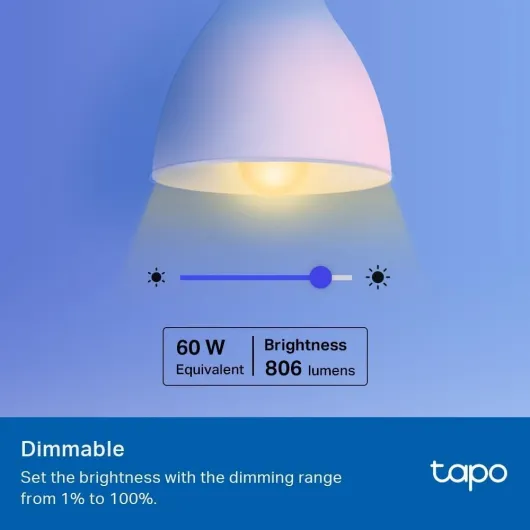
Performance‑wise, the bulbs are bright enough for normal rooms. At full white, one bulb comfortably lights my small living room and is more than enough for a bedroom. The 806 lumens spec feels honest; it’s similar to other 60W‑equivalent LEDs I’ve used. The dimming range from 1–100% is also useful. At the very lowest levels it’s a bit uneven (the last few percent don’t change much), but from about 10% upwards it’s smooth enough for reading, TV, etc.
The colour options are decent for the price. You get the usual RGB range plus warm to cool white. Warm white looks cosy enough for evenings, and cool white is good for working or gloomy winter days, like one reviewer mentioned. The colours are fun for mood lighting: red, blue, green, purple, all there. Are they as rich and accurate as more expensive Philips Hue bulbs? No. Some shades look a bit washed out at high brightness, especially lighter pastels. But for casual use (movie night, party, kids’ room), they do the job.
On the Wi‑Fi side, most of the time they respond quickly to the app and voice commands, usually within a second. I’ve had maybe two or three moments over a few weeks where one bulb showed as offline in the app even though the light was on. Flipping the wall switch off and on or waiting a minute usually fixed it. This matches what some Amazon users said: it’s rare, but it happens. If your router is far away or you have thick walls, expect the occasional hiccup.
The smart features like schedules, timers and away mode work reliably once set. My bedroom bulb turns on at 6am and ramps up brightness in “sunrise” style without fail so far. I also tried the away mode while I was out for a weekend; checking the camera, I could see the lights randomly turning on and off between the times I set, which is exactly what you want for pretending someone’s home. Overall performance isn’t flawless, but for the price bracket, it’s more than acceptable.
What you actually get in the box and how it works day to day
The pack I bought is the 2-pack B22 colour version. In the box you literally get: two bulbs and a small user manual. No remote, no extras, nothing fancy. The bulbs are standard A19 shape with a bayonet (B22) base, so they dropped straight into my existing UK ceiling fittings and a table lamp without any adapters. Each bulb is rated at 8.7W with a claimed 806 lumens, which is roughly like a normal 60W incandescent in brightness.
Setup is all done through the Tapo app. You screw in the bulb, turn it on, the bulb starts in pairing mode, and you follow the app instructions: connect to the bulb’s temporary Wi‑Fi, give it your home Wi‑Fi details, and you’re done. For me, each bulb took about 2–3 minutes. I didn’t have to mess with my dual‑band router beyond making sure 2.4 GHz was enabled. Like one Amazon review said, if you can put them on a dedicated 2.4 GHz SSID it’s cleaner, but I left everything mixed and it still worked.
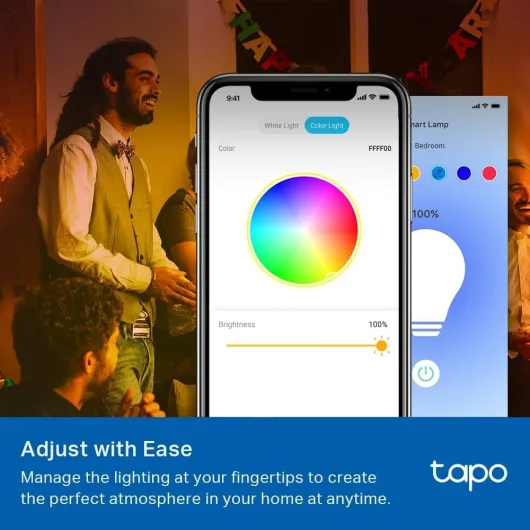
Once added, you can control on/off, brightness, white temperature and colours from the app. You also get extras like schedules, timers, away mode (random on/off between set hours), sunrise/sunset triggers and power usage stats. I mainly use three things: a schedule to slowly brighten the bedroom in the morning, voice control in the living room, and quick colour changes for movie nights. Everything is in one app with my other Tapo gear, which is nice if you’re already in that ecosystem.
They also integrate with Alexa and Google Assistant. I linked mine to Google Home. After that, saying things like “Hey Google, turn off the bedroom light” or “set living room light to blue at 30%” works fine. Just be aware: if someone turns the wall switch off, the bulb is physically off and no app or voice command will bring it back until the switch is on again. That’s not unique to Tapo, but it’s something to keep in mind for shared spaces or guests.
Does it actually make life easier or is it just a toy?
In terms of real usefulness, these bulbs are more than just a gimmick, as long as you actually use the smart features. The biggest change for me is not having to stumble around in the dark. Coming home late and turning the living room light on from the street with the app is genuinely handy. Same for going to bed and just telling Google to turn everything off instead of doing the usual tour of switches.
The schedule and timer functions turned out to be more useful than I expected. I set the bedroom light to slowly brighten before my alarm, starting at 5% and going up. It sounds minor, but waking up to a gradual light instead of a sudden blast is nicer on the eyes. I’ve also used the timer when reading in bed: set it to turn off after 30 minutes so I don’t fall asleep with the light on. These are small things, but they add up in day‑to‑day comfort.
For security, the away mode is simple but effective. I don’t think it will stop a determined thief, but having lights go on and off at random times looks more realistic than a single lamp that stays on all night. You can pick the time window when it should be active, so I set it from 7pm to 11pm. It’s one of those features you set once and forget, but it’s nice to have on a cheap bulb.
One thing that’s less perfect is dependence on the physical switch. If someone turns the wall switch off, all the smart stuff is dead until it’s flipped back on. In a shared house or with kids, this happens a lot. You can set the default power‑on behaviour (brightness and colour when it gets power), which helps, but you still lose remote control when the switch is off. So yes, it makes life easier if everyone in the house understands “don’t kill the switch”. If not, you’ll have the odd moment of frustration.
Pros
- Good brightness and decent colour range for the price
- No hub required, easy setup with a clean Tapo app
- Useful features like schedules, sunrise mode, away mode and voice control
Cons
- Occasional Wi‑Fi connection issues depending on your network
- Colours and dimming not as precise as higher-end systems
- Smart features are useless if people keep turning the wall switch off
Conclusion
Editor's rating
The Tapo L530B 2‑pack is a solid option if you want to dip your toes into smart lighting without gutting your wallet. They’re bright enough for everyday use, the colours are fun, and the app is straightforward. Features like schedules, sunrise mode, away mode and voice control actually get used in real life, not just as bullet points on the box. Most of the time they respond quickly and behave like you’d expect a modern smart bulb to behave.
They’re not perfect. Colours and dimming aren’t as refined as more expensive systems, and the occasional Wi‑Fi hiccup is part of the deal with any cheap Wi‑Fi smart device. You also have to train yourself (and everyone else in the house) not to constantly kill the wall switch if you want to keep the smart features available. But for the price, the compromises are reasonable, and the 2‑year warranty is reassuring.
If you already have Tapo gear, these bulbs fit in nicely and are an easy recommendation. They’re good for small flats, bedrooms, kids’ rooms and anyone who wants simple automations and voice control without buying a hub. If you’re building a big, very reliable smart home setup with loads of bulbs and strict expectations, you might want to look at more advanced (and pricier) ecosystems. For most people though, these are good value, practical smart bulbs that get the job done.
![NEW White and Colour Ambiance Smart Light Bulb Starter Kit, 75W - 1100 Lumen [E27 Edison Screw] 2 Bulbs + Smart Button - With Bluetooth - Works with Alexa, Google Assistant and Apple Homekit E27 2 Pack Starter Kit + Button](https://www.smart-light-guru.com/storage/1015385/conversions/71yJIPbE0LL._AC_SL1500_-medium.webp)