Summary
Editor's rating
Price vs features: where these bulbs actually make sense
Design and build: nothing fancy, but it fits and works
Build quality, heat and long-term feel
Brightness, colours and everyday use
What you actually get in the box and what these bulbs can do
Smart features, app, and Alexa: good once you get over setup
Pros
- Bright for a 9W bulb, with usable warm and cool white plus decent colours
- No hub required, works with Alexa, Google and SmartLife/Tuya-style apps
- Good price for a 2-pack compared to Philips Hue or Hive colour bulbs
Cons
- Setup can be fiddly, especially with 2.4 GHz Wi‑Fi and pairing modes
- Occasional smart integration hiccups (bulb needs rediscovering in Alexa)
- App experience is less polished than bigger, more expensive brands

Specifications
View full product page →| Brand | Avatar Controls |
Smart bulbs on a budget: are these worth the hassle?
I’ve been using these Avatar Controls B22 smart bulbs for a few weeks now, mainly in the hallway and bedroom. I picked them up because I wanted colour bulbs that work with Alexa without paying Philips Hue prices or buying an extra hub. On paper they tick all the boxes: B22 bayonet fitting, Wi‑Fi, RGB colours, tunable white, app control, voice control, scenes, music sync, the whole lot.
In practice, they’re pretty much what you’d expect from a cheaper smart bulb: good once they’re set up, a bit fiddly during installation, and with the odd software quirk. The hardware itself (brightness, colours, heat) is actually decent. The app and pairing side is where you feel the lower price a bit more. Nothing dramatic, just not as polished as the big brands.
I ran them with both the AvatarControls app and the SmartLife app just to see if there was any difference. I also linked them to Alexa and played around with routines, schedules, dimming, and colour scenes. I used one as a regular main light in the kitchen and one as a softer night light / mood light in the bedroom. That gave me a good idea of how they handle different use cases.
Overall, I’d say they’re solid value for the price, especially if you want a couple of smart bulbs to play with and don’t care about having a big fancy ecosystem. They’re not perfect, and if you’re allergic to app setup and Wi‑Fi faffing, you might get annoyed. But once they’re running, they do what they’re supposed to do and the feature set is actually quite generous for what you pay.
Price vs features: where these bulbs actually make sense
For me, the main selling point of these Avatar Controls bulbs is the price compared to bigger brands. Two colour bulbs for roughly what some brands charge for one, and no hub needed. If you want to dip your toes into smart lighting or just add a bit of colour in a couple of rooms, this is a budget-friendly way to do it. You get proper brightness, decent colour options, full dimming, and voice control without buying into an expensive ecosystem.
Compared to Philips Hue or Hive: they’re less polished, especially on the setup side. Hue with a hub is much smoother to install and manage, and Hive’s app is more streamlined. But those systems cost a lot more, and some require a hub on top of the bulb price. If you only need a few bulbs and don’t care about advanced automation across a whole house, spending double or triple just for slightly nicer software doesn’t make much sense.
Where the value drops a bit is if you absolutely hate fiddling with apps and Wi‑Fi settings. In that case, the cheaper price might not be worth the initial frustration. Also, if you already have a full ecosystem (like Hue or Hive with a hub), sticking with that brand can be simpler, even if it costs more. These Avatar bulbs work with SmartLife/tuya, which is handy if you already use that, but they’re not going to magically integrate as tightly as first-party devices in a closed system.
All in all, I’d say value for money is good: you get a lot of features and sufficient performance for what you pay. They’re not premium, but they’re not priced like premium either. If your priority is saving cash while still getting smart control and colours, they’re a sensible pick. If you want a super slick experience and don’t mind spending more, you’ll probably be happier with a more expensive brand.
Design and build: nothing fancy, but it fits and works
Visually, these bulbs are pretty standard A19 LED bulbs with a B22 bayonet base. White plastic body, frosted dome on top, no weird shapes. If you’re expecting something that looks premium or special, forget it. Once they’re in the ceiling, they look like any other cheap LED bulb, which is fine by me. The important part is that they fit normal UK B22 light fittings without any drama, and they do.
The body is plastic with an aluminium heat sink inside (you don’t see it, but you can feel a bit of weight). They’re not super heavy, but they don’t feel toy-like either. Around 90g per bulb, which is in the normal range. I didn’t notice any worrying heat even after a few hours at 100% brightness – they get warm, not scorching. That’s pretty typical for a 9W LED, and good news for lifespan.
Beam angle is around 270 degrees, so it spreads light well in a room. I used one as a main ceiling light in a small kitchen and it lit the space evenly, no weird dark patches. In a bigger room you might still want two bulbs or some extra lamps, but that’s not really the bulb’s fault, that’s just room size. The bulb is not oversized, so it fits easily under standard lampshades without sticking out or looking odd.
Overall, the design is basic but practical. No visible branding when it’s in a shade, no rattling, no loose parts. It’s not a design piece you’ll show off, but as a regular household bulb that has smart features hidden inside, it’s exactly what you’d expect. The main thing: it doesn’t scream “cheap junk” when you hold it, and once it’s installed, you basically forget what it looks like anyway.
Build quality, heat and long-term feel
I obviously haven’t run these for 50,000 hours to see if the lifespan claim is real, but after a few weeks of everyday use, nothing worrying has shown up. No random reboots, no buzzing, no weird colour shifts. I’ve had them running a few evenings in a row on party-style colour changes and long white sessions in the kitchen, and they stay stable. They get warm to the touch but not so hot that you’d be scared to touch the plastic dome.
The bayonet fitting feels solid when you twist it into the socket. It locks in properly, no wobble. I moved one bulb between rooms a couple of times to test different fixtures and shades. No issues with contact, no flicker from loose fitting. That sounds basic, but I’ve had some cheap bulbs in the past that had bad contacts and would randomly cut out – none of that here so far.
Where I’ve seen some minor “durability” annoyance is on the software side. Like some reviewers mentioned, I had one brief moment where Alexa lost track of a bulb and I had to rediscover it. It took a few minutes and then it was fine again. The bulb itself didn’t die, it was just the smart link being flaky. If your Wi‑Fi or router is not very stable, you might see that kind of thing now and then. Physically though, they feel okay for the price.
So my take: hardware durability seems decent, at least in the short term. I wouldn’t expect them to feel as bulletproof as a premium brand, but for cheap smart bulbs, they don’t give off a “this will die in a month” vibe. If one fails early, there’s a 1‑year warranty listed, but obviously dealing with warranty is always a bit of a hassle. Still, nothing in my testing makes me think they’re ticking time bombs.
Brightness, colours and everyday use
On the performance side, I was pleasantly surprised. At 100% brightness in warm or cool white, the bulb is genuinely bright. The 900 lumens claim feels realistic. In my small kitchen, one bulb was enough as a main light. In the bedroom, 50–70% brightness was already plenty for reading or getting dressed. The app lets you dim all the way down to 1%, and at that level it’s more of a night light glow, which is good for late-night trips to the bathroom without waking yourself up.
The colour range is decent. Reds and blues look strong, greens are okay, and the mixed colours (like turquoise, purple, etc.) are good enough for mood lighting. This isn’t a professional lighting rig, but for a living room party or a gaming vibe, it does the job. The white tones are where I spent most of the time: warm white around 2700K feels cosy, and cool white closer to 6500K is nice for working or cooking. Switching between warm and cool makes a bigger difference than all the crazy colours, to be honest.
I didn’t notice flicker during normal use. Even at low brightness, the light looked stable to the eye. No buzzing either, which is something that annoys me a lot with cheap dimmable bulbs. Turning them on via the app or Alexa is usually pretty quick – around a second or so. Occasionally there’s a slight delay if your Wi‑Fi is being moody, but nothing out of the ordinary for Wi‑Fi bulbs.
For everyday routines, they’re quite handy: I set one to slowly brighten in the morning as a wake-up light and another to dim down at night. The gradual change is smoother via the app schedules than when you just bark orders at Alexa, but both work. For the price, I’d say the overall performance is pretty solid. Not mind-blowing, but more than good enough for normal home use and some fun effects.
What you actually get in the box and what these bulbs can do
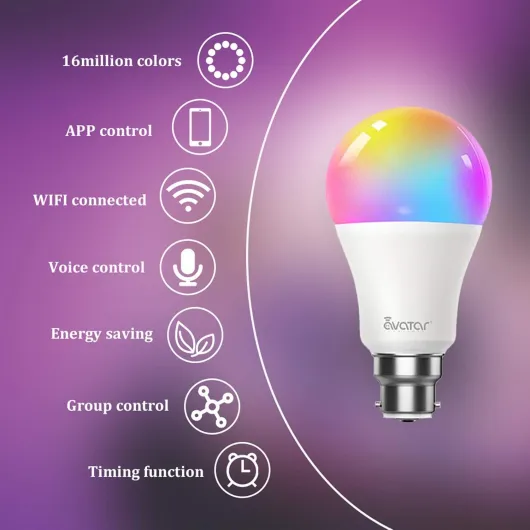
The pack I tried is the 2‑bulb set (B22 bayonet), rated at 9W with up to 900 lumens, which is roughly equivalent to an old 60–80W incandescent bulb. In the box you get: two bulbs and a tiny manual. That’s it. No hub, no remote, no extras. Everything runs over 2.4 GHz Wi‑Fi and the control is done via the AvatarControls app (or SmartLife, Tuya-type apps) plus Alexa/Google/Siri if you want voice.
Feature-wise, they’re pretty loaded for the price. You get:
- Full RGB colours (they claim 16 million, but realistically you’ll use maybe 10).
- Tunable white from around 2700K (warm) to 6500K (cool daylight).
- Dimming from 1–100% in the app, no visible flicker in normal use.
- Scenes and music sync – premade modes plus some party-style effects.
- Schedules and timers – sunrise-style wake-up, night routines, etc.
- Remote control over the internet – turn them on/off when you’re away.
They quote 50,000 hours of life, which is the usual optimistic LED number. If you use them a few hours per day, they should last years, but we all know real life can be different depending on heat, quality of your wiring, and how often you flick them on and off. Energy-wise, 9W is low, so they’re cheap to run compared to old bulbs, especially given they’re often dimmed and not blasting at 100%.
So on paper, for the price bracket, they’re fairly complete: you get brightness, colours, scheduling, and voice control without needing a separate bridge. If you already have a B22 fitting and a basic Wi‑Fi router, you’re basically ready to go. Just be prepared to spend a bit of time with the app the first day you install them.

Smart features, app, and Alexa: good once you get over setup
Let’s be honest: setup is the annoying part. The bulbs only work on 2.4 GHz Wi‑Fi, so if your router merges 2.4 and 5 GHz into one network, you may have to fiddle a bit. You screw the bulb in, turn it on and off a few times to get it into pairing mode (it blinks), then use the AvatarControls or SmartLife app to add it. The app asks things like how fast it’s blinking, and you may need to try two different pairing modes (EZ vs AP) before it finally finds the bulb. My first bulb took me two attempts; the second one was quicker once I knew what to select.
Once the bulbs are in the app, Alexa integration is straightforward but has a couple of steps. You install the relevant skill, link your account, then let Alexa discover devices. Important detail: give your bulbs clear names in the Avatar/SmartLife app first (like “Hallway” or “Bedroom”), or you’ll end up confused in Alexa. After that, voice commands work fine: on/off, dimming, colour changes, groups. The only quirk I hit: some people report that asking Alexa for less than 50% sometimes turns the bulb off; in the app you can go lower without issues. So the hardware can do it, but the voice integration is a bit dumb at times.
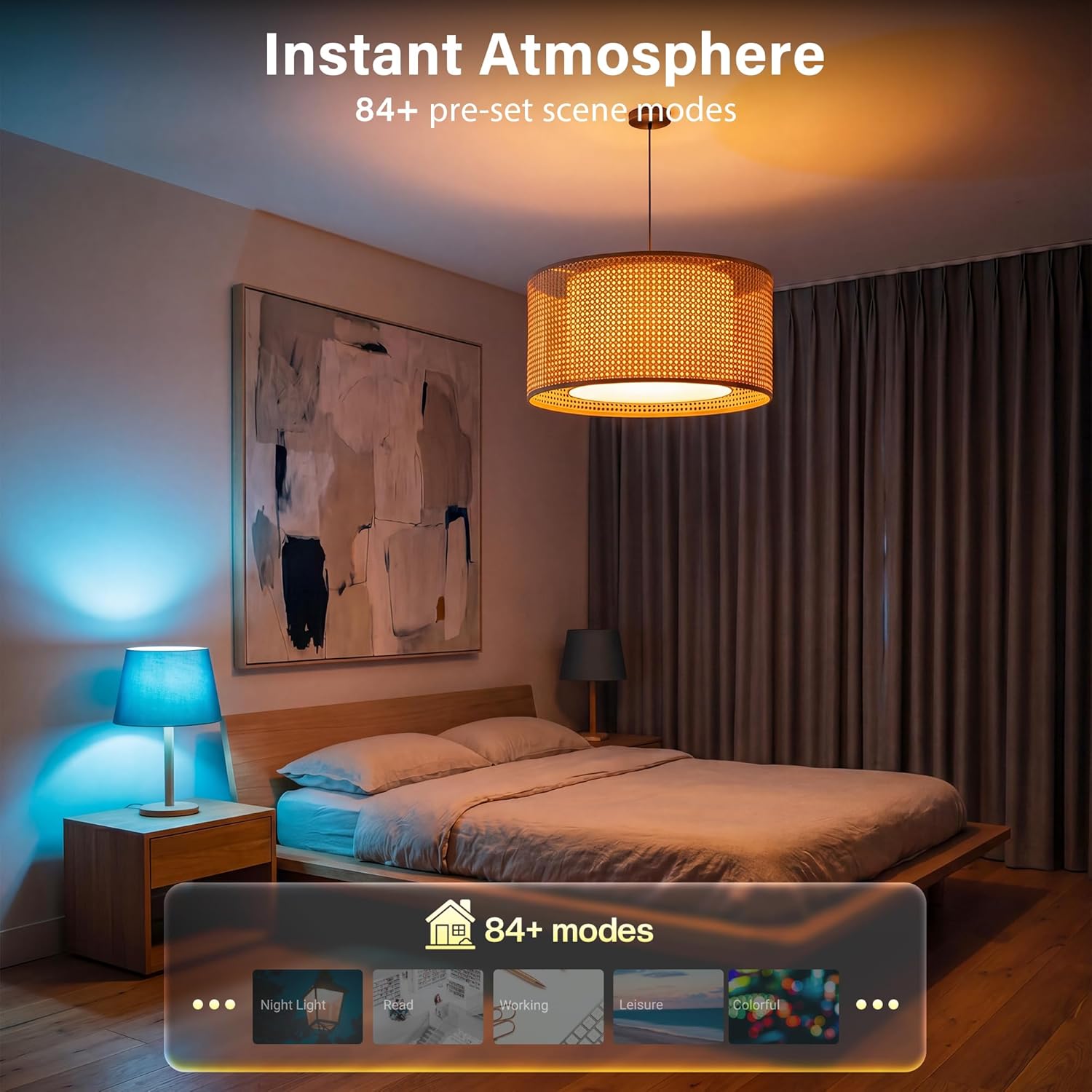
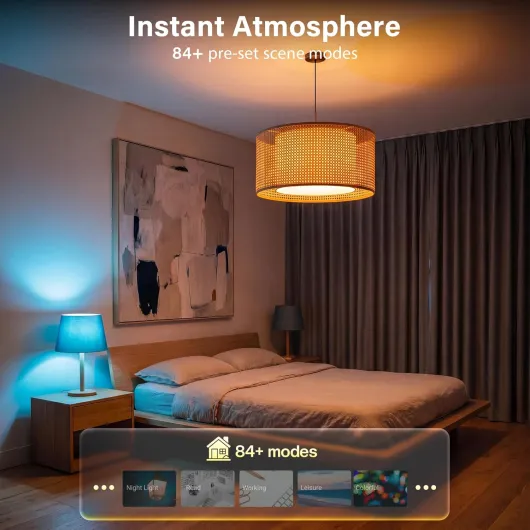
The scheduling and scenes side is where these bulbs are actually quite capable. You can: set timers, build sunrise/sunset routines, create colour loops, use pre‑set scenes like “Reading” or “Party”, and even sync to music using your phone’s microphone. The music sync is more of a fun gimmick than a serious feature, but it works: the bulb changes colour or brightness based on sound. For kids or parties, it’s decent entertainment.
Overall, in terms of effectiveness, I’d say: they do what they promise, but expect to spend 15–30 minutes during the first setup if you’re not used to smart home stuff. After that, daily use is easy, especially if you lean on Alexa or Google instead of always digging into the app. Not perfect, but good enough that I kept them installed and didn’t feel like sending them back.
Pros
- Bright for a 9W bulb, with usable warm and cool white plus decent colours
- No hub required, works with Alexa, Google and SmartLife/Tuya-style apps
- Good price for a 2-pack compared to Philips Hue or Hive colour bulbs
Cons
- Setup can be fiddly, especially with 2.4 GHz Wi‑Fi and pairing modes
- Occasional smart integration hiccups (bulb needs rediscovering in Alexa)
- App experience is less polished than bigger, more expensive brands
Conclusion
Editor's rating
After using the Avatar Controls B22 smart bulbs for a bit, my conclusion is pretty simple: they’re good budget smart bulbs with a slightly annoying setup phase. Once they’re connected, they’re bright, the colours are fun, whites are usable from warm to cool, and the dimming works smoothly. For everyday stuff like “Alexa, turn on the light”, basic schedules, and a bit of mood lighting, they handle it without drama.
They’re not perfect. The app feels a bit clunky compared to big-name brands, the initial pairing can take a couple of tries, and occasionally the smart link (Alexa especially) can be flaky. But for the price, you get a decent amount of functionality: no hub needed, solid brightness, remote control when you’re away, and a lot of flexibility with scenes and timers.
I’d recommend these to people who want cheap but capable smart bulbs, are okay spending 20–30 minutes on setup, and don’t need a super polished ecosystem. They’re a good fit for renters, students, or anyone just testing the smart home waters without blowing the budget. If you’re very picky about seamless integration, already invested in Hue/Hive, or you hate touching Wi‑Fi settings, you might want to skip these and stick to the more expensive, smoother systems.
![NEW White and Colour Ambiance Smart Light Bulb Starter Kit, 75W - 1100 Lumen [E27 Edison Screw] 2 Bulbs + Smart Button - With Bluetooth - Works with Alexa, Google Assistant and Apple Homekit E27 2 Pack Starter Kit + Button](https://www.smart-light-guru.com/storage/1015385/conversions/71yJIPbE0LL._AC_SL1500_-medium.webp)