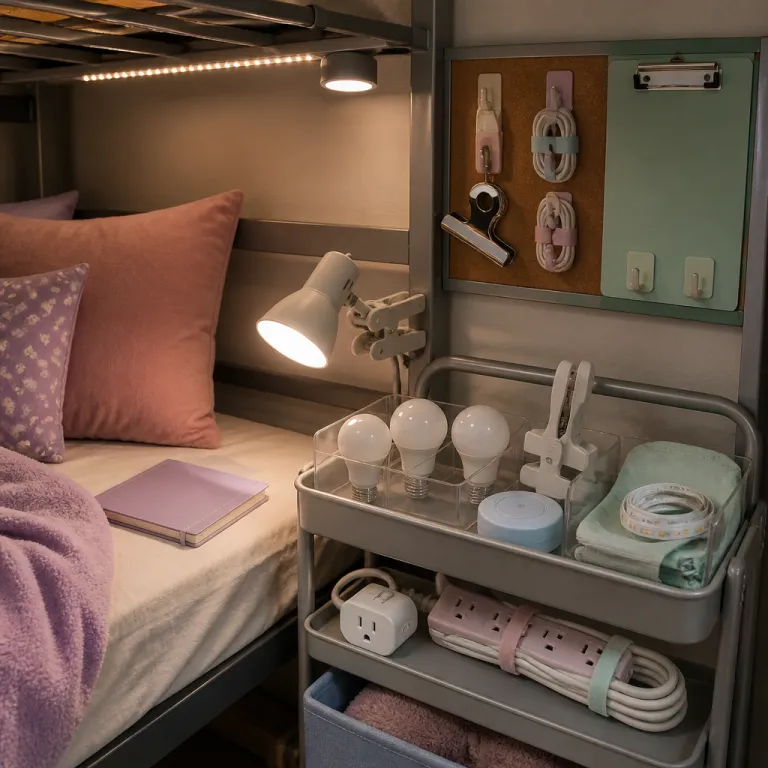
Why smart lights matter in a cramped dorm room college setup
Smart lights in a dorm room college setting solve three problems at once. They make a harsh institutional dorm ceiling light feel softer, they help you study longer without eye strain, and they keep peace with a roommate who does not share your sleep schedule. When you treat every lamp, LED strip and string of lights as part of one lighting plan, the whole room feels calmer and more functional.
Most dorms give you one overhead light, a couple of outlets and a warning about no hardwiring or permanent fixtures. That means every smart light, every lamp and every strip lights kit must plug in, be battery operated or clamp onto furniture, because facilities staff will not let you replace the ceiling devices or touch the wiring. The right mix of portable products lets you pack everything into a box in Aug and move it from dorm to dorm or back home without leaving any smart devices behind.
Think of your space in zones rather than one big lights bedroom blob. You need a focused reading light zone at the desk, a warm white wind down zone near the bed and a flexible social zone where color changing LED lights and music sync features can make movie nights feel special. Smart control through app control or a small lights remote keeps you from crossing the room just to turn a table lamp or floor lamp off when your roommate is already asleep, and it makes a tiny dorm feel closer to a smart home bedroom setup.
The 30 dollar starter kit: one smart bulb and one smart plug
For most first year students, the smartest smart lights dorm room college move is a tiny starter kit. One smart bulb in a desk lamp and one smart plug for a cheap floor lamp or string lights will usually cost less than the list price of a single premium bulb, yet it transforms how the room feels after dark. You avoid paying a high price for sponsored bundles that push extra products you do not need in a small dorm room.
Start with a basic A19 LED bulb that supports tunable white light and simple app control. In a shared dorm, I prefer Wi‑Fi bulbs that support Matter over Wi‑Fi, because they work with local control even when campus internet is flaky and you do not want to carry a hub between college and home. A mid range smart bulb from brands that sell on Amazon often undercuts the official list price of big names, but check whether the product is certified for your preferred voice assistant before you buy; many students pick a 60 W equivalent bulb rated around 800 lumens with a color rendering index near 80 for balanced dorm lighting, which aligns with common ENERGY STAR guidance for bedroom task lighting.
Pair that bulb with a compact smart plug for a cheap floor lamp or a set of string lights along the bed. When the wall switch kills power to the main dorm light, you still have a reading light from the desk lamp and a cozy glow from warm white string lights plugged into the smart plug. If you want color changing effects and music sync for parties, consider a budget friendly Wi‑Fi LED strip kit and read a detailed test from a reputable reviewer or consumer magazine that measures brightness, color accuracy and app reliability before spending more, paying attention to typical prices in the 15 to 30 dollar range and whether the strip supports both Alexa and Google Assistant.
Smart light strips and desk lamps that actually work for studying
Smart light strips are the secret weapon for making a dorm desk feel like a focused workspace instead of a cluttered corner. A single LED strip tucked under a shelf or along the back edge of the desk creates a soft wall wash that reduces contrast between your laptop screen and the rest of the room. When that strip lights kit supports app remote control and scheduled scenes, you can shift from cool white for study sessions to warm white for late night note reviews without touching a switch.
Look for strip lights that offer both color changing modes and precise white temperature control. Many cheap LED lights focus on saturated colors and music sync party tricks, but they skip accurate white light that your eyes need for long reading sessions in a dorm room. A well designed LED strip with a high lumen output and a decent color rendering index will make paper notes and textbook pages look clearer under the light; for example, a 10 m RGB kit rated around 1500 lumens with a CRI of 80 or higher will usually feel bright enough for a shared desk without washing out colors, a level similar to what lighting manufacturers recommend for general study areas.
Pair the strip with a compact LED desk lamp or a clamp on desk lamp that has a flexible arm. A good desk lamp with a focused reading light beam and a simple lights remote or touch control lets you keep the rest of the room dim while you work, which your roommate will appreciate. Before you buy, scan at least one in depth review from a trusted tech site or long term user test of color changing LED strip lights with app control and music sync so you know how the product behaves after months of daily use, and compare details like adjustable color temperature ranges, typical power draw in watts and whether the lamp or strip remembers its last brightness setting after you unplug it.
Roommates, wall switches and what to take home after college
The biggest enemy of any smart lights dorm room college setup is the wall switch. When a roommate flips that switch off, every smart bulb and every lamp on that circuit loses power, so no app control, no scenes and no gentle dimming down at night. The fix is to keep your most important smart devices on always on outlets and use smart plugs, remote control paddles or app remote widgets instead of the original switches.
In practice, that means leaving the institutional dorm ceiling light alone and building your own lighting layers with portable products. Use a floor lamp with a smart bulb for general light, a table lamp or LED desk lamp for task light and a few battery operated string lights or a short LED strip for soft background glow. If you want to understand how smarter ceiling fixtures work in more permanent spaces, a technical review from a lighting manufacturer or standards body that analyzes a canless smart LED downlight for modern ceilings shows what you are missing in a dorm and why portability matters here, especially when you compare fixed recessed lighting to plug in dorm lamps that can move with you.
When the semester ends, you should be able to pack every smart light, every lamp and every strip into one box. Anything wired into the building stays for the next tenant, but your plug in devices, your desk lamp and your portable reading light come home, ready for a bedroom or small apartment. Check the price history and list price on Amazon before buying new products in late Aug, because seasonal sales often drop the cost of LED lights, string lights and compact table lamp models just as students arrive and the stars of the back to school sponsored lists start to sell out.
FAQ
Are smart lights allowed in most college dorms
Most colleges allow plug in smart lights, smart plugs and portable lamps, but they usually ban hardwired fixtures and anything that requires altering dorm wiring. Check your housing rules for restrictions on high wattage devices, exposed LED strip lights or battery operated candles. When in doubt, choose certified products with clear safety labels such as UL or ETL marks and avoid modifying the existing dorm light fixtures.
How much should I budget for basic dorm smart lighting
A realistic student budget for smart lights in a dorm room college setup is around 30 to 60 dollars. That usually covers one smart bulb for a desk lamp, one smart plug for a floor lamp or string lights and possibly a short LED strip for accent light. Spending more mainly adds color changing effects and music sync features, not essential reading light quality.
Will smart lights still work if dorm Wi Fi is unreliable
Smart bulbs and plugs that support Matter over Wi‑Fi or local app control can keep working even when campus internet is unstable. You will still be able to turn a lamp on and off, adjust brightness and change from cool to warm white as long as your phone is on the same local network. Cloud dependent products may lose remote control features when the network is congested during peak evening hours.
What color temperature is best for late night studying
For focused studying at a desk, a cooler white light around 4000 to 5000 Kelvin keeps you alert and makes text appear crisp. When you are winding down in a dorm room before sleep, shifting your LED lights to a warm white around 2700 to 3000 Kelvin reduces blue light exposure. Smart lamps and strip lights that offer tunable white let you switch between these modes with a tap instead of changing bulbs.
Which smart lighting gear should I take home after graduation
Anything that plugs in or clamps on, such as desk lamps, floor lamps, LED strips and portable string lights, should go home with you. Those products work just as well in a bedroom or first apartment as they did in a dorm, and you have already paid the price. Leave only the basic bulbs that came with the dorm fixtures, because wired devices and institutional lamps belong to the college.