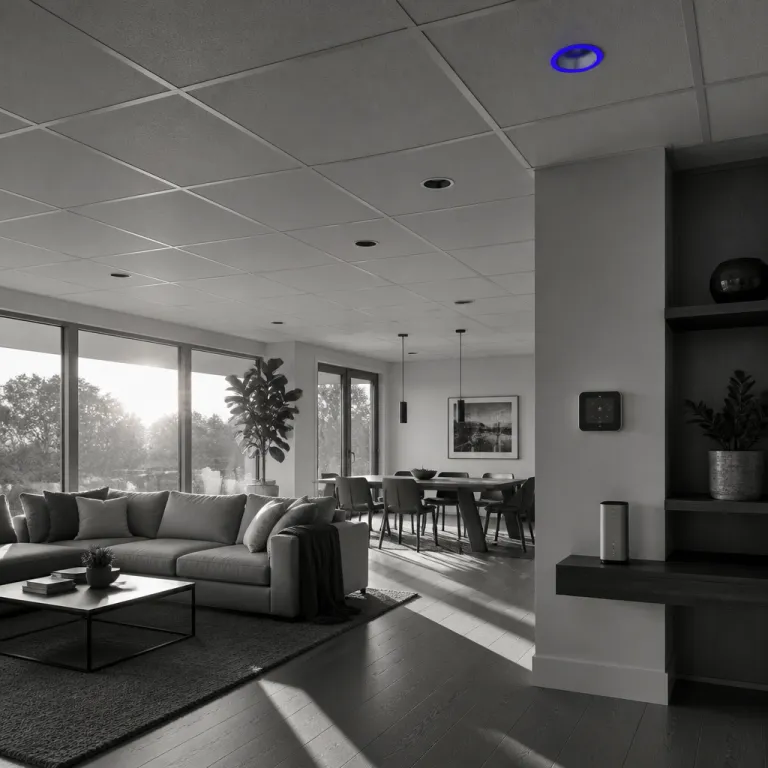
Why smart recessed lights suit a T bar ceiling grid
Smart recessed lights for T bar ceiling installations solve a common problem. Many offices and apartments rely on a suspended grid and drop ceiling, yet they need flexible lighting that behaves like a native smart ceiling light. Modern LED recessed fixtures now bridge this gap, combining discreet design with app control, automation, and tunable white options that work within standard grid modules.
In a typical 600 × 600 millimetre grid, flat panel ceiling lights or compact recessed light modules can sit directly on the bar structure without stressing the frame when they meet the manufacturer’s weight limits. These recessed lights for T bar ceiling layouts replace older fluorescent troffers, delivering higher efficiency and better ceiling lighting uniformity across workstations or living areas. Because each product is designed for the grid, installation often becomes tool free, with clips that rest on the bar and keep the recessed ceiling modules stable while maintaining access to the plenum above.
For smart homes and connected offices, the appeal goes beyond energy savings and lower price over the lifetime of the fixtures. A smart recessed lighting system lets you group multiple ceiling lights, adjust each light independently, and create scenes that match tasks such as reading, video calls, or relaxation. When you choose LED lights with selectable CCT and dimmable drivers that are compatible with common control protocols, you gain precise control over brightness and colour temperature without replacing any light fixtures or cutting new openings in the drop ceiling.
Key features that define smart recessed lighting for T bar grids
When you evaluate recessed lights for T bar ceiling projects, start with the LED engine and driver. High quality LED recessed modules should offer selectable CCT, meaning you can switch between warm white and cooler white tones directly on the product or via a remote control. This selectable dimmable capability matters because it lets one ceiling light serve different purposes throughout the day while maintaining consistent colour rendering and flicker performance.
Look for recessed lighting fixtures that are explicitly rated for a drop ceiling grid and that mention compatibility with T bar rails in their documentation. Many flat panel ceiling lights are designed as surface mount or lay in options, but not all are engineered to sit safely on a bar without extra brackets or safety wires. Smart models such as advanced bar LED panels or compact downlights often integrate wireless chips, allowing you to manage every recessed light from a phone or voice assistant while keeping the ceiling visually clean and avoiding clutter from separate control boxes.
Smart ceiling lights have matured quickly, and some models now pack hundreds of LEDs into a slim, flat housing. For example, a typical 600 × 600 millimetre smart LED panel rated around 3 600 lumens at 30 to 40 watts with a selectable CCT range of roughly 3 000 to 6 500 kelvin can deliver uniform lighting and smooth dimming when the fixtures are correctly spaced in the grid. For T bar installations, that same principle applies; evenly distributed recessed lights reduce glare on screens and create a balanced field of light across the entire drop ceiling, especially when paired with appropriate diffusers and low UGR optics.
Design choices: flat panels, downlights, and hybrid ceiling light fixtures
Not every recessed light for a T bar ceiling looks the same, and design choices affect both aesthetics and performance. Flat LED panels sit directly on the grid and mimic traditional troffers, while round recessed lights create more focused beams that can highlight specific zones. Hybrid fixtures combine a flat backlit panel with a central downlight, giving you layered lighting from a single product and allowing accent and ambient illumination in one ceiling opening.
For open plan offices, flat panel ceiling lights often provide the most even ceiling lighting, especially when spaced one per grid bay. In residential spaces with a drop ceiling, smaller recessed light modules can create a more intimate feel, particularly above seating areas or kitchen islands. When these LED lights are selectable dimmable, you can tune each zone separately, using warmer white light for relaxation and cooler white for tasks without changing the fixtures themselves or altering the T bar layout.
Smart control adds another design layer because you can program scenes that shift the recessed lighting throughout the day while keeping the grid visually consistent. A guide on how core lighting in smart ceiling lights transforms everyday spaces explains how central fixtures set the mood while accent lights add depth. Applying that thinking to recessed lights for T bar ceiling layouts means mixing flat panels for general illumination with targeted recessed ceiling downlights for visual interest, while maintaining a coherent pattern across the suspended grid.
Installation realities in T bar and drop ceiling environments
Installing recessed lights for T bar ceiling grids is usually simpler than cutting into solid plasterboard, but it still demands planning. Each recessed light or flat panel must match the grid module size, and the weight must be appropriate for the bar system. Many LED recessed fixtures are designed as lay in units for a drop ceiling, so they rest on the grid without extra surface mount hardware, though safety cables to the structure above are often recommended or required by code.
Electricians often route cabling above the ceiling tiles, then connect each ceiling light through quick connectors to speed up work. Smart fixtures may require a neutral wire at every location, especially when pairing with advanced dimmers or remote control modules. Before you buy any product, confirm whether the driver is integrated with the light fixtures or supplied as a separate box that must be supported independently from the bar and kept clear of insulation or other services.
Retrofitting older fluorescent grids with LED lights can also expose issues such as sagging rails or damaged tiles. In those cases, upgrading to new T bar components and replacing stained tiles improves both the appearance and the stability of the recessed ceiling. When you combine structural refresh with modern recessed lighting, you gain better safety, higher efficiency, and a more contemporary look in one coordinated project that respects local electrical and building regulations.
Smart control, automation, and the role of cordless lighting
Once recessed lights for T bar ceiling grids are in place, control becomes the next frontier. Smart LED recessed fixtures can connect via Wi Fi, Zigbee, or Bluetooth, letting you manage every ceiling light from a phone, wall keypad, or voice assistant. Many systems also support a handheld remote control, which is useful in meeting rooms or rental spaces where not everyone has app access or permission to change scenes.
Automation routines allow your recessed lighting to respond to time of day, occupancy, or ambient daylight. For example, you might program the ceiling lights in a home office to brighten with cooler white light in the morning, then shift to warmer tones in the evening to reduce eye strain. Cordless smart lighting is becoming a category in its own right, and understanding how it fits with wired recessed lights helps you design a flexible, resilient system that can adapt as furniture layouts or tenant needs evolve.
Battery powered lamps and portable bar LED strips can complement fixed recessed lights by filling dark corners or adding accent lighting without touching the grid. When these portable LED lights share the same app ecosystem as your recessed ceiling fixtures, scenes can blend both types of light seamlessly. The result is a layered lighting strategy where the T bar grid handles core illumination while mobile products adapt to changing needs and temporary activities such as events or pop up displays.
Cost, compliance, and how to evaluate value beyond regular price
Budget decisions around recessed lights for T bar ceiling projects often start with the regular price on a product page. Yet the true cost of lighting includes energy use, maintenance, and the flexibility you gain from features such as selectable CCT and dimmable drivers. LED recessed fixtures usually offer a strong price save over fluorescent options because they consume less power and last longer before replacement, especially when they meet recognised performance benchmarks.
When comparing ceiling lighting options, calculate the expected energy consumption in kilowatt hours per year for each ceiling light, then multiply by your local electricity tariff. As a simple example, replacing a 72 watt fluorescent troffer running 3 000 hours per year with a 36 watt LED panel cuts annual use from about 216 to 108 kilowatt hours; at 0.20 per kilowatt hour, that saves roughly 21.60 per fixture each year, which can quickly offset a higher purchase price. Smart recessed lighting that supports deep dimming can reduce that figure further, especially in spaces where lights run many hours but do not always need full output.
Some manufacturers highlight compliance with Buy American rules or American BAA standards, which can be essential for public sector or institutional projects. Value also comes from how many roles a single set of recessed lights can play over time. A system with selectable dimmable drivers and selectable CCT can adapt as a room changes from open office to classroom or from playroom to studio, avoiding new fixtures and extra labour. When you evaluate price, consider not only the immediate discount or price save but also the long term flexibility, control options, and regulatory fit that each set of light fixtures brings to your T bar ceiling.
Key statistics on smart recessed lighting for T bar ceilings
- According to the International Energy Agency’s “Lighting” tracking report (IEA, 2022), LED lighting accounts for more than half of global lighting sales, and replacing fluorescent troffers in drop ceilings with LED recessed panels can cut energy use by up to 50 percent in commercial spaces when older lamps and ballasts are upgraded; the report notes that continued adoption of high efficacy luminaires is central to meeting efficiency targets.
- Data from the U.S. Department of Energy’s “Energy Savings Forecast of Solid-State Lighting in General Illumination Applications” (DOE, 2016) shows that lighting controls such as dimming and occupancy sensors typically deliver an additional 24 to 38 percent energy saving on top of LED efficiency, which significantly improves the payback period for smart recessed lights in T bar ceiling grids and supports the case for integrated controls.
- Market research from firms tracking smart home adoption, such as the “Smart Lighting Market” analyses published in 2021, indicates that smart ceiling lights and recessed fixtures are among the top three connected lighting categories by revenue, reflecting strong demand for controllable lighting in both residential and small office drop ceiling installations and sustained growth in retrofit projects.
- Studies on workplace design, including post occupancy evaluations cited in lighting ergonomics reviews around 2019, report that improved ceiling lighting quality, including uniformity from flat LED panels and tunable white options, can raise reported visual comfort scores by more than 20 percent compared with legacy fluorescent recessed lighting in similar T bar layouts, supporting investment in higher quality luminaires.
FAQ about smart recessed lights for T bar ceilings
Are smart recessed lights compatible with any T bar ceiling grid
Most smart recessed lights designed for T bar ceilings are built for standard grid sizes such as 600 × 600 or 600 × 1 200 millimetres. You must check the product specifications to confirm compatibility with your particular drop ceiling system and bar profile. If the grid is non standard or damaged, an electrician may need to reinforce or adapt the frame before installing new fixtures.
Do I need special wiring for smart recessed lighting in a drop ceiling
Smart recessed lighting usually uses the same mains wiring as conventional LED lights, but it often requires a neutral conductor at each location. The main difference lies in the driver and control module, which handle dimming and wireless communication. Always follow local electrical codes and, for complex systems, consult a qualified installer.
How many recessed lights should I install in a T bar ceiling
The number of recessed lights depends on room size, ceiling height, and the tasks performed in the space. Lighting designers often start with one flat panel or recessed light per grid bay in offices, then adjust based on target lux levels. For homes, you can often use fewer fixtures and rely on dimmable control to fine tune brightness.
Can smart recessed ceiling lights work without an internet connection
Many smart ceiling lights and LED recessed fixtures continue to operate locally even if the internet goes down. Basic functions such as on or off and dimming usually work through wall switches, local remotes, or direct Bluetooth connections. Cloud features such as remote access from outside the building will pause until connectivity returns.
What is selectable CCT and why does it matter for T bar ceilings
Selectable CCT means you can choose different colour temperatures, such as warm or cool white, from the same recessed light using a switch or software. In T bar ceilings, this flexibility lets one set of fixtures support varied uses, from focused work to relaxed collaboration. It also simplifies purchasing because a single product can meet multiple lighting preferences across different rooms.