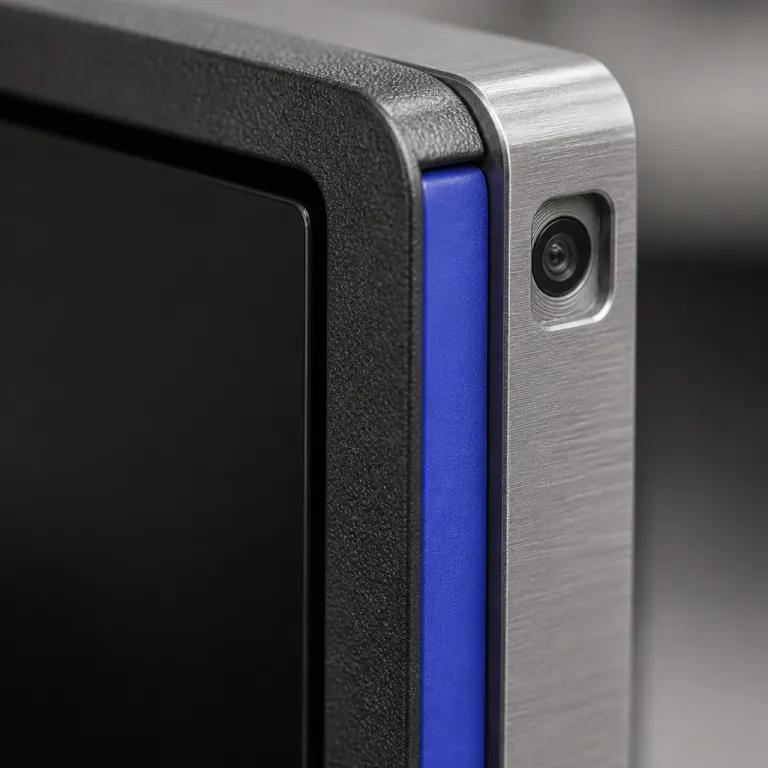
Hue sync camera leak and the end of the HDMI box era
The leaked Philips Hue Screen Sync camera TV system signals a major shift away from the old HDMI sync box model. Early details from HueBlog describe a single lens fisheye camera that mounts above or below your TV screen and reads on screen content in real time, then drives Hue lights around the room without any extra HDMI devices in the chain. For smart home buyers who already own a Hue bridge and several Hue lights, this camera based screen sync approach will finally remove the fragile stack of one more box, one more HDMI cable, and one more power brick from the entertainment area.
Until now, Philips Hue relied on the Philips Hue Play HDMI sync box to sync light with movies, games and music, which meant routing every console and streaming stick through that box. In my testing, that HDMI sync box worked well with a single play HDMI input, but once you added more HDMI devices or tried to pass Dolby Vision content, the setup became fussy and the box supports list felt narrower than the marketing suggested. A camera that reads the screen directly should support any content source, any app and any streaming stick, because the camera only cares about the light and color on the panel, not which sync app or console generated it.
This leak also confirms that Philips Hue now treats camera based sync as the third pillar after the sync box and the native TV sync app integrations on recent Samsung and LG televisions. For buyers, that means three distinct Philips Hue sync paths for the same entertainment goal, each with different tradeoffs in latency, picture accuracy and cost. The new Philips Hue Screen Sync camera TV option will likely sit below the HDMI sync box on price while offering simpler setup, which is exactly where the market pressure from Govee and Nanoleaf has been pushing Philips for years.
How the Hue Screen Sync camera could work in real living rooms
Based on the leak, the Philips Hue Screen Sync camera TV accessory will probably clamp to the top or bottom bezel and use a wide angle lens to see the full screen. In practice, that means you will not need to rewire your rack, swap HDMI cable runs or worry whether your soundbar’s HDMI passthrough will support the sync box, because the camera simply watches the screen and sends hue sync data back to your bridge over Wi Fi. For renters or anyone with wall mounted televisions where the old Philips Hue Play HDMI sync box never fit cleanly, this camera could be the best balance between accuracy and a clean entertainment area.
To get full value, you will still need a Hue bridge, the Hue app and compatible Hue lights such as a play gradient lightstrip behind the TV and a pair of Hue Play light bars on the cabinet. In my own tests with gradient lightstrip kits and Hue Play bars, the most convincing lights sync effect came from combining a bright backlight behind the screen with side mounted smart lights that washed the wall, then grouping them into a single entertainment area in the Hue app. If you are starting from scratch, a dedicated Hue starter kit with a bridge and color capable bulbs, such as a bridge and GU10 smart bulbs bundle, will give you the basic smart lights you need before you add any screen sync hardware.
One open question is how precisely the Hue Screen Sync camera TV system will handle HDR and Dolby Vision highlights compared with the older HDMI sync box. With HDMI sync, the box could read the video signal directly, but it sometimes misinterpreted tone mapping from different apps and televisions, which led to washed out color on Hue lights during very bright scenes. A camera based hue sync approach will see the final calibrated picture that your panel shows, so while there may be a few extra milliseconds of delay, the color mapping to each light in the entertainment area should more closely match what your eyes see on the screen.
Govee, Nanoleaf and what Philips must get right with Hue play
Govee has dominated camera based TV backlighting for years with its triple camera bars and gradient lightstrip kits that cost around two hundred euros, undercutting the Philips Hue Play HDMI sync box by a wide margin. Nanoleaf followed with its own camera and lightstrip combos, proving that many buyers prefer a simple camera and strip over another HDMI box, even if the lights sync effect is slightly less precise. The leaked Philips Hue Screen Sync camera TV product shows that Philips now accepts this reality and will try to bring its hue play ecosystem, its hue bridge reliability and its hue app polish to the same camera driven entertainment market.
For Philips to justify a higher price than Govee, the Hue Screen Sync camera TV kit will need flawless app support, rock solid Wi Fi stability and tight integration with existing hue lights in mixed rooms. In a typical living room where you already run a gradient lightstrip behind the TV, a pair of Hue Play bars, ceiling bulbs and maybe a floor lamp, the ability to define one entertainment area in the sync app and have every light respond in a coordinated way is where Philips Hue still feels best in class. If you want to see how a multi light entertainment setup can look in practice, the modular wall mounted bars in this screen sync wall light kit give a good sense of how layered smart lights can transform a room.
Looking ahead, the leaked Hue Screen Sync camera TV accessory also hints at a future where the old sync box becomes a niche option reserved for gamers who demand the lowest possible latency. For most people who simply want their Philips Hue lights to follow the color and motion of a movie or a sports game, a camera that clips to the screen and talks directly to the hue bridge will be easier to set up, easier to move between rooms and easier to explain to guests. If you already own a more advanced Hue bridge based starter kit such as this bridge pro and GU10 spotlights pack, the leaked camera looks like the missing piece that finally lets your whole Philips Hue entertainment setup keep pace with what Govee built, without giving up the mature Hue ecosystem you already invested in.