Summary
Editor's rating
Value for money: good light quality, but you pay for it
Chunky design that looks fine in a lamp, less so in a tiny fixture
Packaging and setup: compact box, but pairing can be a pain
Durability: mixed signals between specs and user reports
Brightness and colors: strong where it counts, with some app headaches
What this LIFX bulb actually offers in real life
Pros
- Very bright (1100 lumens) and usable as a main room light, not just mood lighting
- Wide color and white temperature range with decent RGBW color quality
- Works over Wi‑Fi with no hub required and supports Alexa, Google, and HomeKit
Cons
- Setup and pairing can be fussy, especially with dual-band Wi‑Fi or less tech-savvy users
- Bulky design that looks a bit gadget-like in exposed fixtures
- Price is higher than many competing Wi‑Fi smart bulbs with similar basic features

Specifications
View full product page →| Brand | LIFX |
A smart bulb that does a lot… when it actually connects
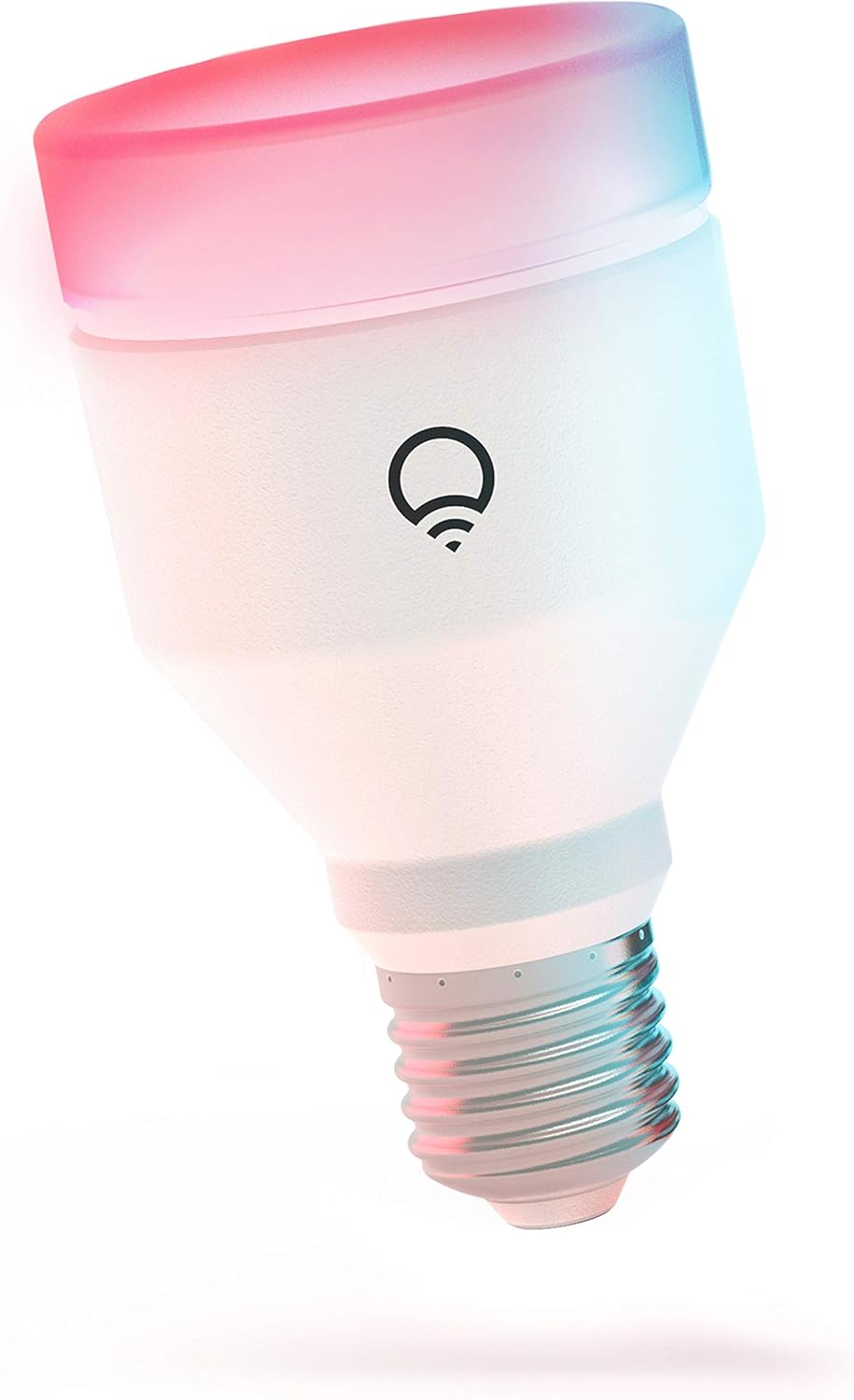
I’ve been using the LIFX Color A19 1100 lumens bulb for a while now in my living room lamp, and I’ll be blunt: it’s a pretty solid smart bulb when it’s connected, but the setup and reliability are not perfect. On paper, it ticks all the boxes: Wi‑Fi, no hub, works with Alexa, Google, HomeKit, loads of colors, and bright enough to replace a 75W incandescent. In reality, it’s a mix of “nice when it works” and “why is this not pairing again?”.
The main thing that stands out is the brightness. At 1100 lumens, it’s not just mood lighting. It can easily light up a medium room on its own. I used it as my main evening light and never felt it was too dim, even when reading. Compared to a lot of cheaper RGB bulbs that get weak in white mode, this one actually feels like a real bulb first, and a color toy second.
But you also see the flip side: everything depends on Wi‑Fi and the app. If your router is a bit far away, or if you only have a 5 GHz network active, you’re going to swear a bit during setup. I had to reset it twice before the app finally detected it properly. Some Amazon reviews mention pairing issues and missing codes; I didn’t have the code problem, but the initial pairing definitely wasn’t plug‑and‑play smooth.
So if you’re expecting a magic, zero‑effort smart bulb, this isn’t that. It’s more like: you fiddle with it for 15–20 minutes, maybe swear once or twice, and then once it’s in, it mostly behaves and gives you very flexible lighting. In the rest of the review I’ll break down what worked well for me (brightness, colors, no hub) and what annoyed me (app quirks, reliability worries, and price).
Value for money: good light quality, but you pay for it
In terms of value, this LIFX bulb sits in a weird middle zone. It’s usually more expensive than basic smart bulbs from brands like TP-Link (Kasa) or generic ones you find on Amazon, but it’s often cheaper than going full Philips Hue with hub and all, especially if you only want one or two bulbs. For the price, you get strong brightness, good colors, and no need for a separate bridge, which is nice if you don’t want to commit to a whole ecosystem.
What I liked is that it actually replaces a real 75W bulb in terms of brightness, and the whites are usable for everyday tasks. A lot of cheaper RGB bulbs are okay for mood lighting but weak as main lights. Here, you can genuinely use it as your main bulb in a room. That alone gives it more value in my opinion: you’re not just paying for colored party light, you’re paying for an actual, usable light source that also does colors.
On the downside, the price feels a bit steep when you add the app quirks, the occasional reliability complaint, and the fact that CRI (around 80) is only average. For this cost, I would have liked better color rendering for whites and a smoother setup experience. When you compare it to cheaper Wi‑Fi bulbs that now also support Alexa and Google, it’s harder to justify unless you really care about that extra brightness and LIFX’s color handling.
So I’d say the value is decent but not mind-blowing. If you catch it on sale, it becomes much more attractive. At full price, it’s for people who want a bright, flexible bulb and are okay paying a bit more for it, knowing that the app isn’t perfect. If you just want “a smart bulb that turns on and off with your voice” and don’t care about brightness or fine color control, you can clearly find cheaper options that will get the job done.
Chunky design that looks fine in a lamp, less so in a tiny fixture
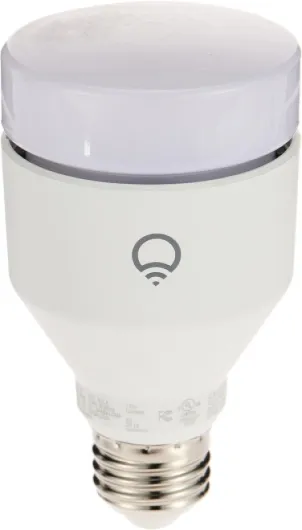
Design-wise, this LIFX bulb is not small or discreet. It has that slightly industrial, polygon-style shape that LIFX has used for years. The top is diffused plastic for light spread, and the lower part is a thicker body with some edges. It’s not ugly, but it’s definitely bulkier than a regular A19 bulb. In a table lamp or floor lamp, you don’t really notice it once the shade is on. In an exposed pendant or a very small fixture, it looks a bit techy and can stick out physically.
The dimensions are about 6.3 cm wide and 11.5 cm high, so slightly taller and thicker than many standard bulbs. I tried it in three fixtures: a simple IKEA table lamp, a semi-enclosed ceiling fixture, and an exposed socket over the kitchen counter. It fit all three, but in the ceiling fixture it was close to the glass, and in the exposed socket you clearly see the chunky body. If you’re into a minimalist or vintage look, this design may not be your favorite; it’s more “smart gadget” than “discreet light source”.
One thing I did like is the light distribution. The bulb has a wide beam angle (around 210°), and in practice it spreads light across the room pretty evenly. I didn’t notice strong hotspots or weird shadows. For reading on the couch, the light from a single bulb in a floor lamp was enough. Compared to some cheaper smart bulbs that are more directional, this one behaves more like a standard bulb and less like a spotlight, which is a plus if it’s your main light.
So overall, the design is practical but not stylish. It’s clearly built to handle the electronics and Wi‑Fi antenna rather than to look slim. If your bulb is hidden under a shade, you won’t care. If you have exposed pendants or decorative fixtures, you should know it will look a bit like a gadget. Personally, it didn’t bother me, but I wouldn’t put three of these over a dining table where the bulbs are clearly visible.
Packaging and setup: compact box, but pairing can be a pain
The packaging is compact and fairly simple: a small box with the bulb protected inside. Nothing fancy, just a molded insert to keep it from bouncing around. Mine arrived without damage, and the bulb was clean, no scratches or marks. Inside you get the bulb and a small quick start guide. No extra accessories, which is normal for a smart bulb. The design of the box is modern enough, but nothing you’ll keep; it’s just functional cardboard that goes straight to recycling after setup.
Where it gets tricky is the setup experience. The box and the bulb have the usual identifiers, but some Amazon users complain there’s no code for the app to detect. I didn’t have a missing code issue, but I did have to restart the pairing process twice. The app asks you to connect to the bulb’s temporary Wi‑Fi network, then switch back; if your phone is stubborn about networks or if you have both 2.4 GHz and 5 GHz running with the same name, it can get confusing. I ended up switching off the 5 GHz on my router for 10 minutes just to finish the pairing cleanly.
The instructions in the leaflet are short and a bit too optimistic. They assume everything will just work on the first try. In reality, expect to spend 10–20 minutes if you’re not used to smart home stuff, especially if you want to integrate it straight into HomeKit or Google Home. Once it’s in, you don’t touch the packaging again, but that first impression matters. I can see why some people left angry reviews about pairing and “broken app”. It’s not totally broken, but it’s not idiot-proof either.
So if you’re buying this for someone who’s not very tech-savvy, be ready to help them with the initial setup. The packaging protects the bulb well enough, but the onboarding process could be clearer and more forgiving. For this price level, I would have liked slightly better documentation or at least a more guided, step-by-step process in the app.
Durability: mixed signals between specs and user reports
On paper, this bulb is supposed to last around 25,000 hours, which is pretty standard for a decent LED smart bulb. If you use it 3 hours per day, that’s many years before it should die. During my test period, obviously I didn’t hit that kind of usage, but I did leave it on for long stretches (6–8 hours at a time, often at 60–80% brightness) and it never overheated or showed any weird behavior. The body does get warm, which is normal for a powerful LED, but not scorching hot. You can still touch it without burning your fingers.
That said, looking at some Amazon reviews, there are a few red flags. There are people saying the bulb stopped working after a week, which is not reassuring. It’s hard to know if that’s a batch issue, user wiring problem, or just bad luck, but it’s there. I’ve also seen in the past that some older LIFX models had reliability issues over a couple of years (Wi‑Fi modules failing or bulbs not turning on). So while my unit behaved fine, I’m not blindly trusting the 25,000 hours claim either.
The physical build feels solid enough. The plastic diffuser and the aluminum/plastic body don’t feel cheap. I screwed and unscrewed it several times from different fixtures and the base stayed tight, no wobble. It’s clearly meant for indoor use only, and I wouldn’t put it in a very hot or fully enclosed fixture without ventilation, because smart bulbs hate heat. If you respect that, you probably reduce the risk of it dying early.
In short, durability is a bit of a question mark. The specs say it should last years, and my short-term use supports that it’s at least well-built. But the mix of some 1-star reports about early failures and LIFX’s past reputation makes me cautious. If you’re planning to buy just one or two, it’s probably fine. If you want to outfit your whole house, I’d maybe test one for a few months first before going all in.
Brightness and colors: strong where it counts, with some app headaches
On the performance side, this is where the LIFX Color bulb is actually pretty solid. At full white brightness, it easily lights up a 15–20 m² room. I replaced a normal 75W equivalent LED bulb in my living room and didn’t feel any drop in brightness. If anything, the light felt slightly more even. For reading, working on a laptop, or just hanging out, 70–80% brightness was enough. I rarely pushed it to 100% because it was a bit too strong for evening use.
The colors are also decent. You get a wide range, and the RGBW setup helps with more accurate tones. Reds and blues look strong, not washed out, and greens are okay too. Some cheaper bulbs tend to look dull or too neon in certain colors; this one is better than average. I used it a lot in softer colors: warm orange for movie nights, dim purple or blue in the background when listening to music. You can fine-tune things quite a bit in the app, and the transitions between scenes are smooth. No flickering or weird jumps when dimming or changing color.
Where it gets a bit annoying is the reliability of control. The bulb itself didn’t crash on me, but the app sometimes took a few seconds to connect, or said the bulb was offline when it clearly wasn’t. A quick refresh or closing/reopening the app usually fixed it, but it’s the kind of small friction that gets tiring over time. Voice control with Alexa was more stable: I’d say 9 times out of 10 the command worked right away, and the last time there was a 1–2 second delay. Not catastrophic, but not perfect either.
As for latency, once the app is connected or the voice assistant hears you, the reactions are pretty quick. Lights change color or brightness in under a second. Schedules also worked reliably for me: the light turned on and off at the right times every day. So in pure performance (brightness, color quality, reaction time), it’s strong. The weak point is the ecosystem around it: the app feels a bit clunky at times, and if your Wi‑Fi isn’t stable, you’ll notice it right away with this bulb.
What this LIFX bulb actually offers in real life
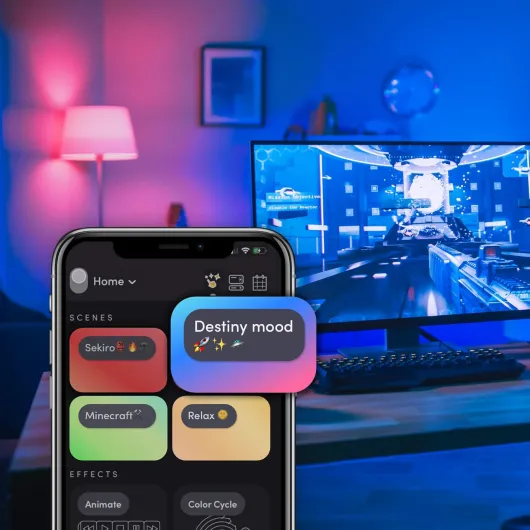
On paper, the LIFX Color A19 1100 lm is a fairly complete smart bulb. It uses Wi‑Fi directly, so there’s no bridge or hub to buy separately. You just screw it into an E26 socket, power it on, and go through the LIFX app on your phone. It supports Alexa, Google Assistant, Apple HomeKit and Siri, which is nice if you’re mixing ecosystems or planning to switch later. I tested it mainly with Alexa and HomeKit; both integrations worked once the initial setup was done.
In terms of numbers, you get up to 1100 lumens, which is roughly a 75W incandescent equivalent. Power draw is around 11.5W, so it’s efficient for the brightness you get. The color temperature range is wide (1500–9000K according to the brand, even though the listing only mentions 9000K), so you can go from very warm yellowish light to cold bluish white. The bulb is RGBW, which means there are dedicated white LEDs, and that does help keep whites more natural compared to cheap RGB-only bulbs that always look a bit off.
Daily use is simple: once it’s configured, you control it via the LIFX app or voice. You can turn it on/off, dim it, change colors, and set schedules. I set up a basic routine: warm white at 40% brightness in the evening, cooler white in the morning, and a red/orange scene at night. It handled all that without complaining, and the transitions were smooth, not jerky. There’s also remote control: if you’re out, you can still turn the light on/off as long as your Wi‑Fi and internet are up.
In practice, the product is clearly aimed at people who want a flexible light without buying a whole ecosystem like Philips Hue with a hub. If you’re already deep into HomeKit or Alexa routines, it integrates reasonably well. If you just want a simple bulb you never have to think about, this may feel a bit overkill and slightly finicky. It’s more for someone who likes tweaking scenes, colors, and automations rather than just replacing a normal bulb and forgetting about it.
Pros
- Very bright (1100 lumens) and usable as a main room light, not just mood lighting
- Wide color and white temperature range with decent RGBW color quality
- Works over Wi‑Fi with no hub required and supports Alexa, Google, and HomeKit
Cons
- Setup and pairing can be fussy, especially with dual-band Wi‑Fi or less tech-savvy users
- Bulky design that looks a bit gadget-like in exposed fixtures
- Price is higher than many competing Wi‑Fi smart bulbs with similar basic features
Conclusion
Editor's rating
Overall, the LIFX Color A19 1100 lumens bulb is a strong smart bulb in terms of brightness and flexibility, but it’s held back by a slightly clunky app and some question marks around reliability. When it’s connected and behaving, it’s genuinely useful: it’s bright enough to replace a normal 75W bulb, whites are good enough for daily use, and the color range gives you plenty of options for mood lighting. Not needing a hub is also a real plus if you don’t want another box plugged into your router.
On the other hand, setup can be annoying if your Wi‑Fi isn’t perfectly configured, and some users clearly had pairing or early failure issues. The design is a bit bulky, the CRI is only average, and the price is higher than many entry-level smart bulbs. So it’s not the obvious choice for everyone. I’d say it’s best for people who care about brightness and color control, already have Alexa/Google/HomeKit at home, and don’t mind spending a bit of time during initial configuration. If you just want cheap, simple smart lighting that you never touch again, there are more basic bulbs that will annoy you less and cost less.


![L510E Smart Bulb, Smart WiFi LED Light, E27, Works with Amazon Alexa(Echo and Echo Dot), Google Home, Dimmable Soft Warm White, No Hub Required [Energy Class F] 1 Pack](https://www.smart-light-guru.com/storage/939180/conversions/71WGq8rBN-L._AC_SL1500_-medium.webp)