Summary
Editor's rating
Is this starter kit really worth the money?
Bulbs and bridge: looks basic, works fine
Smart button battery and general power considerations
Built to last? At least it doesn’t feel cheap
Brightness, colors, and how it behaves day to day
What you actually get in the box and how it works in real life
Does it actually make the house smarter, or just more complicated?
Pros
- Bright 1100 lumen bulbs with good color quality and very low dimming
- Stable bridge-based system with quick response and solid integrations (Apple Home, Alexa, Google, SmartThings)
- Smart button included and actually useful for everyday control without apps
Cons
- High upfront cost compared to simple Wi‑Fi bulbs
- Setup is more involved and you’re locked into the Hue ecosystem once invested

Specifications
View full product page →| Brand | Philips Hue |
Smart lights that finally behave like normal lights (most of the time)
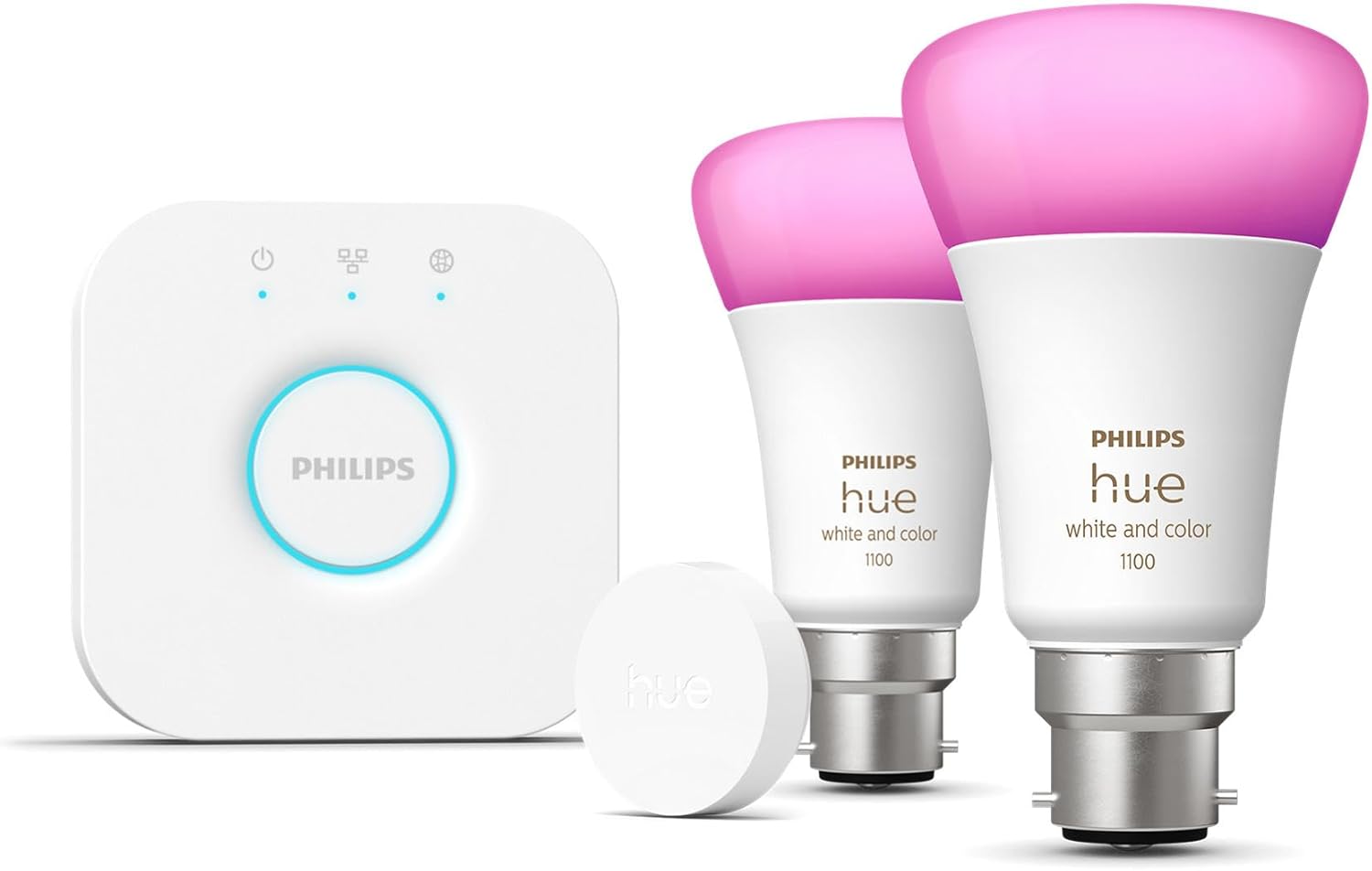
I’ve been curious about Philips Hue for years, but always bounced off because of the price and the whole “you need a bridge” thing. I finally grabbed this starter kit with the bridge, 2 B22 bulbs and the smart button, and used it as my main lighting setup in the living room for about three weeks. So this isn’t an unboxing impression, it’s after living with it every day: evenings on the couch, early mornings, and a couple of movie nights.
The short version: it works well and feels pretty polished, but you really feel that you’re buying into a whole system, not just two bulbs. The bridge is both the strong point and the annoying part: once it’s configured, everything is stable and responsive, but the setup is more involved than simple Wi‑Fi bulbs. If you just want a single smart bulb in a bedroom, this kit is probably overkill. If you plan to add more lights later, it starts to make sense.
I tested it mainly with an iPhone (Apple Home) and an Echo Dot (Alexa). Voice control worked reliably once everything was paired, but there were a few hiccups during the first day: one bulb not responding, scenes not syncing, that kind of stuff. Nothing dramatic, but you do have to tinker a bit with the app and firmware updates before it all settles down. After that, it was pretty smooth.
Overall, I’d say this kit is pretty solid if you want to properly dive into smart lighting, not just play around. It’s not cheap, and there are cheaper brands that also change colors, but the Hue ecosystem is more stable and better integrated in my experience. Just don’t expect magic straight out of the box: plan an hour for setup, updates and figuring out the app.
Is this starter kit really worth the money?
Let’s talk about the price, because that’s the main sticking point with Philips Hue. You’re paying for two bulbs, a bridge, and a smart button, and it’s clearly more expensive than buying a couple of random Wi‑Fi bulbs. If you only want to control one lamp with your phone, this kit is not great value. You’re basically paying for the hub and the ecosystem, which doesn’t make sense for a single bulb scenario. In that case, a standalone Wi‑Fi bulb from a cheaper brand will do the job for much less.
Where the value starts to make sense is if you plan to expand your setup. The bridge can handle up to 50 bulbs and accessories, so each extra Hue bulb you add later benefits from the same stable system, app, and integrations. If you see yourself slowly converting multiple rooms over the next year or two, starting with this kit is more logical. The included smart button also adds value: if you had to buy a separate remote, you’d pay extra anyway. Here it’s in the box and actually useful.
In terms of what you get for the money: you have reliable connectivity, good color quality, strong integration with Apple Home, Alexa, Google Assistant, and SmartThings, and a brand that will likely still update the app in a few years. Compared to my experience with cheaper bulbs where the app vanishes from the store or stops being updated, that matters. You’re not just buying hardware, you’re also paying for a bit of long-term support and stability.
So overall, I’d rate the value as decent but not outstanding. If you’re on a tight budget or only want basic remote on/off, it’s overkill. If you care about reliability, want to set up several rooms over time, and like the idea of a central hub that just works, then the price becomes easier to justify. It’s one of those products where you pay more upfront to hopefully avoid headaches later.
Bulbs and bridge: looks basic, works fine
Design-wise, there’s nothing fancy here, and that’s not a bad thing. The bulbs look like normal A60 bulbs with a B22 bayonet base. Slightly bulkier than a classic bulb, but they fit fine in my standard ceiling fixture and a cheap IKEA lamp. No weird shapes or giant heat sinks sticking out. Once installed, you basically forget about them, which is what I want from bulbs. The glass/plastic dome is matte, so the light spreads evenly and you don’t get hotspots.
The Hue Bridge is a small white square puck, light but not flimsy. It just sits next to the router and you never touch it again after setup. There’s a single big button on the front for pairing, and a couple of LEDs to show power and connection. It’s very neutral: it doesn’t look good or bad, it just disappears into the mess of cables around the router. The Ethernet cable is short, so depending on your setup you might need a longer one if your router is in an awkward place.
The smart button is actually the most interesting piece in terms of design. It’s small, round-ish, and magnetically snaps onto a little mount plate that you can stick to the wall. You can also just use it loose like a remote. The click feels decent, not super premium but not toy-like either. My only complaint is that it’s very light and easy to misplace if you don’t keep it on the wall. In my case, it migrated between the coffee table and the TV stand all week.
Overall, the design is simple and practical. No one is buying this to show off the bulbs, they just need to blend into the house. On that front, it’s fine. If you’re expecting some fancy-looking hardware, this isn’t it. But everything feels consistent and reasonably well built, and after three weeks of daily use, I didn’t notice any creaks, loose parts or weird noises when the bulbs warm up.
Smart button battery and general power considerations
There’s no battery in the bulbs or the bridge of course, but the smart button runs on a coin cell battery, so it’s worth talking about that and general power behavior. I can’t comment on long-term battery life because I only used it for about three weeks, but based on Hue’s usual accessories and how often I pressed it (around 10–20 times a day), it should last several months at least, probably much more. During my test, there was no sign of lag or missed presses that could suggest a weak battery.
The good thing is that the button doesn’t need to be recharged via USB or anything. You just replace the coin cell when it dies. Not the most eco-friendly solution, but in terms of convenience it’s fine. The back cover pops off with a bit of pressure (not super obvious the first time, but manageable), and you can swap the battery in under a minute. It behaves like a normal remote: no worrying about cables or charging schedules.
For power usage of the bulbs themselves, they’re rated at 11 watts, which is low for the amount of light you get (1100 lumens). Compared to my old halogen bulbs, it’s obviously much more efficient. I didn’t measure the exact consumption with a meter, but based on the specs and my electricity bill, there’s nothing surprising here. Even if you use them a lot, the cost impact should be modest, especially if you dim them most of the time.
One detail I noticed: when the power goes out and comes back, the bulbs turn on in a default state (you can tweak this in the app, but you have to dig in the settings). It’s not a huge issue, but the first time it happened in the middle of the night, it was a bit annoying. Once configured, they return to their previous state after a power cut, which is much better. Overall, from a power and battery perspective, everything is sensible and predictable, nothing fancy but no nasty surprises either.
Built to last? At least it doesn’t feel cheap
The bulbs are advertised with a 25,000-hour lifespan. I obviously didn’t run them that long, but I did keep them on for long stretches (5–6 hours in the evening, almost every day). They never overheated, didn’t make buzzing noises, and the color stayed consistent. I also tried some quick on/off cycles from the wall switch to see if they would glitch; they handled it fine. No flickering, no weird startup behavior. So, at least in the short term, they feel stable and well built.
The bridge just sat there doing its job. It doesn’t get hot, only slightly warm to the touch. No random reboots, no disconnections from the router that I could see. This might sound basic, but I’ve had cheap smart home hubs that crashed for no reason every few days. Here, it was boring in the good way: plug it in, forget about it. That’s the kind of durability I want from a hub that controls all the lights.
The smart button is the only part that feels a bit more fragile, but still acceptable. The plastic is light and the finish is more “practical” than premium. I dropped it twice from coffee table height onto a hardwood floor; no cracks, no malfunction afterwards. The click still feels the same. The magnet on the wall plate is strong enough that it doesn’t fall off when you tap it, but you can still pull it away with one hand without effort.
Given Philips Hue’s track record and what I saw in these weeks, I’d expect this kit to hold up well for years if you don’t abuse it. There are definitely cheaper RGB bulbs out there, but I’ve already had a couple of those die after a year. With Hue, you’re probably paying partly for better components and firmware support over time. It’s not indestructible, but it doesn’t feel like disposable tech either.
Brightness, colors, and how it behaves day to day
On performance, I focused on three things: brightness, color quality, and response time. The bulbs are rated at 1100 lumens and, in practice, they’re pretty bright. With both bulbs in my living room, I never felt like I needed more light, even when reading. At 100%, it’s almost too bright for a cozy evening. I usually left them around 40–60% brightness for normal use. For comparison, I also have cheaper Wi‑Fi RGB bulbs from another brand and those are clearly dimmer at the same claimed lumen rating, so Hue seems more honest here.
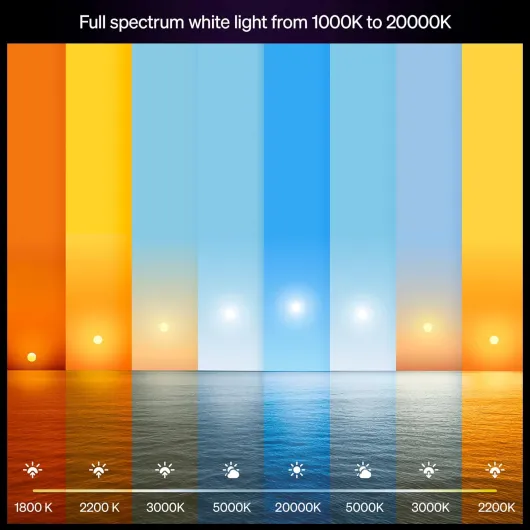
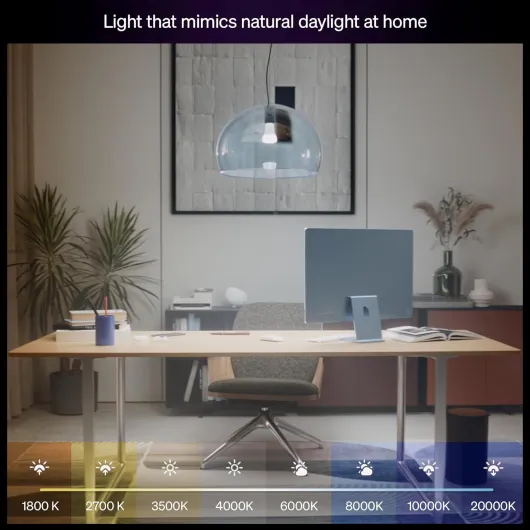
Colors are good. Not mind-blowing, but consistent and clean. Reds are actually red, not washed-out pink. Blues are deep without turning purple. The app’s pre-made scenes (like “Relax”, “Read”, “Concentrate”) are genuinely useful. I rarely bothered making my own scenes because the defaults were already fine. The white color temperature range is wide, going from very warm (nice in the evening) to very cold (good for working at a desk). I used the cold light in the morning to wake up a bit faster, and it did make a difference compared to the old yellow bulbs.
Response time is where the bridge helps. When I tap a scene or change brightness in the app, the bulbs react in about half a second, sometimes less. With Alexa, there’s the usual voice assistant delay, but once the command is processed, the bulbs change instantly. I didn’t have random disconnections like I had with cheap Wi‑Fi bulbs that sometimes vanish from the network. In three weeks, I had one short moment where one bulb didn’t respond to a scene change; turning it off and on from the app fixed it.
As for advanced stuff like ultra-low dimming, you can really go down to a very soft glow, which is nice at night. It doesn’t flicker or cut off suddenly at low levels, which cheaper bulbs often do. I used that setting as a kind of night light when watching movies and it was comfortable. Overall, performance is solid: not perfect, but clearly above no-name brands I’ve tried before.
What you actually get in the box and how it works in real life
In the box, you get two B22 bulbs, the Hue Bridge, a smart button with its magnetic wall mount, and the usual cables and paperwork. No power adapter for the bridge in my unit, just the standard plug, which is fine. The bulbs are rated at 1100 lumens, so roughly like a 75W old-school bulb. In practice, one bulb is enough for a small room, but I was happy to have both for a medium-sized living room. The color and white range is wide: from very warm yellowish light to a cold bluish daylight, plus all the RGB stuff.
The Hue Bridge plugs into your router with Ethernet and acts as the brain. That’s the big difference compared to random Wi‑Fi bulbs: all control goes through this hub. You can connect up to 50 bulbs and accessories, which is overkill for starters, but good if you plan to expand. During my test, I had the two bulbs, the button, and later added an older Hue bulb from a friend: all worked on the same bridge without issues. Once paired, the bulbs respond quickly, even when my Wi‑Fi is a bit flaky, which is a real plus.
The app (Philips Hue) is where you set up rooms, scenes, automations, and link to Apple Home, Alexa, Google Assistant, etc. It’s fairly clear, but you do feel a learning curve the first evening: how to group lights, how to assign the button, how to sync with voice assistants. I had to redo the linking with Alexa once because it didn’t detect the scenes correctly. After that, routines like “Goodnight” and “Movie time” worked fine. Nothing magical, but it gets the job done.
In day-to-day use, the important thing is that you can still use your normal wall switch. If someone turns the wall switch off, the smart stuff obviously stops, but when you turn it back on the bulbs come back in the last used state (or a default you can configure). That’s key if you live with people who don’t care about apps and just want to press a switch. In my place, that avoided arguments.
Does it actually make the house smarter, or just more complicated?
Effectiveness for me is: does this kit actually make daily life easier, or is it just another gadget you forget after a week? In my case, it did change how I use the lights, especially thanks to automations and the smart button. I set up a basic routine: lights slowly turn on in the morning at a cool white, then in the evening they switch to a warm scene around sunset. After a few days, I got used to not touching the wall switch much. It’s a small thing, but it does feel more comfortable than constantly fiddling with switches.
The smart button is what convinced the rest of the household. A single press cycles through scenes (I configured 3: bright white, warm evening, and a dim movie mode). Long press turns everything off. So even the person who hates apps and voice control could manage the lights without thinking. That’s crucial, because if everyone in the house doesn’t play along, smart lighting quickly becomes annoying. Here, they accepted it pretty fast, which says a lot about how practical it is.
Voice control also works reliably. “Alexa, turn off the living room lights” did its job every time after the initial setup. I also tested with Apple Home and Siri on my phone, and it was similarly straightforward. I didn’t bother with complex routines like geofencing or advanced schedules, but even the basics already cover most daily needs: timed on/off, dimming, and scenes. It’s not life-changing, but it’s convenient and consistent enough that I kept using it instead of going back to dumb bulbs.
On the downside, you do feel the lock-in effect. Once you’ve set up scenes and automations, you’re basically married to the Hue ecosystem. Mixing with other brands is possible through some platforms (like Alexa or Home Assistant), but the smoothest experience is staying within Hue. So in terms of effectiveness, it works well as long as you’re okay with that commitment. If you just want one or two smart bulbs and don’t care about expansion, this might be more system than you actually need.
Pros
- Bright 1100 lumen bulbs with good color quality and very low dimming
- Stable bridge-based system with quick response and solid integrations (Apple Home, Alexa, Google, SmartThings)
- Smart button included and actually useful for everyday control without apps
Cons
- High upfront cost compared to simple Wi‑Fi bulbs
- Setup is more involved and you’re locked into the Hue ecosystem once invested
Conclusion
Editor's rating
After a few weeks of daily use, I see this Philips Hue starter kit as a solid entry point into proper smart lighting, with some clear conditions. The bulbs are bright, the colors are consistent, and the bridge-based system is stable once you’ve gone through the initial setup. The smart button is surprisingly useful and makes the whole thing acceptable for people who don’t care about apps or voice control. Day to day, I actually used the different scenes and dimming, instead of just leaving the lights at 100% forever, which is a good sign.
On the flip side, the price is not low, and you really feel that you’re buying into an ecosystem. For someone who only wants one or two smart bulbs in the house, this kit is probably too much: too expensive and too complex compared to simple Wi‑Fi bulbs. But if you plan to roll out smart lighting in several rooms and want something reliable that plays nicely with Apple Home, Alexa, Google Assistant and SmartThings, this kit is a reasonable starting point. It’s not perfect, there are cheaper options, but in terms of stability, performance and long-term potential, it holds up well.


![L510E Smart Bulb, Smart WiFi LED Light, E27, Works with Amazon Alexa(Echo and Echo Dot), Google Home, Dimmable Soft Warm White, No Hub Required [Energy Class F] 1 Pack](https://www.smart-light-guru.com/storage/939180/conversions/71WGq8rBN-L._AC_SL1500_-medium.webp)