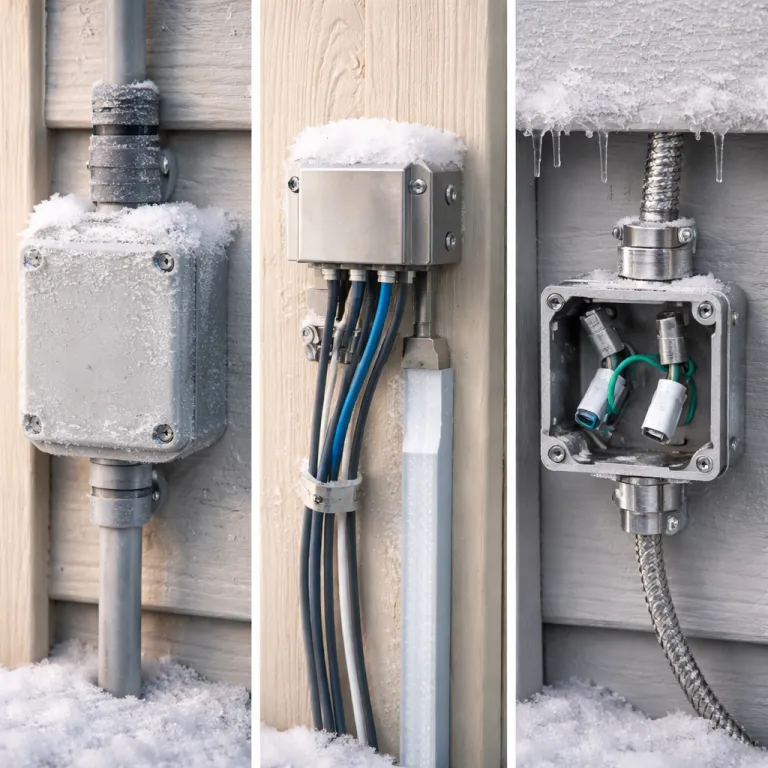
Why outdoor smart lighting wiring fails when winter hits hard
Outdoor smart lighting wiring winter problems usually start where water, metal, and electricity meet. When outdoor lighting is installed for summer evenings only, the first real winter with sub freezing temperatures exposes every weak connector, cracked gasket, and overloaded outdoor electrical outlet. If your smart outdoor lights work perfectly in October but fail by January, you are almost certainly facing an electrical work or weatherproofing issue rather than a bad bulb.
Cold air changes how every part of a smart lighting system behaves, from battery chemistry to plastic housings and even the color temperature of some LED drivers. At cooler temperatures, lithium cells inside solar path lights offer far less energy, while cheap plastics around connectors shrink and let water ingress freeze, expand, and break the seal. That is why outdoor smart lighting wiring winter planning must start with your climate’s lowest temperature, not the catalog photo of warm white light on a dry patio.
Think about your outdoor spaces as zones with different risks, not one uniform yard. A covered porch with IP44 rated fixtures sees less direct water and more stable temperature, while grade level garden lights need at least IP67 protection against splash, snow, and soil. Matching the IP rating, electrical system capacity, and smart technology protocol to each zone is the only way to keep outdoor lighting efficient and reliable year round, especially once snow, ice, and freeze thaw cycles arrive.
Setup 1: low voltage wiring with smart transformer for deep winter reliability
If you want outdoor smart lighting wiring winter reliability in Chicago style cold, a hardwired low voltage system with a smart transformer is the top choice. A 12 volt landscape circuit driven by a Ring Smart Lighting Bridge or a Philips Hue Outdoor power supply keeps all critical electrical work indoors, then sends safe low voltage power through buried cable to each light. This approach avoids outdoor electrical outlets cycling in freezing rain and gives you stable smart lighting controls even when temperatures swing from warm afternoons to icy nights.
In my testing, Hue Lily spots and Hue Outdoor Lightstrips running from a sheltered transformer kept their white light and color scenes consistent through repeated freeze thaw cycles. The electrical system stayed dry, the cabling handled snow load, and the lights offer full brightness even when the ground was frozen solid and air temperature dropped well below zero. With Zigbee based smart technology, the mesh network remained strong where Wi Fi smart lights on the same property struggled at the edge of the house, which aligns with the operating temperature and IP ratings listed in typical Philips Hue outdoor spec sheets.
This setup does demand more planning and higher upfront electrical upgrades. You need to size the transformer for total wattage, plan cable runs to avoid voltage drop, and respect local codes for outdoor electrical installations. As a simple example, imagine four 8 watt spotlights and two 12 watt path lights on a single 12 volt run: total load is 56 watts, so a 75 watt or 100 watt transformer gives comfortable headroom. On a 60 foot run using 12 AWG landscape cable, voltage drop stays within common manufacturer guidance for low voltage lighting, while a longer 120 foot run with the same load might require 10 AWG cable or a second run to keep brightness even at the far end. For a detailed look at how a robust ceiling fixture behaves on smart platforms, the analysis of a white ambiance smart ceiling light with Bluetooth and dimmer shows how stable drivers and good thermal design translate into predictable light color and color temperature control outdoors too.
Setup 2: solar smart path lights in freezing temperatures
Solar smart lights promise cable free outdoor lighting, but outdoor smart lighting wiring winter issues simply move from wires to batteries. Products like Linkind Smart Solar Pathway Lights or Ring Solar Pathlight work well in shoulder seasons, yet their internal cells lose capacity fast once temperatures sit near or below freezing. In real yards, that means your path lights offer a brief glow at dusk, then fade long before midnight when you actually want security lighting, even if the LED modules themselves are rated for lower temperatures in the manufacturer documentation.
To make solar smart lighting more energy efficient in winter, treat the panels and batteries as a heating problem, not just an energy problem. Panels buried under snow or shaded by low winter sun will not recharge fully, so you must reduce brightness, shorten schedules, or switch to motion based lighting controls to stretch limited energy. Some homeowners even pair solar fixtures with nearby mains powered lights, using the solar units for accent color while wired warm white light handles safety and security.
Battery chemistry also reacts to temperature color and temperature swings. At cooler nights, voltage sag can cause smart technology radios to drop offline even while LEDs still glow faintly, which explains why your app shows devices as unavailable while you still see a dim white light in the yard. For decks and fences, a guide on using solar post cap lights to elevate outdoor space illustrates how fixture placement, panel angle, and realistic expectations about winter performance matter more than headline lumen numbers.
Setup 3: outdoor smart plugs and string lights in snow and slush
The cheapest way to test outdoor smart lighting wiring winter performance is an outdoor smart plug driving simple string lights. A Kasa Outdoor Smart Plug paired with warm white patio strings can transform a small terrace, but this combination is the least reliable once wet snow, slush, and repeated freeze thaw cycles arrive. Every plug, socket, and inline connector becomes a potential water ingress point that can trip breakers or corrode contacts, especially if the plug’s IP rating and operating temperature range from the manufacturer spec sheet are ignored.
To keep this style of outdoor lighting safe, treat every connection as critical electrical work. Use weather rated covers on outdoor electrical outlets, keep plug bodies off the ground, and apply dielectric grease to exposed metal prongs before the first storm. When temperatures drop and snow piles up, check that no connector sits in a meltwater pool where warm daytime sun and cooler nights create constant freeze thaw stress on plastic housings.
Smart lighting plugs excel for seasonal setups rather than permanent security lighting. They are ideal when you want flexible light color, quick upgrades, or temporary heaters for a patio, but anything not explicitly rated for your local minimum temperature should be pulled inside before deep winter. For more permanent exterior fixtures and better fixture selection, a guide on choosing the right exterior light fixtures for smart lighting needs offers useful criteria that also apply to home patios and balconies.
Four winter failure modes and how to wire against them
Most outdoor smart lighting wiring winter failures fall into four buckets that repeat across climates. Water ingress at connectors, battery capacity collapse, Wi Fi range issues, and freeze thaw damage to housings explain nearly every January outage I see in outdoor spaces. Each problem has a wiring or placement fix, but you must design for it before the first storm, not after the first blackout.
Water ingress is the most common and the easiest to prevent with good electrical upgrades. Use IP65 or IP67 rated junctions for ground level lights, keep all splices above grade where possible, and seal every crimp or screw terminal with heat shrink and dielectric grease. For covered porches, IP44 fixtures are usually enough, but any outdoor electrical box should still have a gasketed cover and drip loop in the cable to keep water from tracking inside. A simple winterization checklist helps: inspect gaskets and seals for cracks, confirm that all cable entries use proper strain relief, reapply dielectric grease to exposed metal, tighten any loose cord grips, and verify that drip loops keep water from running directly into boxes or fixtures.
Battery collapse and Wi Fi range problems are linked to temperature and energy. At low temperatures, radios in smart lights work harder to maintain a connection through walls, which drains batteries faster and exposes weak routers at the edge of the property. A Zigbee or Thread based mesh, or a dedicated bridge like Ring’s, usually beats direct Wi Fi for year round reliability because each light relays the signal rather than fighting through brick alone.
Freeze thaw cycles punish plastics and cheap potting compounds around LEDs. When warm daytime sun hits a dark housing then a rapid drop to cooler night air follows, micro cracks form that eventually let moisture reach the electrical system. Choosing fixtures with metal bodies, proper gaskets, and clear IP ratings is not cosmetic; it is the difference between five winters of service and a single season of flickering white light. Build a simple maintenance schedule around this: in late autumn, clean lenses and housings, check mounting hardware, and confirm that all fixtures still match the IP and temperature ratings in their spec sheets; mid winter, after the first major freeze, walk the property to look for sagging cables, damaged conduit, or boxes buried in snow and correct any issues before they turn into failures.
Designing winter ready controls, color temperature, and energy use
Once the hardware is right, outdoor smart lighting wiring winter planning shifts to controls and energy. Dusk to dawn schedules, motion triggers, and fixed timers behave very differently when sunset creeps toward late afternoon and nights stretch long. A pure schedule that worked in summer may leave your driveway dark at 16:00 unless you tie lighting controls to actual astronomical dusk.
For security, a hybrid approach usually wins. Use a low level warm white light from energy efficient fixtures as a dusk to dawn baseline, then layer motion based boosts of brighter white light or cooler color temperature when someone approaches. This keeps energy use reasonable while making it obvious when a person, not just a passing car, is in your outdoor spaces.
Color and light color choices also change with snow on the ground. Neutral or slightly warm white light around 2700 to 3000 Kelvin avoids harsh glare on reflective surfaces, while occasional color scenes can still mark paths or highlight trees without blinding neighbors. If you already run smart thermostats or a smart thermostat on the same platform, consider linking your heating system and smart lighting scenes so that a late arrival triggers both a warm interior and a clearly lit entry path.
Remember that every watt of lighting is part of your overall energy and heating picture. Efficient LEDs produce far less waste heat than old incandescent lights, so you cannot rely on them to keep fixtures dry or snow free the way older lights did. Treat lighting, heaters, and any other outdoor electrical loads as one system, and size circuits, breakers, and electrical work accordingly so that winter upgrades do not overload a marginal panel.
FAQ
How cold is too cold for outdoor smart lights to work reliably ?
Most quality outdoor smart lights are rated to at least minus 20 degrees Celsius, but cheaper models may only be tested to around minus 10 degrees. The real limit is usually the weakest component, such as a battery pack or plastic connector, rather than the LED itself. Always check the specified operating temperature range and pull any un rated fixtures indoors before your climate regularly drops below that point, using the manufacturer spec sheet as your reference.
What IP rating should I choose for winter exposed outdoor lighting ?
For a covered porch or soffit where rain and snow rarely hit directly, IP44 rated fixtures are usually sufficient. In open exposure or where snow, spray, or puddles are common, IP65 or IP67 ratings provide much better protection against water ingress and freeze thaw damage. Ground level or in ground lights benefit most from IP67, because they face standing water and compacted snow more often.
Are solar smart path lights worth it in snowy climates ?
Solar smart path lights can still be useful in snowy regions, but expectations must be realistic. Short winter days, low sun angles, and frequent snow cover all reduce charging, so run times will be shorter and brightness lower than in summer. They work best as accent lighting alongside a wired system that handles critical safety and security tasks.
How can I improve Wi Fi reliability for outdoor smart lighting ?
To improve Wi Fi reliability outdoors, start by placing your main router or an access point closer to the yard facing wall. Use 2.4 gigahertz networks for longer range, and avoid putting the router behind metal cabinets or appliances that block signal. For larger properties, a mesh system or a dedicated bridge for Zigbee or Thread lights often provides more stable coverage than a single Wi Fi router.
When should I use motion sensors instead of dusk to dawn schedules ?
Motion sensors are ideal where you want bright light only when someone is present, such as side paths, sheds, or back gates. Dusk to dawn schedules work better for front entries and driveways where continuous low level light improves both safety and perceived security. Many homeowners combine both, using a dim baseline level all night and motion triggered boosts to full brightness when movement is detected.