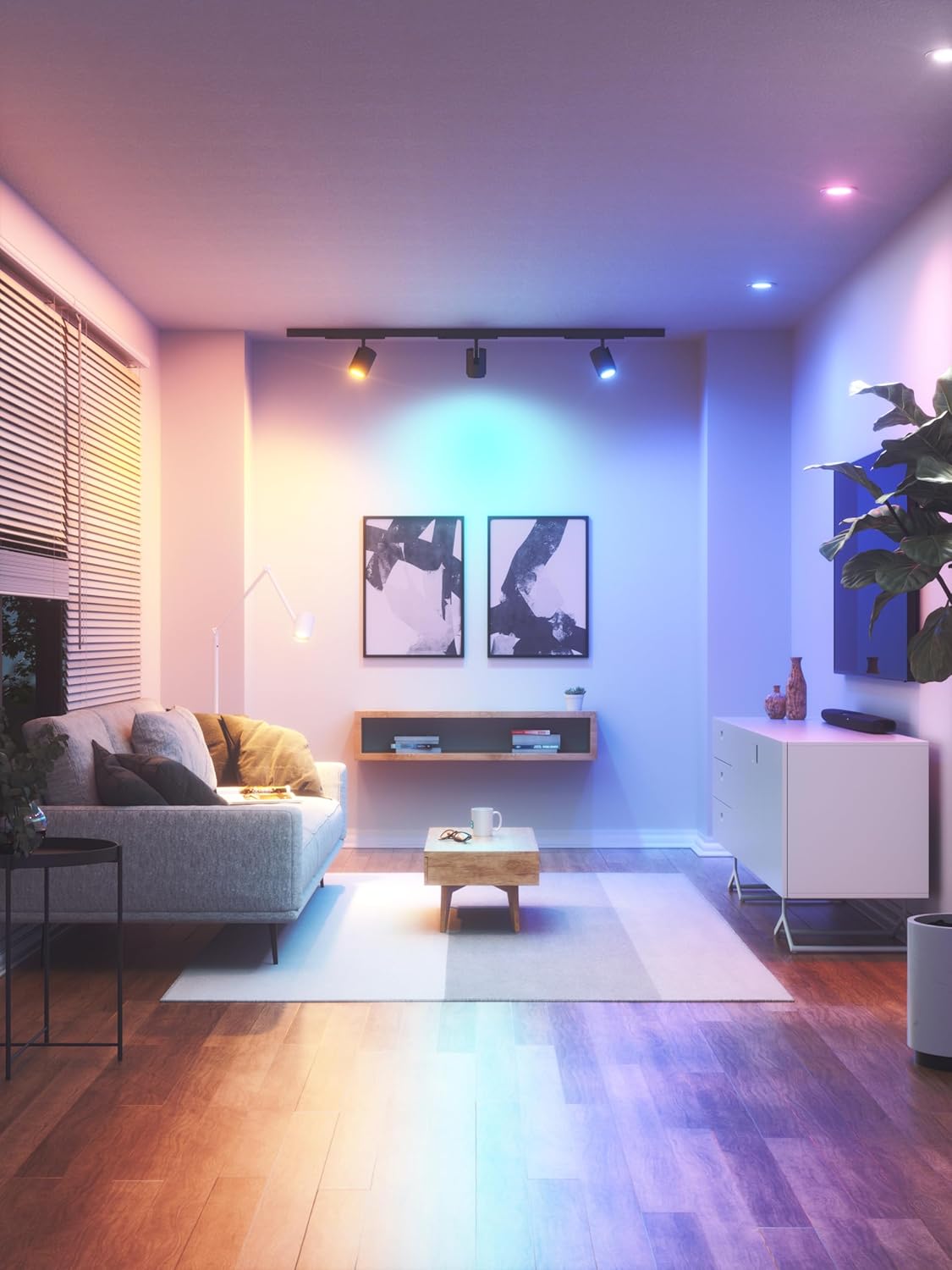
Summary
Editor's rating
Value for money: better than Hue on price, but you pay in patience
Design: simple GU10 spots, nothing fancy – and that’s fine
Durability and stability: early impressions and potential weak spots
Performance: good colours and speed, but setup and Thread can be a pain
What you actually get in this 12-pack
Effectiveness in real life: daily routines, scenes, and screen sync
Pros
- Good price per bulb for RGBW GU10s, especially in a 12-pack
- Strong integration with Apple Home and Google once Matter/Thread are set up
- Decent colour range and very usable tunable white with good dimming
Cons
- Setup and firmware updates can be slow and sometimes buggy, especially with many bulbs
- Requires a Matter-compatible hub and Thread border router for best experience
- Occasional connectivity hiccups and “no response” messages, not the most stable option

Specifications
View full product page →| Brand | Nanoleaf |
Smart spots for people who like to tinker
I’ve been using this 12‑pack of Nanoleaf Matter Essentials GU10 bulbs for a few weeks in my living room and kitchen. I replaced a mix of basic GU10 LEDs and a couple of Philips Hue spots. I mainly wanted colour scenes for movie nights and to stop relying on the Hue bridge. On paper, these Nanoleaf bulbs tick all the boxes: Matter, Thread, RGB, dimmable, works with Apple/Google, no extra bridge. In reality, it’s a bit more nuanced.
The first thing to know: this is not a “plug in and forget” product if you’re new to smart home stuff. The bulbs work, the colours look good, and automations are handy, but the setup and firmware updates are a bit of a patience test. If you’re not comfortable fiddling with apps, codes, and updates, you might get frustrated quickly, especially with Thread and Matter.
On the positive side, once I finally got them all on Thread with Apple Home and the Nanoleaf app, the response time was fast and pretty reliable. Scenes switch quickly, and the colour range is more than enough for day‑to‑day use and some gaming/TV ambience. Brightness is fine for accent and mood lighting, but it’s not like switching on a stadium projector. They’re 400 lumens per bulb, so more “cosy room” than “surgery room”.
In short: they’re pretty solid if you already have a compatible hub (HomePod mini, Apple TV 4K, Nest Hub, etc.) and you don’t mind spending time on setup and updates. If you want something idiot‑proof that just behaves like a normal bulb with colours, these might feel a bit overcomplicated for what they are.
Value for money: better than Hue on price, but you pay in patience
On value, I’d say this 12‑pack sits in a pretty solid spot if you specifically want smart RGBW GU10s and you already own a compatible hub. Per bulb, they come out cheaper than Philips Hue GU10 colour bulbs, especially if you count the fact that Hue usually needs a separate bridge. For someone who wants to convert a whole ceiling or two rooms at once, the bundle pricing makes sense.
However, the price only feels good if you’re actually going to use the smart features: colours, scenes, automations, integration with Apple/Google, and maybe the screen mirror. If you just want white dimmable GU10s, you can pay a lot less with basic LED bulbs and a simple wall dimmer. These are overkill for someone who never touches the colours or the app after day one.
Compared to Hue, you trade a bit of reliability and polish for a lower cost and no dedicated bridge. If you’re already invested in Matter and Thread (HomePod mini, Apple TV 4K, Nest Hub, etc.), the Nanoleaf bulbs give you a good amount of functionality for the price. If you don’t have any of that yet and you’re starting from zero, the hidden cost is buying a compatible hub, which suddenly makes the whole setup less cheap.
Personally, I think the value is good but not mind-blowing. You get a lot of bulbs, solid colour options, and modern protocols, but you also get some setup hassle and possible update drama. If you’re tech‑savvy and you want to fill a ceiling with colourful smart spots on a reasonable budget, these are worth a look. If you hate troubleshooting and just want bullet‑proof lights, spending more on Hue or going for simpler non‑smart bulbs might be less frustrating in the long run.
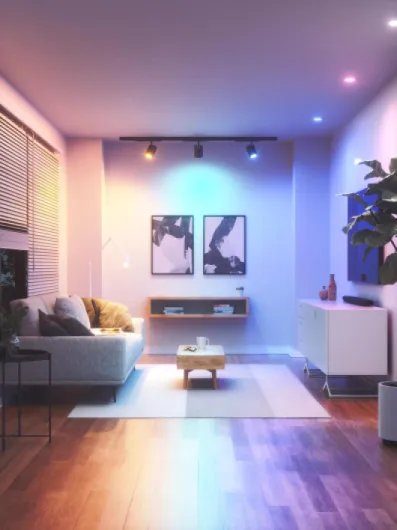
Design: simple GU10 spots, nothing fancy – and that’s fine
Design-wise, these are pretty standard GU10 bulbs. White plastic body, GU10 base, compact enough to fit into all my existing fixtures (I tried them in three different recessed housings and one surface spotlight bar). They’re not shorter than a typical GU10 halogen, but also not much longer than the Philips Hue GU10 I had before. If your fitting is very tight or has a decorative cover, you might want to check clearances, but in my case everything slotted in without drama.
The front diffuser is matte and spreads the light fairly evenly. You don’t see any ugly LED hotspots when they’re on, even at low brightness. That’s something I actually prefer to some cheap GU10 RGB bulbs I tried from no‑name brands, where you clearly see red/green/blue segments. Here, colours blend properly and whites look like a single beam, not a patchwork.
There are small printed codes and the Matter setup info on the side of the bulb, which is useful but slightly annoying if your fixtures leave the side visible – it doesn’t look premium, just like a typical smart bulb with labels. I’d call the design functional and discreet. Once they’re in the ceiling, you don’t really notice them anyway, which is probably the goal for a GU10 spot.
One small practical detail: the bulbs get warm but not crazy hot after a few hours at full brightness. Less heat than my old halogens (obviously), but still warm to the touch. If you’re constantly changing bulbs or testing like I do, you’ll feel it. For normal use, it’s not an issue. Overall, nothing here screams “high-end design”, but they blend in and do the job without looking cheap or weird.
Durability and stability: early impressions and potential weak spots
I obviously haven’t hit the 25,000-hour rated lifespan, so I can’t say if they’ll last years, but I can talk about early build quality and stability. Physically, the bulbs feel solid enough. The base is tight, no wobble in the socket, and I didn’t hear any rattling when handling them. I had them on for several evenings in a row at high brightness and didn’t run into any obvious overheating or flickering issues.
Where “durability” is more questionable is on the software and connectivity side. With smart bulbs, that’s often the real weak point. If a firmware update breaks Thread or Matter, the bulb isn’t really usable even if the LED hardware is still fine. Seeing that some Amazon reviews mention problems after Thread updates doesn’t surprise me based on my own update hiccups. I didn’t brick any bulbs, but I had two that needed full resets to behave again.
Once the network and firmware stabilised, I didn’t see bulbs randomly dropping offline every day, which is a good sign. Over a couple of weeks, I saw maybe 3–4 temporary “no response” messages across the whole set of 12, which is tolerable but not flawless. If you’re the kind of person who gets annoyed when lights don’t obey instantly every single time, this might wear on you over months.
So my early verdict on durability: hardware seems fine, and the LEDs should last if the specs are honest. The real risk is future firmware updates or changes in your smart home setup (new router, new hub, etc.) that might cause headaches. If you like to keep everything updated and you’re used to troubleshooting smart home stuff, you’ll probably be okay. If you want “install once and never touch again for 10 years”, this ecosystem might feel a bit fragile long term.
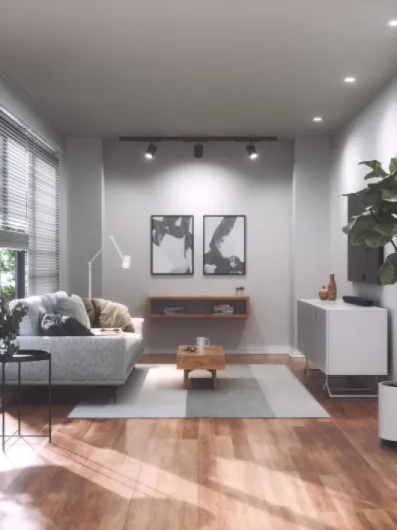
Performance: good colours and speed, but setup and Thread can be a pain
On performance, I’ll split it into two parts: once they’re set up, and getting them set up. Once everything was configured with Matter over Thread, I was honestly pretty happy. Commands from Apple Home and Siri were quick, usually under a second for all 8 bulbs in the living room to turn on or change colour together. Scenes with mixed brightness and colours applied reliably 9 times out of 10. For day‑to‑day stuff like “Hey Siri, dim living room to 30% warm white”, they just worked.
Colour quality is decent. Reds and blues are strong, greens are okay, some in‑between pastel shades look a bit washed out, but for a ceiling spot it’s fine. Whites are where these bulbs are strongest: you can go from cold office white to very warm evening light. I ended up using mainly warm white and soft amber tones, and for that they’re clearly better than the random cheap GU10s I had before. 400 lumens per bulb is acceptable for a small room or in groups; a single bulb won’t light a big room on its own, but a set of 4–6 is comfortable.
Now the annoying part: setup and firmware updates. Out of the box, a couple of bulbs wanted firmware updates in the Nanoleaf app before they would properly join Thread and Matter. Updating 12 bulbs took a while, and a few failed the update the first time. I had to reset two bulbs (power cycle them a few times) and re‑add them. One Amazon review complaining about Thread and Matter breaking things after update doesn’t surprise me – I can see how someone less patient would give up at that point.
Bluetooth fallback is both a blessing and a curse. It’s handy if Thread isn’t behaving, but it’s slower and sometimes the app thinks a bulb is offline when it’s actually just lagging. Once I forced everything onto Thread with a HomePod mini nearby, things stabilised. So performance is good once the system is stable, but getting there can be messy, especially with a big pack like this.
What you actually get in this 12-pack
In the box you literally just get 12 GU10 smart bulbs and a small leaflet with basic instructions and QR codes. No remote, no bridge, no fancy accessories. The idea is that your existing smart home hub (HomePod mini, Apple TV 4K, Nest Hub, etc.) and the Nanoleaf app handle everything. Each bulb has its own Matter code on the body, which you’ll want to note before you plug them into the ceiling, otherwise you’ll be climbing up and down to scan them later.
Specs-wise, each bulb is 5–6 W, roughly equivalent to a 40 W halogen, with 400 lumens. They support 16+ million colours, tunable white, dimming, and they work over Matter over Thread plus Bluetooth as backup. In my case, I used a HomePod mini as the Thread border router and Apple TV 4K as an extra hub. With that combo, they eventually worked fine, but the initial pairing and firmware updates took some time, especially when I tried to update all 12 in one go.
The product positioning is clear: this is for people who want a full room or small flat covered with smart spots in one shot. A 12‑pack is overkill if you only want to light a single lamp, but perfect if you’re refitting a kitchen ceiling or living room spot rail. Compared to Philips Hue, the obvious pitch is: no dedicated bridge, just your existing smart home gear, and a lower price per bulb for RGBW GU10s.
In practice, the pitch is half true. You do avoid buying a separate bridge, but you still absolutely need a Matter‑compatible hub and Thread router if you want the proper experience. If you rely only on Bluetooth and the Nanoleaf app, things get slower and more flaky, especially with 12 bulbs. So yes, you save on hardware, but you pay with a bit more hassle during setup and updates.
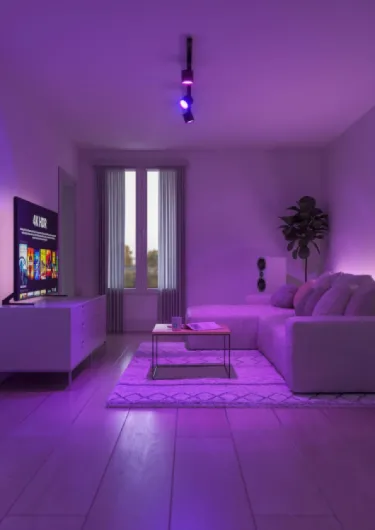
Effectiveness in real life: daily routines, scenes, and screen sync
In day‑to‑day use, these bulbs are effective for what they’re meant to do: flexible lighting, scenes, and automations. I set up a few basic routines: kitchen spots turn on at 7:00 in a cool white, living room goes warm at sunset, and everything turns off at midnight. Those routines have been running for a couple of weeks without major issues. Maybe once or twice, one bulb didn’t respond and stayed off, but a manual toggle fixed it. So not perfect, but acceptable for consumer smart lights.
The dimming range is quite good. They can go very low without flickering, which I appreciate in the evening. For gaming and movies, I used the Nanoleaf Desktop App’s screen mirror feature with my PC monitor. It’s not as tight and polished as a dedicated system like Philips Hue Sync with a Hue HDMI box, but it’s fun. The colours roughly match what’s on screen, and the room gets a matching glow. If you’re into RGB setups for gaming, this is a nice extra, though I wouldn’t buy the bulbs only for that feature.
Voice control with Siri worked well for me. Commands like “set kitchen to blue” or “make living room brighter” were handled quickly. Compared to my old Philips Hue GU10s, the main difference is that there is no separate bridge; everything rides on Thread and Matter. When the network is stable, the experience is similar. When it’s not, you feel it: occasional delays, a bulb that doesn’t respond, or the app showing “no response” for a few seconds.
For basic “turn on/off, change colour, dim” usage, these bulbs get the job done. If you want rock‑solid reliability for a big house with dozens of bulbs, I still think Hue with a bridge is safer. For a flat or a couple of rooms, Nanoleaf is okay as long as you’re ready to spend a bit of time getting everything configured properly.
Pros
- Good price per bulb for RGBW GU10s, especially in a 12-pack
- Strong integration with Apple Home and Google once Matter/Thread are set up
- Decent colour range and very usable tunable white with good dimming
Cons
- Setup and firmware updates can be slow and sometimes buggy, especially with many bulbs
- Requires a Matter-compatible hub and Thread border router for best experience
- Occasional connectivity hiccups and “no response” messages, not the most stable option
Conclusion
Editor's rating
Overall, the Nanoleaf Matter Essentials GU10 bulbs are good value for tech‑savvy users, but not a simple plug‑and‑play solution for everyone. The light quality is decent, colours are fun, and whites are very usable for daily living. Once you get them running on Thread with a proper Matter hub, they react quickly and work well with Apple Home or Google Assistant. For a full room or small flat, the 12‑pack makes sense financially and gives you plenty of flexibility with scenes and automations.
On the flip side, the setup and firmware update process is clearly the weak point. You need patience, a compatible hub, and a bit of tolerance for occasional glitches. If your idea of a good evening is not resetting bulbs and checking firmware versions, you might swear at these once or twice. They’re not total junk, but they’re not flawless either, and some reviews complaining about Thread issues are justified.
I’d recommend these to people who already have a HomePod mini / Apple TV 4K or a Nest Hub, like to tinker with smart home gear, and want a reasonably priced way to fill a ceiling with RGBW GU10s. If you just want simple, rock‑solid lights with zero fuss, either go for standard non‑smart LEDs or pay more for something like Philips Hue with its own bridge. These Nanoleaf bulbs sit in the middle: pretty solid when set up right, a bit annoying to get there.


![L510E Smart Bulb, Smart WiFi LED Light, E27, Works with Amazon Alexa(Echo and Echo Dot), Google Home, Dimmable Soft Warm White, No Hub Required [Energy Class F] 1 Pack](https://www.smart-light-guru.com/storage/939180/conversions/71WGq8rBN-L._AC_SL1500_-medium.webp)