Summary
Editor's rating
Value for money: nice product, painful price, mainly for Hue fans
Design and look: clean, modern, a bit bulky but nice on the ceiling
Build quality and materials: solid, no rattling, but not premium furniture either
Durability and daily reliability: feels long-term, but with the usual smart caveats
Brightness, colours and daily use: good overall, but marketing oversells the colours
What you actually get with this Centris 2-piece
Smart features and control: works well, but really wants a Hue Bridge
Pros
- Strong overall light output for small to medium rooms, with good adjustable white tones
- Three independently controllable light sources (panel + 2 spots) in one ceiling fixture
- Solid build quality and smooth integration with Hue app, Bridge and Alexa
Cons
- High price compared to a normal ceiling light plus simple LEDs
- Colours look less vivid than in marketing photos, more muted in real use
- To get the most out of it, a Hue Bridge is practically required, adding extra cost

Specifications
View full product page →| Brand | Philips Hue |
A ceiling light for people who went too far with smart bulbs
I’ve been piling up smart bulbs for years, so at some point it made sense to try a proper smart ceiling light instead of having ten random lamps everywhere. That’s how I ended up with the Philips Hue White & Color Ambiance Centris 2-Piece (black). I installed it in a mid-sized living room (~12 m²) that used to have a single boring ceiling fixture. I already had a Hue Bridge and a few Hue bulbs, so it slotted into an existing setup, which helps a lot.
First impression: it’s a solid, heavy unit, not some cheap plastic bar. Also: the price hurts. You really feel like you’re paying for the Hue ecosystem and the design, not just for three LED lights. I went in thinking, “this thing better replace at least two or three lamps on its own,” and in practice, for a small/medium room, it more or less does. It combines a fixed ceiling panel and two adjustable GU10 spots, all color-capable.
I used it daily for a few weeks: normal white light for working, warmer light at night, and some colour scenes when watching TV or having people over. I controlled it mostly through the Hue app and Alexa, with a physical wall switch as backup. During that time, I tried to see if it’s actually worth the price compared to just buying a basic ceiling light plus a couple of smart bulbs.
Short version: it’s good gear, but far from perfect. The light output is solid, the app control is convenient, and it looks nice on the ceiling. On the downside, colours are a bit less punchy than the marketing photos, and without a Hue Bridge or some discipline with the app, it quickly turns into a hassle to manage. If you’re already deep into Hue, it fits right in. If not, there are cheaper ways to light a room.
Value for money: nice product, painful price, mainly for Hue fans
This is where things get a bit harsh. The Philips Hue Centris 2-piece is not cheap, especially compared to a normal ceiling light plus a few basic LED bulbs. You’re clearly paying for three things: 1) the Hue smart features, 2) the integrated design with panel + spots, and 3) the brand tax. If you just want light in a room, this is overkill. A simple fixture and some non-smart LEDs will cost a fraction of the price and still let you see what you’re doing.
Where it starts to make sense is if you already have Hue gear and a Bridge, and you want to tidy up your lighting setup. Instead of having multiple lamps and plugs everywhere, this gives you a clean ceiling solution with three controllable light sources in one place. For that scenario, the price is high but somewhat justifiable, because you’re replacing several products at once. The 4.5/5 average rating on Amazon lines up with that: people who know what they’re buying are mostly satisfied.
On the other hand, if you’re new to smart lighting, I’d say this is not the best entry point. You’d be better off starting with a Hue starter kit or a couple of bulbs in existing lamps to see if you actually like using the app, voice control, and routines. Then, if you find yourself using the features a lot, upgrading to something like the Centris for your main room makes more sense. Jumping straight to this as your first smart light might leave you thinking you paid a lot for fancy colours you barely use.
So in terms of value: for a regular user who just wants decent lighting, it’s too expensive for what it does. For someone already invested in Hue, who wants a neat all-in-one ceiling fixture with colour and good app control, it’s a pretty solid but pricey upgrade. There are cheaper smart ceiling lights out there, but very few that integrate as cleanly with the Hue ecosystem and offer three independently controllable light sources in one body.
Design and look: clean, modern, a bit bulky but nice on the ceiling
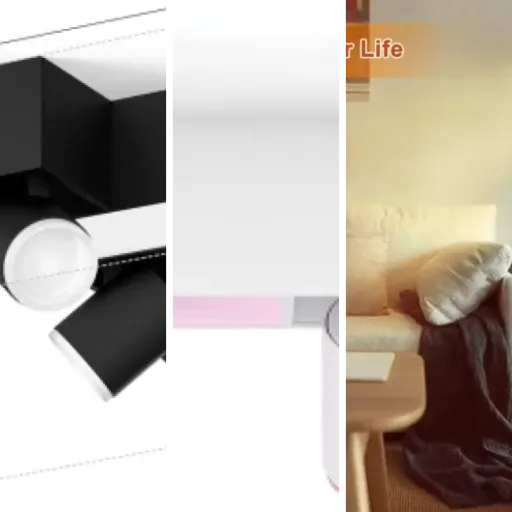
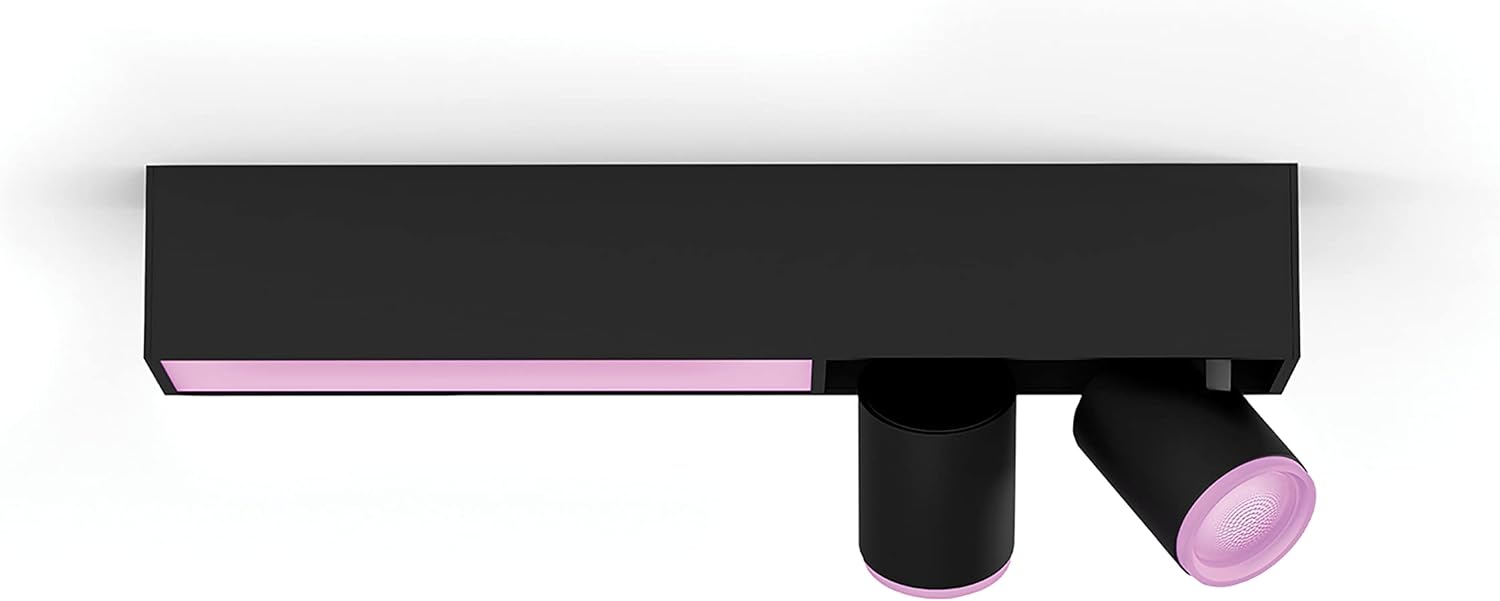
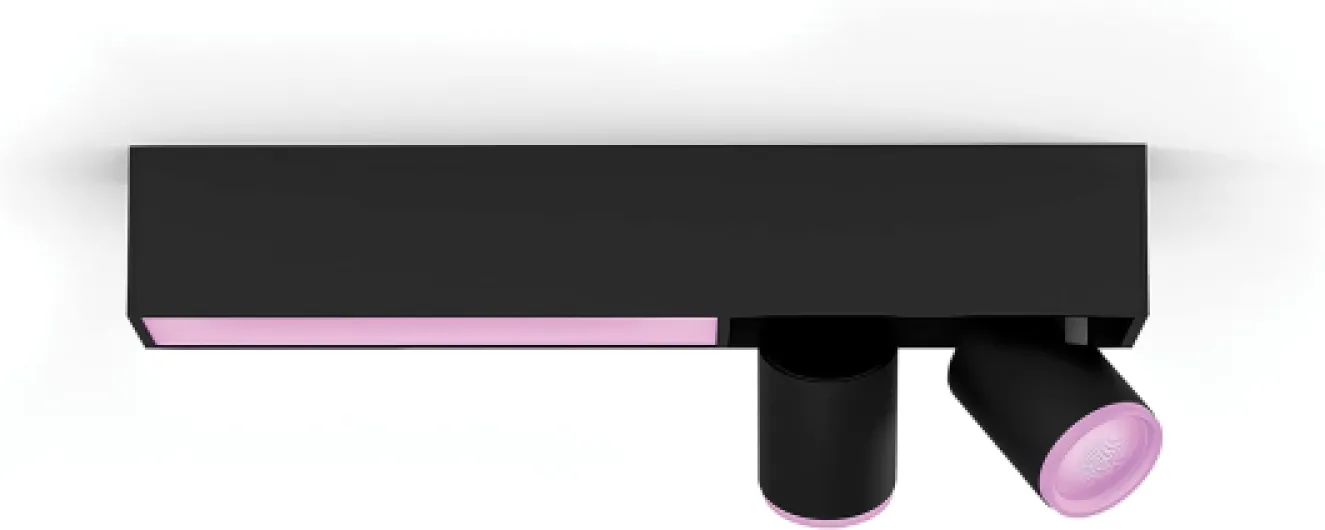
Design-wise, the Centris 2-piece in black is pretty straightforward: a flat rectangular panel (disc/flat shape according to the specs, but it feels more like a slim bar) with two small spot heads attached. The whole thing is made of aluminium with a lacquered black finish. Once it’s up, it looks modern and relatively discreet. It’s not a statement piece, but it doesn’t scream “office strip light” either. In a room with white ceilings and some black accents, it blends in well.
The two spots are the interesting part. They can rotate and tilt, so you can aim them at different corners of the room. The central panel stays fixed and gives a soft, wide light. I liked having the option to keep the main panel on a warm white and set the spots to colder white when working at the desk, or put a bit of colour on the wall while keeping the rest neutral. Visually, it gives a bit of depth to the room rather than just one flat light from the middle.
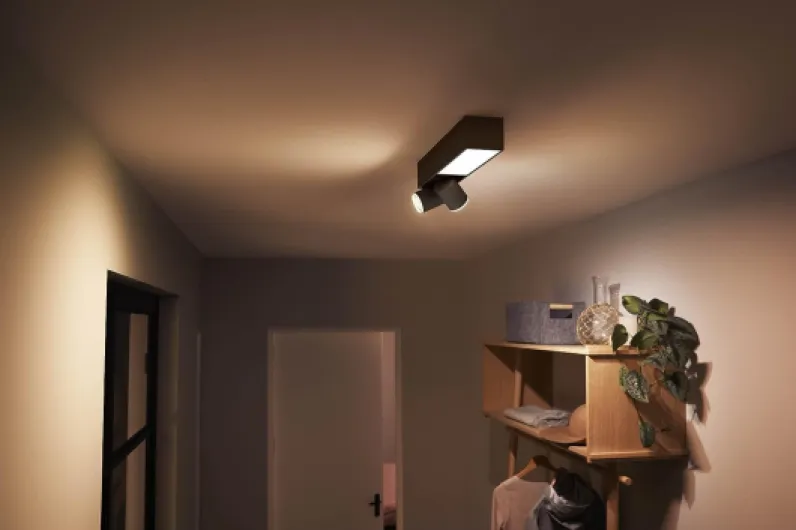
One thing to know: it’s not tiny. At roughly 40.8 x 8.5 x 12.7 cm and almost 2 kg, you feel it when you mount it. If your room is very small or your ceiling is low, it will be noticeable. It doesn’t hang very low, but it’s not a flush-mount pancake either. In my living room with a standard ceiling height, it looked fine, but in a narrow hallway it might feel a bit too present.
Compared to a cheap track light with GU10 spots, this has a more finished look. The transitions between the panel and the spots are clean, and the black finish looks decent in real life, not plasticky. Still, for the price, don’t expect some luxury designer centerpiece. It’s just a well-built, modern-looking smart ceiling light. If you like minimalist black fixtures, you’ll probably be happy. If you want something decorative or vintage, this is not it.
Build quality and materials: solid, no rattling, but not premium furniture either
The body of the Philips Hue Centris is mainly aluminium with a lacquered finish. When you take it out of the box, the first thing you notice is the weight: around 1.9 kg for a ceiling light is quite a bit. That’s actually reassuring; it doesn’t feel hollow or flimsy. The spots and the main panel feel sturdy when you handle them, and the rotation/tilt of the spots is smooth without being loose. I didn’t get any weird creaks or wobble when adjusting them.
The paint on the black version is even and matte-ish, not glossy. I didn’t see any defects or scratches on mine out of the box. Over a few weeks of use, no marks or discoloration showed up, but to be fair, ceiling lights don’t get much handling once they’re installed. Dust is visible on the black surface if you look closely, so if you’re picky, you’ll be up there with a duster from time to time. At least the surfaces are flat and easy to wipe.
The included GU10 bulbs are standard Philips Hue White & Color Ambiance units, so nothing surprising there. They twist into the sockets like any GU10. If one fails in a few years, you can swap it out yourself, which is a big plus compared to sealed LED panels. The central panel is integrated, though, so if that part fails outside warranty, it’s less straightforward. In my use, everything worked fine: no flickering, no buzzing, even at low dim levels.
Is the material quality on the level of high-end designer lighting? Not really. It feels like a good consumer product, not like custom-made metalwork. But it’s clearly a step up from the random cheap fixtures you get in hardware stores. For a ceiling light that you’ll look at every day and probably never touch, I’d say the build is solid enough to justify part of the price. The rest of the price is clearly for the smart features and the Hue ecosystem, not for exotic materials.
Durability and daily reliability: feels long-term, but with the usual smart caveats
I obviously haven’t had this Centris for years, but after a few weeks of daily use I can at least talk about reliability and build perception. First, nothing loosened, rattled, or overheated. The aluminium body gets slightly warm after a few hours at full brightness, which is normal for LED gear, but it never felt concerning. No buzzing from the driver, even when dimmed low, which is something that can be annoying on cheaper fixtures.
The Hue GU10 bulbs inside are rated for long lifespans like other Hue products. I’ve had other Hue bulbs for years that are still going, so I’m reasonably confident these will last as well. The nice part is that, unlike sealed LED panels, you can swap out the GU10 spots yourself if one dies. The central panel is integrated, though, so if that goes, you’re probably dealing with warranty or replacing the whole unit. That’s the trade-off of integrated smart fixtures in general, not just this one.
On the software side, the product page says software update guarantee is unknown, which basically means Philips isn’t promising a specific end date. In practice, Hue stuff usually gets updates for quite a while, but there’s always the risk that in 5–7 years, app support changes or some features stop being updated. Without the Bridge, you’re less dependent on cloud features, but you also get fewer functions. During my time with it, updates were smooth and nothing broke after firmware changes.
From a daily-use standpoint, it’s been very stable: no random resets, no “light not reachable” messages every other day. It just turned on when I flipped the switch or triggered a routine. My feeling is that the physical durability is fine and the electronics are in line with other Hue products, which are generally reliable. The only long-term worry I’d have is software support many years down the road, but that’s a general problem with all smart home gear, not specific to this Centris.
Brightness, colours and daily use: good overall, but marketing oversells the colours
On paper you get 1630 lumens and 11 W, which doesn’t sound huge, but the way the light is distributed makes it feel enough for a small to medium room. In my ~12 m² living room, I could use only this fixture most of the time. For reading or working, I pushed brightness to 80–100% with a cooler white, and it was fine. For evenings, 30–40% warm white on the panel and lower brightness on the spots felt comfortable. If your room is bigger than 15 m², you’ll probably want another light source to avoid dark corners, which one of the Amazon reviewers also hints at.
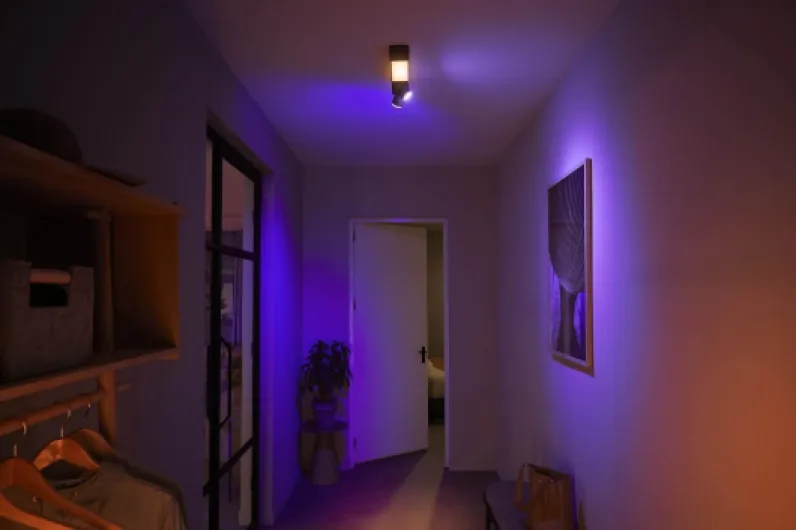
About the colours: this is where expectations matter. The marketing photos show super vivid saturated colours on the ceiling and walls. In real life, the colours are decent, but not as intense. One reviewer complained that the colours look washed out compared to Philips’ promo shots, and I agree to a point. On white walls at night, you clearly see the colour scenes (blue, purple, etc.), but they’re not like neon signs. For mood lighting, it’s fine; if you wanted nightclub-level colours, this won’t do it.
White light performance is where it does best. You can go from cold daylight-style white to warm yellowish white, and dim it smoothly. No flicker, no weird colour jumps. With the Hue app, you also get predefined scenes (Relax, Concentrate, Read, etc.) that actually feel different. I mostly used the white scenes and only played with colours for TV time or guests. Over a few weeks, the light turned on reliably every time, responded quickly to the app and Alexa, and didn’t randomly drop off the network.
In practice, the combination of one panel plus two adjustable spots is handy. You can keep the panel neutral and use the spots to highlight parts of the room or add colour. If you’re lazy, you can also just set all three to the same white and forget about it. Overall, performance is solid: it lights a small room well, whites are good, colours are okay but not dramatic, and everything responds fast. It does what it promises, just don’t buy it only for the colour effects.
What you actually get with this Centris 2-piece
The product name is long, but the idea is simple: the Centris 2-piece is a ceiling-mounted bar with one main light panel plus two GU10 spotlights attached. Everything is already wired together inside the unit, you just connect it to your ceiling power line. The included bulbs are Hue White & Color Ambiance GU10s, so you get the full 16-million-colour thing, plus adjustable white from cool to warm. Total output is listed around 1630 lumens, which in real life is enough for a 10–12 m² room if you’re not trying to recreate a dentist’s office.
Each of the two spots can be aimed separately, while the central panel gives more diffuse light. In my case, I pointed one spot towards a bookshelf and the other towards a work corner. The panel covers the general lighting. The nice thing is that in the Hue app, it shows up as three separate lights inside one physical fixture, so you can change colour or brightness per spot, or group them and treat the whole thing like a single lamp.
Out of the box, you can control it via Bluetooth with your phone, without a Hue Bridge, which is what some Amazon reviewers mention. That works, but with limits: range is shorter, and you can’t really automate much or control it from outside your home. With a Hue Bridge, you get routines, remote access, and easier grouping with other Hue devices. If you already have Hue at home, this thing drops in easily. If you don’t, you either buy into the ecosystem or live with the basic Bluetooth control.
So in practice, what are you buying? You’re paying for: 1) a design-y aluminium ceiling unit in black, 2) three full-colour Hue light sources already integrated, 3) the ability to mix direct and indirect light from one point on the ceiling. It’s not just three bulbs in a cheap rail; it feels like a finished product. But you also feel the price difference compared to a standard ceiling bar with three GU10s you could pick up for a fraction of the cost.
Smart features and control: works well, but really wants a Hue Bridge
The whole point of this thing is that it’s smart and app-controllable, so I pushed it pretty hard on that front. I used it with both Bluetooth (direct from phone) and with a Hue Bridge. Bluetooth alone is usable, and one Amazon reviewer was happy with that setup: you can change colours, brightness, and use some preset scenes without any extra hardware. For a single room, that’s okay. But the more lights you add, the more you feel the limits: slower discovery, smaller range, and no real automation.
With the Hue Bridge connected to my router, things got much smoother. The Centris shows up as three lights in the app, which you can put into a room and control together or separately. I set up routines like “dim in the evening” and “turn off at midnight” and they worked without issues. Alexa integration also worked fine: commands like “Alexa, turn off the living room lights” or “set living room to warm white” were understood quickly. No long delays, no frequent disconnections in my case.
One thing to keep in mind: if you don’t have a Bridge and you start adding more Hue lamps, you’ll end up controlling each one separately via Bluetooth, which gets annoying. Another reviewer mentioned exactly that: with several Hue lamps, a Hub (Bridge) becomes almost necessary, otherwise you’re tapping around the app too much. Also, if you keep turning the physical wall switch off, the smart functions obviously die, so you need to train yourself (or your family) to leave the switch on and use the app, a Hue Dimmer Switch, or voice control instead.
Overall, as a “smart” light, it’s effective: it connects easily, reacts fast, and integrates well with the rest of the Hue ecosystem. Just be aware that without a Bridge, you’re only using a part of what it can do, and you might end up frustrated if you expand your setup. If you already have or plan to get a Bridge, it becomes much more interesting and less of a gimmick.
Pros
- Strong overall light output for small to medium rooms, with good adjustable white tones
- Three independently controllable light sources (panel + 2 spots) in one ceiling fixture
- Solid build quality and smooth integration with Hue app, Bridge and Alexa
Cons
- High price compared to a normal ceiling light plus simple LEDs
- Colours look less vivid than in marketing photos, more muted in real use
- To get the most out of it, a Hue Bridge is practically required, adding extra cost
Conclusion
Editor's rating
The Philips Hue White & Color Ambiance Centris 2-Piece in black is a well-built, practical smart ceiling light that fits nicely in small to medium rooms. The combination of one central panel and two adjustable GU10 spots gives you flexible lighting: general light from the panel, plus targeted or coloured light from the spots. White light quality is good, dimming is smooth, and the whole thing responds quickly to the app and voice commands. It feels solid on the ceiling and doesn’t look cheap.
Where it falls short is mostly around expectations and price. The colours are fine but less intense than the marketing photos suggest, which one Amazon reviewer rightly pointed out. Also, without a Hue Bridge, you’re stuck with basic Bluetooth control; it works, but you don’t really unlock the full potential. For the price, it’s hard to recommend if you’re not already into the Hue ecosystem. A simple fixture plus a few standard bulbs will light your room just as well for a lot less money, just without the smart tricks.
If you already own a Hue Bridge, use the app or Alexa regularly, and want a clean, modern ceiling light that combines direct and indirect light in one unit, this Centris is a solid but expensive option. If you’re just curious about smart lighting or mainly care about colours, I’d start with cheaper Hue bulbs or another brand’s smart ceiling light. In short: good product, reliable and pleasant to use, but the price and slightly oversold colours mean it’s best for committed Hue users, not casual buyers.
![NEW White and Colour Ambiance Smart Light Bulb Starter Kit, 75W - 1100 Lumen [E27 Edison Screw] 2 Bulbs + Smart Button - With Bluetooth - Works with Alexa, Google Assistant and Apple Homekit E27 2 Pack Starter Kit + Button](https://www.smart-light-guru.com/storage/1015385/conversions/71yJIPbE0LL._AC_SL1500_-medium.webp)