Summary
Editor's rating
Is it worth the price, or are you paying for the logo?
Discreet, modern look that doesn’t scream “smart gadget”
Build quality and how it should hold up over time
Brightness, color effects, and daily usability
What you actually get in the box
How well it works as a smart light, not just as a lamp
Pros
- Clean, discreet metal design with four adjustable spot heads
- Full Hue ecosystem support with color, dimming, scenes, and voice control
- Uses replaceable GU10 bulbs, so you’re not stuck if one fails
Cons
- High price compared to non-smart ceiling spotlights
- Total brightness (around 800 lumens) is modest for larger rooms

Specifications
View full product page →| Brand | Philips Hue |
Smart ceiling spots that actually get used every day
I’ve been using the Philips Hue Argenta ceiling lamp with four spots in my living room for a while now, and I’ll be straight: this is not a cheap light, and it only really makes sense if you’re already into Philips Hue or planning to go all-in. It’s a metal ceiling fixture with four GU10 smart bulbs, all tied into the Hue system, so you can control it with the app or voice assistants. It’s meant more for people who want flexible light scenes than for someone just looking for a basic ceiling light.
In my case, I put it in a 20–25 m² living room that only had one central ceiling point. Before this, I had a basic 3-spot halogen bar that got hot, ate electricity, and of course had only one boring warm white color. Swapping to the Argenta gave me four independently aimable spots and full color control, which is a big shift in daily use. I didn’t expect to use color so much, but I actually do.
The first thing that struck me is that the specs on paper (4x GU10, about 800 lumens total, Zigbee, dimmable) don’t sound crazy, but in practice it’s enough light for a normal living room if you’re not trying to light up a warehouse. If you’re used to a bright central pendant with 2–3 big bulbs, this will feel a bit different: more directional, more focused, but also more flexible because you can angle each head.
So overall, this is a ceiling light that tries to be both decorative and functional. It does its job pretty well, but it’s not magic. You’re paying mostly for the Hue ecosystem and the color options, not for raw brightness. If you expect it to replace a super bright panel light in a big room, you might be a bit underwhelmed. If you want scene lighting, voice control, and something neat but still fairly discreet on the ceiling, it starts to make sense.
Is it worth the price, or are you paying for the logo?
Let’s talk money, because that’s where opinions will split. The Philips Hue Argenta 4-spot is not cheap, especially once you remember that you probably also need a Hue Bridge if you don’t already have one. For the price of this set, you could easily buy a decent non-smart ceiling spot bar plus a bunch of regular LED bulbs and still have money left. So if your only goal is “light up the room”, this is not good value. You’re clearly paying a premium for smart features and brand.
Where the value starts to make sense is if you already have Hue at home or plan to build a whole ecosystem around it. In that case, you’re basically getting four Hue GU10 color bulbs (which alone are quite expensive) plus a matching fixture that looks clean and is ready to go. If you add up the cost of buying four separate Hue GU10 bulbs and a decent quality metal 4-spot fixture from another brand, the total is often in the same ballpark. So from that angle, the Argenta is not a bargain, but not a rip-off either.
For me personally, I see it like this: I’m paying more than for a basic lamp, but I get routines, dimming from the sofa, color scenes, and integration with my other Hue devices. I actually use these features every day, so the extra cost feels justified. If you’re the type who will never open the app after the first week and just use the wall switch, then yeah, you’re throwing money away on features you don’t use.
So in terms of value for money, I’d rate it as decent for Hue users and weak for people outside that ecosystem. If you’re on a tight budget or just don’t care about smart lighting, go for a normal 4-spot bar and some good warm white LEDs. If you’re already deep into Hue and want a ceiling fixture that fits right in, this Argenta is a pretty solid but not cheap option.
Discreet, modern look that doesn’t scream “smart gadget”
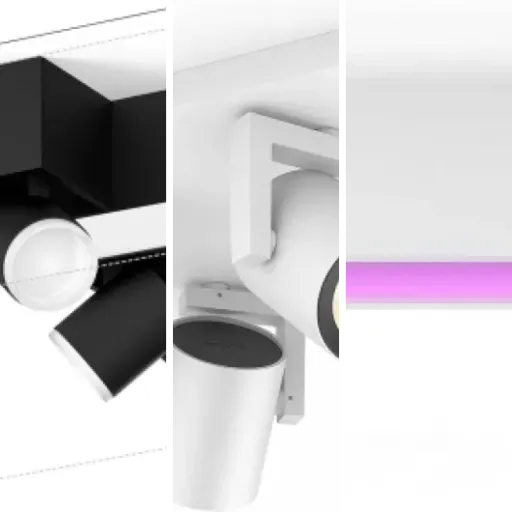
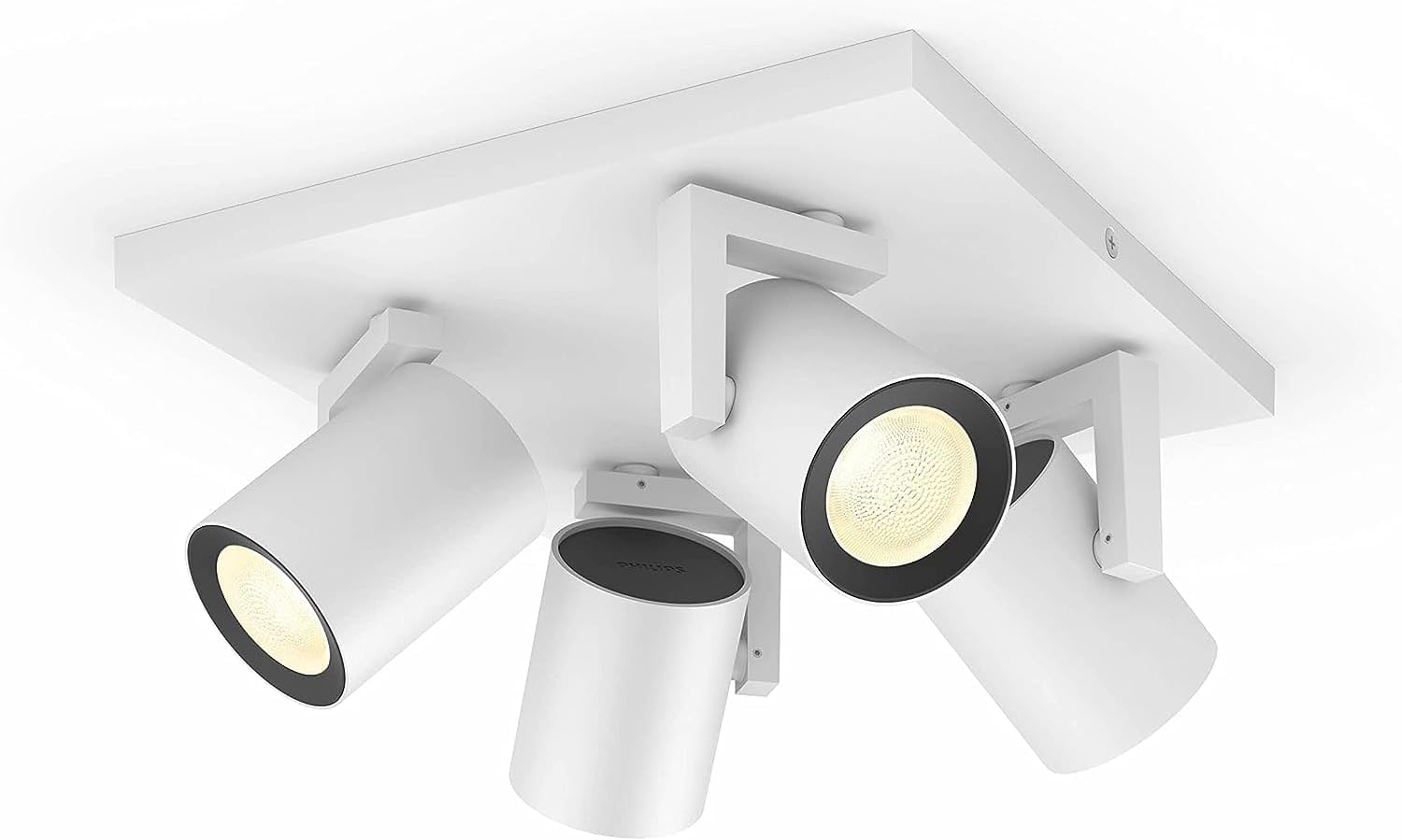
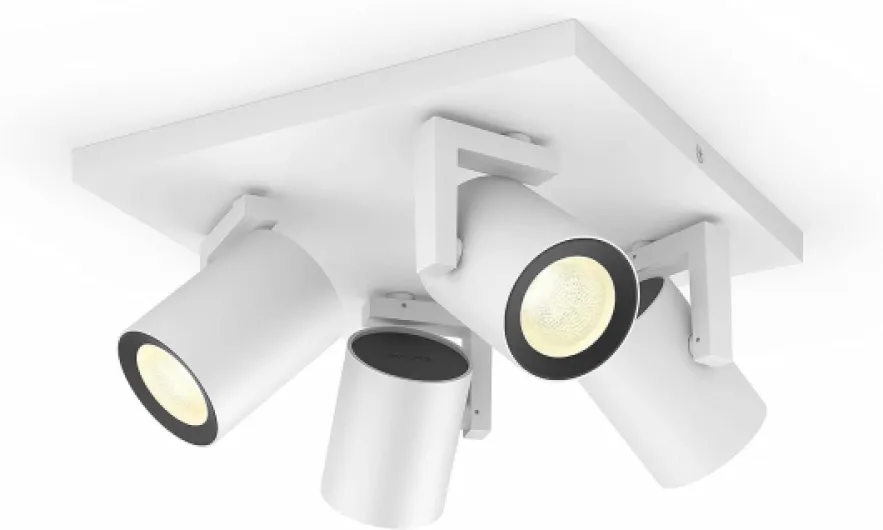
Design-wise, the Argenta is very much on the “clean and simple” side. It’s a white, lacquered metal fixture with four spot heads on a rectangular base. No fancy curves, no glass shades, no chrome details. If you like minimal, modern gear that blends into a white ceiling, this fits right in. In my living room, once it was up, it basically disappeared visually during the day, which I like. It doesn’t fight with other furniture or decorations.
Each spotlight can be angled, so you can point one towards the sofa, one towards a bookshelf, one towards a dining corner, etc. The adjustment range is decent: you can tilt them enough to hit different zones of a medium room, but it’s not a fully flexible track system. In practice, I used it like this: two spots on the seating area, one on a wall where I have frames, and one towards the TV corner, slightly bounced off the wall to avoid glare. That already gave a nicer feel than my old fixed bar.
The finish is okay for the price range: the paint is even, no sharp edges, and the heads move with reasonable resistance. You don’t feel like they’ll snap off or loosen quickly. That said, we’re still in the “mass-produced metal lamp” territory, not high-end design. If you go up in price in non-smart brands, you’ll find more visually interesting fixtures. Here the point isn’t to impress guests with the look of the lamp itself; it’s more about what it can do with light.
One small thing: when the bulbs are off, you clearly see the GU10 lamps, so if you hate seeing the bulb shape, this might bug you. I don’t mind it, it’s pretty standard for spots. Also, because everything is white, dust will show a bit, so expect to wipe it from time to time. Overall, I’d say the design is practical, neutral, and living-room friendly. Not exciting, not ugly, just something that fits quietly into most modern interiors.
Build quality and how it should hold up over time
In terms of durability, I obviously haven’t used it for ten years, but I can comment on build quality and what I’ve seen so far. The Argenta fixture is all metal with a lacquered white finish. It feels solid when you handle it: no rattling, no flimsy plastic arms. The spot heads hold their position after adjustment and don’t sag over time, at least not in the first months. The base mounts firmly to the ceiling, and once it’s up, there’s no wobble when you touch it lightly.
The included GU10 Hue bulbs are rated for long lifespans like most LEDs. I’ve used other Hue bulbs in my home for years without failures, so I trust them more than generic cheap LEDs. Also, the nice thing here is that the bulbs are not built-in: they’re standard GU10. If one fails in a few years, you just swap it, you don’t have to replace the whole fixture. That’s a big plus compared to some integrated LED panels where you’re stuck if the electronics die.
The main weak points I can imagine long term are: the white paint might get slightly yellowish in very smoky or greasy environments (kitchen, for example), and the adjustment joints might loosen a bit if you constantly move the heads. But this is more general spotlamp behavior, not something specific to this model. In a living room or bedroom, I don’t see any big durability concern. The CE marking and the fact that it’s made in Poland by Signify (Philips Hue’s parent company) also gives a bit of confidence versus totally no-name brands.
One thing to keep in mind: it’s not water resistant at all, so I wouldn’t put it in a bathroom where there’s a lot of steam or above a shower. It’s clearly meant for indoor dry rooms like living rooms, bedrooms, offices. Treated that way, I expect it to last many years. Overall, I’d say build quality is pretty solid, and the use of replaceable GU10 bulbs is a practical choice for long-term use.
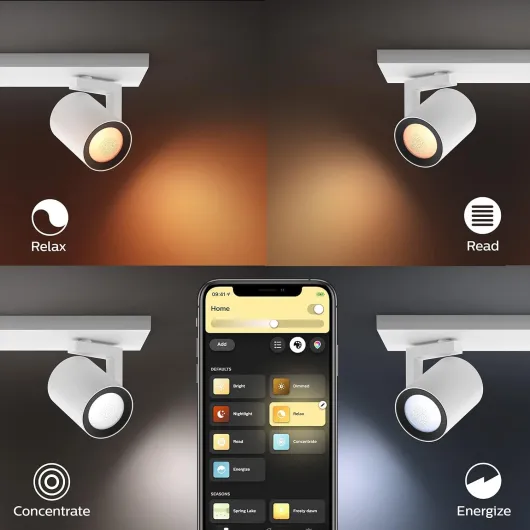
Brightness, color effects, and daily usability
On performance, I’ll be honest: if you expect blinding brightness, this isn’t it. The total rated output is about 800 lumens, which is similar to a single strong bulb. The difference is that here, that output is split across four adjustable points. In my 20–25 m² living room, it’s fine for normal use in the evening, watching TV, hanging out, or having friends over. For detailed tasks like reading small text or doing crafts at the table, I prefer turning on an extra floor lamp. So the main point: good for atmosphere and everyday use, a bit light for serious work lighting unless your room is smaller.
Where it really does well is flexibility. With the Hue app, you get all the usual presets: warm white for evenings, cooler white for the day, and full color scenes. I use warm white at low brightness at night (like 20–30%) and a neutral white around 60–70% during the day if it’s cloudy. The dimming is smooth, no visible flicker, and colors are consistent across the four bulbs. Reds and blues are strong enough for mood lighting; you’re not getting cinema-grade color, but it’s more than enough to set a vibe for movie nights or parties.
Latency with the Hue Bridge is low: when I ask Alexa to turn off the living room lights, they respond almost instantly. Same with the app. I’ve had a couple of moments where one spot was a bit slower to change color than the others, but it usually syncs up within a second. For me, that’s acceptable. If you’re super picky about perfect synchronization, you’ll notice it occasionally, but it’s not a constant issue.
In everyday life, I ended up using a few routines: in the morning, they turn on with a cooler white to wake up, and in the evening they switch to a warm, dimmed scene around sunset. It’s the kind of thing you quickly get used to and then miss when you go back to a normal light switch somewhere else. So from a practical standpoint, performance is solid: not the brightest fixture on earth, but very flexible and pleasant to live with if you like tweaking your lighting.
What you actually get in the box
Out of the box, the Philips Hue Argenta 4-spot is pretty straightforward. You get the metal ceiling fixture in white, already assembled, and four GU10 Hue White & Color Ambiance bulbs. No remote, no wall switch, no Hue Bridge included. So if you don’t already have a Hue Bridge, keep in mind you’ll need to buy that separately to unlock all the smart functions and automations. Without the Bridge, you can still do some basic stuff via Bluetooth, but it’s more limited and honestly not the main way this product is meant to be used.
The fixture itself is semi-flush mount, around 24 x 24 cm with a rectangular base and four adjustable spot heads. Each head takes a GU10 bulb, and the bulbs are the usual Hue GU10 color models. The combined power is around 16.8W with a total luminous flux of about 800 lumens according to the specs. That’s not huge if you compare it to a 2000+ lumen panel, but for a directional spot setup it’s fine for medium rooms or as a main light plus maybe a floor lamp.
Setup is pretty classic: you mount the base to the ceiling connection, connect the live and neutral, screw it in place, then pop in the GU10 bulbs. No fancy assembly, but you do need to be comfortable with ceiling wiring or get someone who is. Once powered, you open the Hue app, search for new lights, and they show up like any other Hue bulb. For me, the pairing was quick, under a minute for all four spots.
In daily life, the product behaves just like four Hue GU10 bulbs grouped in one fixture. You can group them together in the app as one room or zone, assign scenes, schedule timers, and control via Alexa, Google Assistant (with Bridge), or Apple HomeKit. So in terms of what you’re paying for, it’s really: a decent quality metal fixture + four premium GU10 smart bulbs + integration into a mature smart lighting ecosystem. If that combo sounds overkill for your needs, a regular GU10 bar and some cheap LED bulbs will be far cheaper and still light up your room.
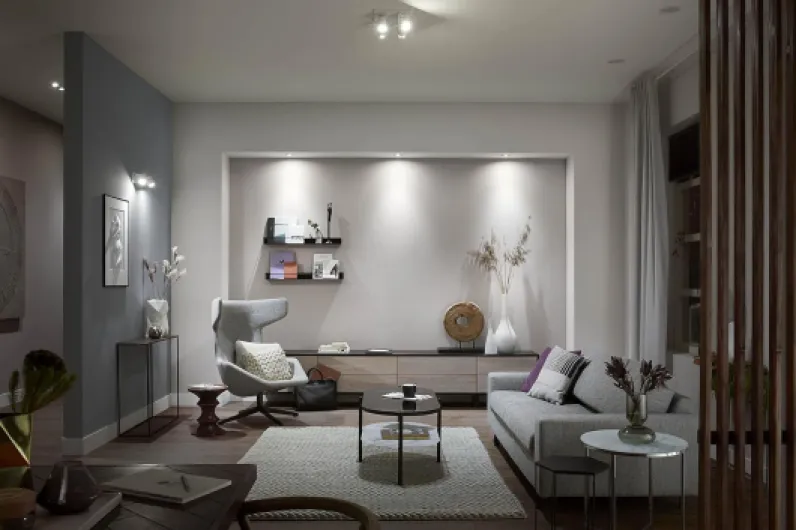
How well it works as a smart light, not just as a lamp
Effectiveness here is really about how well the Argenta integrates into the whole smart home routine. As a plain lamp, it’s basically four GU10 spots. Where it actually earns its keep is when you connect it to a Hue Bridge and start using scenes, automations, and voice. I linked it to both the Hue app and Alexa. Setup took maybe 10–15 minutes including physical installation, and once it was added to my “Living Room” group, it behaved like any other Hue light.
For example, I set up a routine where the Argenta turns on at sunset at 40% brightness with a warm white tone, and then dims slowly to 20% around bedtime. I also use it with a Hue motion sensor when I walk into the room at night: it comes on very dim, which is nice for late-night trips without blasting your eyes. This is the kind of thing a basic non-smart ceiling light simply can’t do, and where the Argenta starts to feel genuinely useful rather than just a fancy gadget.
Voice control is straightforward. I say “Alexa, turn on living room” and the four spots come on together. I can also say “set living room to nightlight” or “set living room to blue” and it switches scenes. It’s not flawless 100% of the time—maybe once in a while a command is misheard or the internet is slow—but that’s more on the assistant or network than the lamp itself. From the lamp side, response is quick and consistent.
Compared to using separate GU10 bulbs in a random bar from another brand, the Argenta’s advantage is that everything is already matched: the design, the spacing of spots, and the included Hue bulbs. If you already have other Hue stuff (lightstrips, bulbs, sensors), it slips right into your setup. If you’re not into smart lighting at all, honestly, the effectiveness will feel overkill: you’ll pay for features you don’t really use and might end up just flipping the wall switch like any normal lamp. So it works very well as a smart product, but only if you actually plan to use the smart side.
Pros
- Clean, discreet metal design with four adjustable spot heads
- Full Hue ecosystem support with color, dimming, scenes, and voice control
- Uses replaceable GU10 bulbs, so you’re not stuck if one fails
Cons
- High price compared to non-smart ceiling spotlights
- Total brightness (around 800 lumens) is modest for larger rooms
Conclusion
Editor's rating
Overall, the Philips Hue Argenta 4-spot is a solid smart ceiling light if you’re already invested in the Hue ecosystem or really want to start using smart lighting properly. The design is clean, the build quality feels reliable, and the fact that it uses standard GU10 Hue bulbs means you get all the usual Hue benefits: scenes, color control, dimming, automations, and voice control. In daily use, it’s comfortable, flexible, and genuinely changes how you use light in the room, especially with routines and motion sensors.
It’s not perfect though. The brightness is enough for a medium living room, but it’s not a powerhouse. If you’re looking for very strong, uniform lighting with a single fixture, you might find it a bit soft and need extra lamps. And the price is clearly on the high side compared to non-smart options. You’re paying for the ecosystem and convenience more than for raw lumens. So I’d say: it’s a good pick for people who already have a Hue Bridge, like tweaking their lighting, and are okay paying extra for smart features. If you just want a cheap, bright ceiling light and don’t care about apps or voice, there are many simpler and more affordable options that will do the job just as well.
![NEW White and Colour Ambiance Smart Light Bulb Starter Kit, 75W - 1100 Lumen [E27 Edison Screw] 2 Bulbs + Smart Button - With Bluetooth - Works with Alexa, Google Assistant and Apple Homekit E27 2 Pack Starter Kit + Button](https://www.smart-light-guru.com/storage/1015385/conversions/71yJIPbE0LL._AC_SL1500_-medium.webp)