Summary
Editor's rating
Value for money: cool system, but the price bites
Design: discreet black hardware that focuses more on light than looks
Build quality and weather resistance: feels sturdy, but time will tell
Durability and long-term expectations
Brightness, colours and smart features: how it actually behaves day to day
What you actually get in the box (and what you still have to buy)
Does it actually make your outdoor space more usable?
Pros
- Good light quality with plenty of colour options and smooth dimming
- Solid weatherproof build (IP65) and low-voltage system suitable for outdoor use
- Integrates well with existing Philips Hue setup, app, and voice assistants
Cons
- High overall price, especially considering the Hue Bridge is sold separately
- Cable layout and length limit placement without buying extra extensions
- Relies on a stable home network and Bridge for most smart features to work reliably

Specifications
View full product page →| Brand | Philips Hue |
Smart lights for the garden: cool idea, expensive experiment
I set up this Philips Hue Lily and Calla outdoor kit because I wanted the garden to look a bit less boring in the evenings and to sync everything with the rest of my Hue stuff indoors. I already had a Hue Bridge and a couple of indoor bulbs, so this felt like the logical next step. I’ve been using the kit for about three weeks now, through a few rainy days and a couple of late-night BBQs, so I’ve had time to see the good and the not-so-good sides.
The short version: it looks good once it’s installed and the colour options are fun, but the price is high for what is basically five outdoor lamps on a low-voltage cable. If you’re already deep into the Hue ecosystem, it makes sense. If not, you’ll probably raise an eyebrow when you add up the cost of the kit plus the separate Hue Bridge. It’s not plug-and-forget either; you need decent Wi‑Fi and a bit of patience for the setup and placement.
What surprised me most is how much difference the lights make to how the garden feels. Before, it was just dark after 9 pm and we basically never used the space. Now we actually sit outside more, and it’s easier to see the path and the plants. On the other hand, some details annoyed me: the cable length is limiting, the app can be a bit fussy, and you really notice the cost when you realise you’re still missing a couple of spots you’d like to light.
So this review is from the angle of a normal user, not some lighting nerd. I’m not going to dress it up: it’s a decent product with some clear pros and cons. If you’re thinking about lighting up your garden with smart lights and you’re wondering if this specific Philips Hue Lily + Calla set is worth the money, I’ll walk you through what actually happens when you buy it, install it and live with it.
Value for money: cool system, but the price bites
Let’s be blunt: this kit is not cheap. You’re paying for five smart outdoor lights, plus you either already have or need to buy a Hue Bridge on top. When you compare it to regular low-voltage garden lighting from a DIY store, the price difference is big. Those cheaper kits won’t give you app control, voice control, or 16 million colours, but they will light your path and your plants for a fraction of the cost.
Where the value shows up is if you’re already invested in the Philips Hue ecosystem. In that case, this kit plugs nicely into what you have. One app controls everything, you can group indoor and outdoor lights, use the same routines, and integrate with Alexa, Google Assistant or Apple HomeKit without extra steps. If you’re the kind of person who already has Hue bulbs in several rooms, the cost feels more like an extension of something you’ve already committed to rather than a fresh big purchase.
From a pure lighting perspective, the build quality and IP65 rating justify part of the price, but not all of it. A chunk of what you’re paying is for the smart features and the Hue brand/software ecosystem. If those things matter to you – automations, remote control when away, integration with other smart devices – then the value is easier to accept. If you just want the garden to be lit and don’t care about scenes or voice commands, the value is weaker.
Personally, I’d call the value “acceptable but not generous”. I don’t feel ripped off, because the product works well and fits into my existing setup, but I also don’t feel like I got a bargain. For people on a tight budget or with a large outdoor area to cover, there are better ways to spend the same amount of money. For someone who wants smart, colour-capable lighting and already owns a Hue Bridge, it’s a decent, if pricey, upgrade.
Design: discreet black hardware that focuses more on light than looks
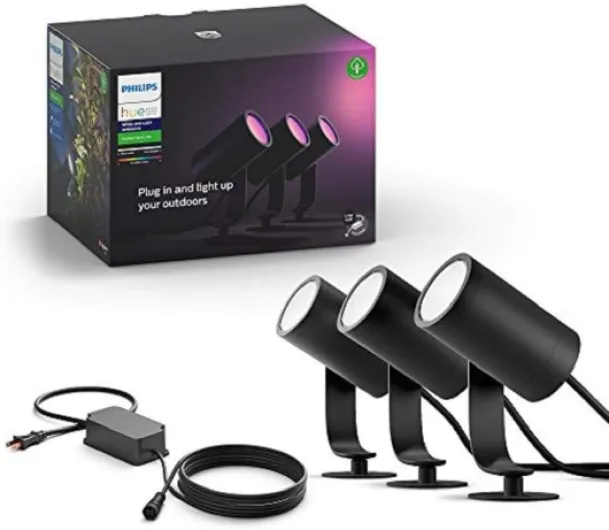
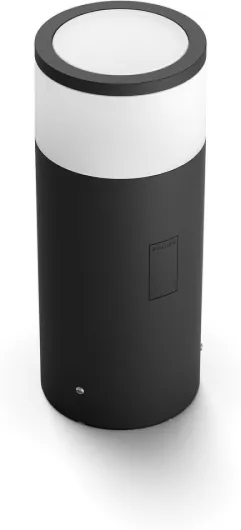
The overall design is pretty simple and practical. Everything is matte black with a powder-coated finish, so it blends into most gardens without shouting for attention. The Lily spotlights are compact, kind of like small cylindrical cans on a short arm, and you can tilt them to aim at a tree, wall or plant. The Calla pedestals are short posts, not very tall, so they work better for marking a path edge or defining a border than lighting a big area.
What I liked is that the design is clearly thought out for outdoors: the cables have proper seals, the connectors are chunky and feel solid, and the fixtures are IP65 rated, which means they handle rain and splashes fine. I’ve had them through heavy rain and they didn’t flicker or fill with water. The black finish hasn’t scratched or faded yet, but that’s only a few weeks, so long term is still an open question. Still, they don’t feel cheap in the hand; they feel like real outdoor kit, not indoor lamps pretending to be weatherproof.
Visually, once they’re on, you mostly see the light, not the hardware, which is what I wanted. The Lily spots do a nice job of highlighting a tree or a wall without being huge. The Calla pedestals give more of a soft glow around them. If you’re expecting them to be tall driveway posts, you’ll be disappointed; they’re more decorative than functional in terms of height. For a small patio or short path, they’re fine.
On the downside, the whole system is a bit rigid in terms of how the cables connect. Everything daisy-chains from the power supply, so you end up planning your layout around the cabling, not just around what you want to light. It would have been nicer to have a bit more flexibility in cable lengths out of the box. Also, the design is only available in black; that worked for me, but if you want something that matches a lighter fence or a more classic garden style, you don’t have options here. Overall, the design is practical and low-key, not pretty or decorative by itself.
Build quality and weather resistance: feels sturdy, but time will tell
The materials are mostly metal for the bodies of the lights and plastic for the shades and some of the connectors. The powder-coated finish on the metal parts feels decent and doesn’t come across as cheap paint. After a few weeks outside in rain and some wind, I haven’t seen any rust spots or peeling. Obviously, that’s not long-term testing, but at least there’s no immediate red flag. The plastic parts (especially on the Calla pedestals) don’t feel brittle, and they don’t have that shiny toy-like look you get on low-end garden lights.
The cables and connectors are where you can really see the outdoor focus. The cable is thick, the connectors twist and lock with rubber seals, and they feel like they can handle being on the ground, stepped on occasionally, and left in the wet. The IP65 rating means they’re protected against rain and low-pressure water jets, and given how they behaved in heavy rain, I believe it. I didn’t bother covering them or moving them during bad weather, and they just kept working.
However, you still get that feeling that you need to be a bit careful when pushing the ground spikes into harder soil. The spikes are plastic, and while they haven’t broken on me, I can see someone snapping one if they try to force it into rocky ground. My tip: pre-loosen the soil or use a small tool to make a pilot hole instead of just stomping them in. Once in, they feel stable enough and don’t wobble much.
Overall, the materials match the price better than I expected, but they’re not bulletproof. This is not heavy cast metal that will survive 20 years of abuse. It’s more like: good quality consumer-grade outdoor gear that should last several seasons if you don’t treat it like construction equipment. For the price point, I would have liked slightly beefier spikes and maybe some metal in those parts as well, but what’s there is at least consistent and well put together.
Durability and long-term expectations
I haven’t had the kit long enough to talk about multi-year durability, but I can comment on how it’s held up so far and what I expect. After a few weeks outdoors with several heavy rains, some strong wind, and temperature swings between about 5°C and 20°C, everything is still working like day one. No moisture in the lenses, no random flickering, and the connectors are still tight. That’s a good start, and the IP65 rating backs that up on paper.
The LED technology itself is usually long-lasting. Philips doesn’t expect you to change bulbs here; the light sources are integrated. That’s convenient, but it also means if a unit fails outside warranty, you’re basically replacing the whole fixture. Given the brand’s track record, I’d expect several years of life, but I can’t verify that yet. The stated wattage of 100W for the whole system suggests it’s not under heavy stress, which is a plus for longevity.
Physically, I think the weak points will be the ground spikes and potentially the cable where it bends sharply. If you move the lights often or push them into hard soil without care, I can see things breaking over time. Also, constant sun exposure might eventually fade the plastic or make it more brittle, but that’s true of most outdoor gear. The powder-coated metal should handle UV better than bare plastic though.
Overall, from what I’ve seen and felt, I’d rate the expected durability as pretty solid for home use. Not industrial level, but good enough for several seasons if you install them sensibly and don’t abuse them. For the price, I would hope they easily last 4–5 years at least. If you want something you never think about for a decade, you might want to look at more heavy-duty, possibly wired-in outdoor fixtures and accept losing the smart features.
Brightness, colours and smart features: how it actually behaves day to day
In terms of pure light output, the set is bright enough for a normal garden, but it’s not floodlight level. The Lily spots do a good job lighting up a small tree, a wall section, or a seating area. The Calla pedestals give more of a diffuse glow around your feet and along the path. If you want to fully light a big garden, you’ll probably need more units, which again means more money. For my medium-sized terrace and a bit of lawn, five lights felt reasonable, but I can already see spots where one or two extra would be nice.
The colours are what you’d expect from Philips Hue: lots of choice, from warm white to saturated colours. Some shades (deep blues and some greens) look better than others, but overall it’s fun to play with scenes from the app. I used a warm white / amber mix most evenings and only switched to bright colours when we had people over. Colour accuracy isn’t perfect if you’re picky, but for a garden, it’s totally fine. The colour rendering index of 80 is decent, and you don’t get that weird sickly tone you sometimes see with cheap RGB lights.
On the smart side, once you have the Hue Bridge set up and the lights added, it all works pretty smoothly. I created routines like “turn on at sunset, off at 1 am” and a presence-mimicking one when we’re away. The lights respond quickly in the app and to voice commands via Alexa and Google Assistant. There was a bit of lag once or twice when my Wi‑Fi was struggling, but in normal conditions, it’s fast enough. Just remember: the Bridge connects to your router via Ethernet, and the lights talk to the Bridge, so good Wi‑Fi coverage near the bridge/router area matters for app control from your phone.
One thing that’s worth noting: as an outdoor set, this depends heavily on your home network stability and range. The product info mentions needing a strong Wi‑Fi, and that’s not just a small detail. When my router rebooted one night, the automation failed and the garden stayed dark. Not the end of the world, but it shows you’re relying on more than just a simple timer plug. If you’re ok with that trade-off for the smart features, the performance is pretty solid overall. If you want absolute reliability with no tech involved, a plain old outdoor spotlight kit with a mechanical timer might suit you better.
What you actually get in the box (and what you still have to buy)
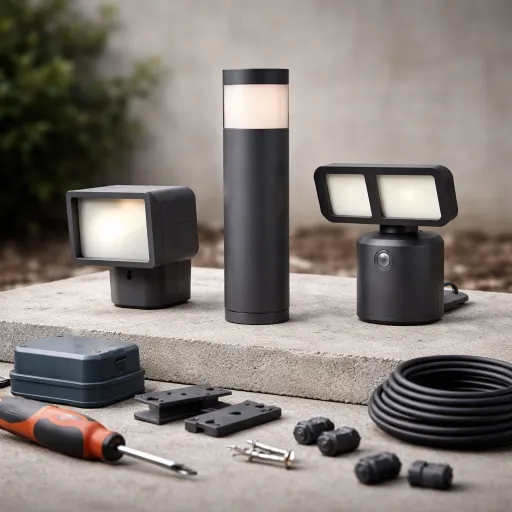
This bundle is basically two things combined: the Philips Hue Lily base kit with 3 spotlights, and 2 Calla pedestal lights. So in total, you get five outdoor lights. The Lily units are small spotlights you stick in the ground or screw to a surface, and the Calla are short bollard-style posts meant for paths or borders. Everything runs on low voltage from a single power supply, which is safer for outside and easier to route around the garden.
In the box for the Lily kit, you get: 3 spotlights, the power supply, the low-voltage cables with connectors, plus ground spikes and mounting brackets. For the Calla, in this set, you’re basically getting two pedestal lights that plug into the same low-voltage system. You do not get a Hue Bridge in this bundle, and that’s important. If you don’t already own one, you have to buy it separately, otherwise these are just dumb lights stuck on one colour/brightness. No app control, no timers, nothing smart. So factor that into your budget.
Setup is fairly straightforward but you need to think about placement. The main thing is the power supply location and the cable runs. The supplied cables are ok for a small to medium garden, but if your socket is far from where you actually want the lights, you’ll either need an outdoor extension or to compromise on positioning. That’s something the product page doesn’t really stress. You can buy extension cables, but again, more money.
Overall, the presentation is typical Philips Hue: the kit feels like part of a bigger system, not a standalone product. If you’re already used to the Hue app and the Bridge, it all fits in pretty smoothly. If this is your first Hue product, it’s a bit confusing at first: separate bridge, separate app, and several steps before the lights actually respond. Nothing too hard, but definitely not a quick plug-in lamp like a normal outdoor spotlight set from a hardware store.
Does it actually make your outdoor space more usable?
In practice, the main question for me was: does this kit actually make us use the garden more and feel a bit safer walking around at night? And the answer is yes, to a reasonable extent. Before, the area outside was basically dark apart from a single wall light by the door. Now, the path is visible, the plants are highlighted, and the whole thing feels more inviting. We ended up staying out later a few evenings just because it was more pleasant and we could see where we were walking.
The motion or automation aspect is indirect here (since these specific lights don’t have built-in sensors), but with the Hue app and the Bridge, you can set schedules and geofencing. I set them to turn on at sunset and off at 1 am on weekdays, and a bit later on weekends. It’s nice not having to remember anything. The presence-mimic mode, where lights switch on and off randomly while you’re away, is a nice extra for security. Is it going to stop a determined burglar? Probably not. But it’s better than a completely dark house.
For entertaining, the kit does its job. Switching to a warmer tone gives a cosy vibe, and you can go full colour if you want a more playful look for a BBQ or a small party. The dimming is smooth, so you can go from bright, practical light while you’re cooking to softer lighting when you’re just sitting around. It’s not revolutionary, but it’s practical and it works as advertised.
On the downside, the effectiveness is limited by how many lights you have and where you can place them. With only five lights, you have to be strategic. I found myself moving one of the Lily spots twice before I was happy with the coverage. If you have a large or complex garden, this kit alone won’t be enough; it’s more like a starter set. Also, if your Wi‑Fi or Bridge setup is flaky, the automations can occasionally fail, which is annoying when you expect the garden to light up and it doesn’t. So yes, it makes the space more usable, but you need to put in a bit of thought and accept some occasional tech hiccups.
Pros
- Good light quality with plenty of colour options and smooth dimming
- Solid weatherproof build (IP65) and low-voltage system suitable for outdoor use
- Integrates well with existing Philips Hue setup, app, and voice assistants
Cons
- High overall price, especially considering the Hue Bridge is sold separately
- Cable layout and length limit placement without buying extra extensions
- Relies on a stable home network and Bridge for most smart features to work reliably
Conclusion
Editor's rating
Overall, this Philips Hue Lily and Calla outdoor kit is a good but pricey way to add smart lighting to your garden. The light quality is decent, the colours are fun, and the hardware feels solid enough for normal outdoor use. The integration with the Hue Bridge and the app works well, and voice control through Alexa, Google Assistant or Apple HomeKit is convenient once you’ve set everything up. It does make the garden more usable and pleasant in the evenings, and the automation options are genuinely handy.
On the flip side, the cost is high, especially when you factor in the separate Hue Bridge if you don’t already own one. Cable lengths and the daisy-chain layout limit where you can place the lights without extra accessories, and five units might not be enough for larger gardens. You’re also depending on your home network for automations to work smoothly, which adds another potential failure point compared to basic plug-in lights with a timer.
I’d recommend this kit to people who are already using Philips Hue indoors and want to extend that same experience to their outdoor space, and who are ok spending extra for smart features and colour control. If you just need basic outdoor lighting on a budget, or you have a very large area to cover, you’ll probably be happier with simpler, cheaper garden lights and maybe a smart plug. This set is more for those who like tinkering with scenes and routines and want their garden to feel like an extension of their smart home.


![TP-Link Smart Bulb, Smart WiFi LED Light, E27, 8.3W, Works with Amazon Alexa(Echo and Echo Dot) and Google Home, Colour-Changeable, No Hub Required L530E [Energy Class F]](https://www.smart-light-guru.com/storage/939170/conversions/61umAkCvEzL._AC_SL1000_-medium.webp)

![Philips Hue Lily White and Colour Ambiance LED Outdoor Smart Light [Base Kit - 3 Lily ] with 2x Calla Pedestal, Requires Hue Bridge , Works with Alexa, Google Assistant and Apple Homekit - 5 Piece Set Base Kit - 3 Lily Lily](https://www.smart-light-guru.com/storage/815265/616WjVSKf4L._AC_SL1010_.jpg)