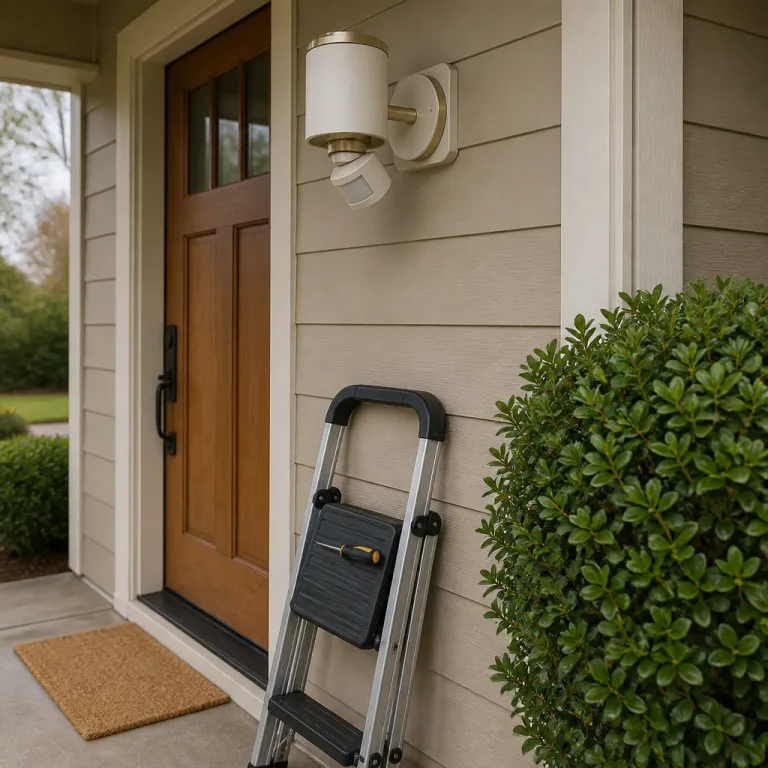
Why motion sensor smart lights on porches misbehave at 3 am
Most front porch motion sensor smart lights that misfire at night are not actually broken. The core issue is how the passive infrared motion sensor reads heat changes in the scene rather than clean human motion. A warm car exhaust crossing a cool driveway or a cat stepping through a patch of light will turn the light on exactly like a person walking up your steps.
These connected products use passive infrared (PIR) detectors that watch for rapid shifts between warm and cool zones, not for shapes or faces. When a cloud moves across the moon or a gust of wind pushes warm air past a cooler wall, the sensor motion pattern looks almost identical to a visitor approaching your door. That is why motion sensors on many porch lights feel unreliable straight out of the pack, even when the price and brand suggest a premium experience.
On basic models the sensor is usually locked at a very wide detection cone, often close to 180 degrees. That means your smart motion coverage includes the road, the neighbour’s garden and every tree branch that sways in a pool of cool white or warm white light. If your porch faces a busy street, a single car driving past can trigger the motion sensor repeatedly, which drains any battery powered unit and makes you distrust the light.
The 90 second app fix that stops most false triggers
The fastest way to tame front porch motion sensor smart lights is to open the companion app and narrow what the sensor can see. On Philips Hue motion products, for example, you can shrink the detection angle from a default wide arc down to a tighter 90 to 120 degree cone that only covers your path and front steps. Similar app control exists on many Alexa and Google Assistant compatible lights sold on Amazon, even if the settings are buried under advanced options.
On a Philips Hue Outdoor Sensor, the Motion Sensitivity and Detection Area sliders sit under the Accessories > Motion Sensor menu in the Hue app, while Eufy and Aqara place comparable controls under Automation or Security tabs. In the same menu you should raise the sensitivity threshold so the sensor ignores small heat changes. A higher threshold means the smart motion system waits for a clearer, larger motion event before the light will turn on, which filters out cats, swaying plants and distant cars. Setting a minimum cool down time between triggers, usually 30 to 120 seconds, prevents the light motion pattern from strobing on and off when repeated motion sensors events occur in quick succession.
If you are troubleshooting constant 3 am activations, start with these three tweaks before blaming the product or the brand. A detailed breakdown of how passive infrared sensitivity works in real homes is available in this guide on preventing 3 am motion light false triggers, which includes annotated screenshots of the Philips Hue app and side by side comparisons of wide versus narrow detection zones. Once you have tuned the app control correctly, even a modestly priced pack of porch lights can behave like a far more expensive starter kit with integrated AI.
Mounting height, angle and why the road should stay out of frame
Where you mount motion sensor smart lights on the porch matters more than which logo sits on the box. A sensor placed at 2.1 metres high and angled slightly down toward the path will see human motion clearly while ignoring most background traffic. The same sensor mounted at 4 metres and pointed straight out to the road will turn every passing car into a false alarm.
For most front porches the sweet spot is between 2.1 and 2.7 metres above the ground. At that height the motion sensor can track a person’s torso and shoulders, which create a strong heat signature against the cooler background of a wall painted white or a darker brick. If you angle the sensor down by around 15 degrees and avoid pointing it directly at a tree or reflective window, you dramatically reduce the number of random motion sensors events.
Many Hue motion units and similar smart bulbs with integrated sensors ship with adjustable heads that you can tilt and swivel. Take a minute to walk the path while someone else watches the app or the light to see exactly where the sensor motion zone begins and ends. For a deeper technical explanation of how detection zones and sensitivity interact, a specialist article on understanding PIR sensitivity for smarter lighting is worth reading before you move the bracket or drill new holes.
AI enhanced motion sensors and when they are worth the extra cost
Traditional motion sensor smart lights only see heat and movement, which is why they confuse pets, cars and people. Newer AI enhanced sensors from brands such as Reolink, Eufy and Aqara add on device processing that classifies the object before the light turns on. In practice that means the system can ignore a dog crossing the garden while still reacting instantly to a person walking up the drive.
These products often cost £30 to £50 more than a basic pack smart of porch lights, but the upgrade is justified when your porch faces a busy street or a large yard. AI models trained on thousands of real world clips can distinguish human motion from car headlights or tree shadows with far greater accuracy than a simple Hue motion sensor. When paired with smart bulbs that support both warm white and cool white output, the system can even adjust colour temperature based on the time of night and the type of motion detected.
Most AI capable motion sensors now integrate with Alexa, Google Assistant and sometimes both Alexa and Google ecosystems through Matter or Zigbee bridges. A Hue Bridge or similar bridge required device acts as the central brain, linking the sensor motion events to scenes in multiple rooms and to other products such as cameras or sirens. If you already own Philips Hue lights indoors, adding an outdoor AI sensor to the same bridge can be cheaper than buying a separate battery powered standalone product with its own app.
Schedules, two stage brightness and how the porch should feel at night
Even the best motion sensor smart lights become annoying if they trigger at noon or stay on all night. A simple schedule layer in the app ensures that motion only controls the light between sunset and sunrise, while manual switches or scenes handle daytime use. Most smart apps let you tie this schedule to local sunrise data so you never have to adjust it seasonally.
For front porches a two stage activation pattern often feels more welcoming and less harsh. Set your smart bulbs or integrated light to a low warm white glow, perhaps 20 to 30 percent brightness, that will turn on with the first motion sensor event. If motion continues for 10 to 20 seconds, the light motion rule can then ramp up to full cool white or a brighter warm white level for security and camera clarity.
This approach halves the wear on LEDs and reduces the sense that the porch is constantly flashing on and off. It also works well with voice assistants such as Alexa or Google Assistant, because you can still use voice commands to override the automation when hosting guests. If you run multiple products in a pack smart configuration, link them so that one sensor motion event near the steps gently raises all nearby lights rather than blasting a single spotlight.
Choosing the right porch rated motion light: real product examples
When you shop for motion sensor smart lights on Amazon or in a local store, focus less on marketing terms and more on a few concrete specifications. Look for an IP54 or higher weather rating, support for your existing bridge such as a Hue Bridge or a Matter hub, and clear mention of app control for motion zones and sensitivity. Battery powered units are easier to install but require careful tuning of motion sensors and schedules to avoid frequent battery changes.
Philips Hue offers several outdoor rated products that pair with the Hue Bridge, including smart bulbs that fit standard porch fixtures and dedicated Hue motion sensors for outdoor use. A typical starter kit might include a bridge, a pack of two or three white or white and colour ambience bulbs, and one outdoor motion sensor. The Philips Hue Outdoor Sensor, for example, is rated IP54, offers a detection cone of up to 160 degrees with adjustable range, and usually sits in the £45 to £60 bracket depending on retailer promotions.
If you prefer a Wi Fi based product without a bridge required, many brands sell single light fixtures with integrated sensors and direct Alexa and Google compatibility. A common example is a wall mounted LED flood with an IP65 enclosure, a quoted 120 degree motion zone and a price around £35 to £70 per unit. For renters or those who cannot run new wiring, a compact battery powered porch light with a focused sensor motion cone can still provide a meaningful security upgrade when mounted at the right height.
Making existing smart lights work better with the rest of your home
Front porch motion sensor smart lights rarely operate in isolation once you start building a smart home. A Hue Bridge or similar hub can link outdoor motion sensors to indoor smart bulbs so that a late night visitor gently raises the hallway light instead of leaving you to fumble in the dark. This kind of cross room automation is where the value of a slightly higher price for ecosystem products becomes clear.
Voice assistants such as Alexa and Google Assistant add another layer of control and reassurance. You can ask for the porch light to turn white or dim after a motion event, or create routines where a specific sensor motion event triggers an announcement on a smart speaker. For example, a motion sensor at the driveway could turn on the porch lights and a side room lamp while also sending a notification to your phone.
As you expand, pay attention to how many products your bridge or Wi Fi network can handle before performance drops. Some users find that separating high traffic devices such as cameras and motion sensors from decorative gear like light strips improves reliability and latency. If you are planning to add accent lighting, a guide on smart light strips behind a TV and the install mistake that kills them in six months can help you keep both your porch and your living room lighting stable over the long term.
Key figures on motion sensor smart lights for porches
- Studies of residential passive infrared sensors from security industry labs and manufacturer field trials show that up to 80 percent of nuisance triggers are caused by non human heat sources such as cars, pets and moving foliage, which aligns with field reports from major security lighting manufacturers and independent lab tests on outdoor PIR modules.
- Independent testing of outdoor smart bulbs and fixtures typically finds that narrowing the detection angle from 180 degrees to around 100 degrees can cut false triggers by roughly half while still covering the main approach path, especially when combined with a modest reduction in maximum range.
- Energy audits on homes that switch from always on porch lights to motion controlled LED fixtures report exterior lighting electricity use dropping by 50 to 70 percent, depending on traffic patterns and timer settings, with case studies published by utility efficiency programs and smart home research groups.
- Consumer surveys from smart home research firms indicate that front porch and driveway lights are among the first three smart lighting products installed, but also among the top devices disabled due to annoyance from false triggers.
- Market analyses of smart outdoor lighting show steady growth in AI enhanced motion sensors, with human detection features moving from premium cameras into mid range security lights within just a few product generations.
FAQ about motion sensor smart lights on the front porch
Why does my porch motion light keep turning on with no one there ?
Most front porch motion lights use passive infrared sensors that react to heat changes, so a warm car, a cat, or even moving tree shadows can look like a person. If the sensor is aimed at the street or a garden, it will see far more of these changes and trigger constantly. Narrowing the detection angle, raising the sensitivity threshold and avoiding direct views of the road usually solves the problem.
What is the best height to mount a motion sensor porch light ?
The most reliable range for a typical residential motion sensor is between about 2.1 and 2.7 metres above the ground. At this height the sensor can see the upper body of approaching people clearly without being overwhelmed by ground level heat sources. Mounting much higher or pointing the sensor straight out instead of slightly down tends to increase false triggers and reduce detection of real visitors.
Do I need a bridge like Philips Hue Bridge for my porch light ?
You only need a bridge such as a Philips Hue Bridge if you choose bulbs or fixtures that use Zigbee or similar protocols and are designed to work through that hub. Many Wi Fi based porch lights connect directly to your router and use their own apps, so no bridge is required. The trade off is that bridge based systems often handle many devices more reliably and integrate better with whole home scenes.
Are battery powered motion sensor lights good enough for security ?
Battery powered motion lights can be very effective for short paths, side gates or rental properties where wiring is difficult. Their main limitation is runtime, because frequent triggers or very bright settings will drain batteries quickly in busy areas. Careful placement, a narrower detection zone and shorter on times help keep them reliable for security without constant battery changes.
Should my porch motion light stay on all night or only when it detects motion ?
For most homes a hybrid approach works best, with a low level glow for ambience and safety and brighter light only when it detects motion. Smart bulbs or fixtures can hold a dim warm white level through the evening, then ramp up to full brightness when someone approaches. This pattern balances security, neighbour friendliness and energy use better than either permanent darkness or a fully lit porch all night.