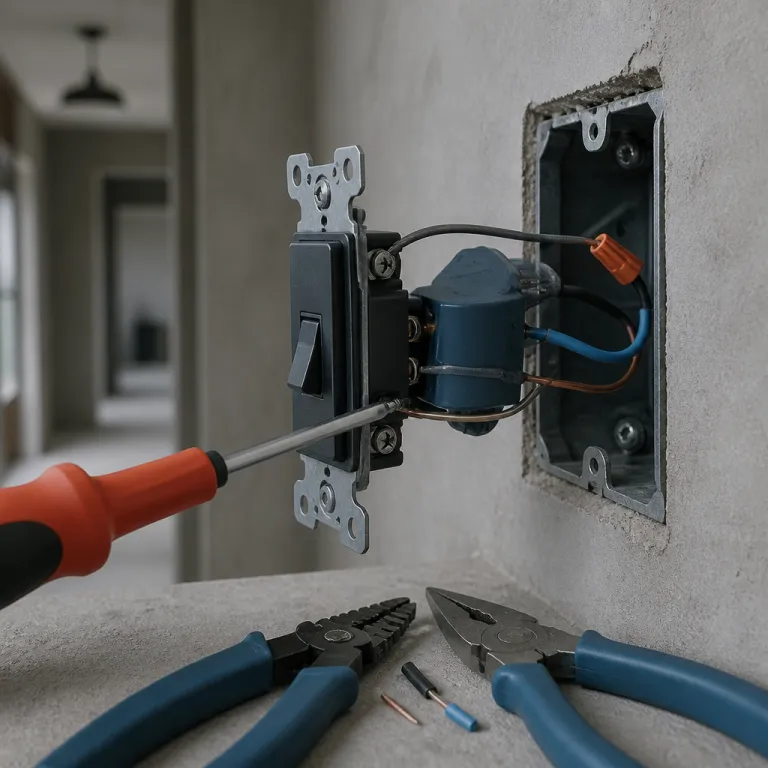
Single pole single throw switches in smart lighting: a practical guide
Why the single pole single throw switch still matters in smart lighting
A single pole single throw switch looks simple, yet it shapes how every smart light behaves. In a connected home, this basic switching device still defines whether power reaches the circuit and how safely your smart bulbs, dimmers, and retrofit modules operate. When you understand how single pole switches work, you can choose smarter products, avoid wiring mistakes that damage expensive equipment, and keep your lighting system easy to troubleshoot.
Electricians describe a single pole single throw switch, often shortened to an SPST switch, as a standard on off control for one circuit in one location. In practice, that means one pole switch controls a single lighting load, such as a ceiling light or a row of LED downlights, without any double throw complexity or extra traveler wires. This clarity makes SPST toggle switches and rocker switches the preferred starting point for many smart light switch upgrades in apartments and small homes, especially where the existing wiring is limited to a simple feed and switched live.
Most smart light switch designs still rely on a physical throw switch mechanism inside, even when the front shows a sleek capacitive touch surface. Whether the external style is a classic toggle switch, a modern rocker switch, or a discreet push button, the internal contacts behave like a compact knife switch that either connects or isolates the live conductor. That is why manufacturers publish detailed SPST ratings in VAC, current, and sometimes heavy duty cycles, so you can match the number on the label to the real demands of your lighting circuit and the inrush behavior of LED drivers.
Inside the circuit: how SPST switches interact with smart dimmers and sensors
At wiring level, a single pole single throw switch sits in series with the live conductor feeding your light switch box. When the throw switch is closed, current flows through the circuit to the luminaire or smart module, and when it opens, the circuit is free of power and the light turns off. This simple behavior becomes critical when you start adding smart dimmers, occupancy sensors, and wireless relays behind the same mounting hole or inside a crowded junction box.
Many smart light switch products are designed to replace a standard SPST device without changing the back box or the faceplate. They still use a single throw internal mechanism, but they add electronics that talk to a hub, measure energy for sustainability reporting, or support multiway control through software instead of double pole wiring. When you pair these switches with an occupancy sensor wall switch, you must ensure that the smart module always has power, which often means leaving the physical switch permanently on or using a momentary contact that never fully removes supply.
For that reason, several manufacturers now recommend using a smart relay or in wall module behind a conventional SPST toggle switch or rocker switch, then locking the front in the on position. This approach keeps the familiar feel of mechanical toggle switches while letting the sensor or hub manage the actual switching logic and dimming curves. If you want to understand how a hub coordinates these roles, a detailed guide on a Z Wave lighting hub acting as a silent conductor explains how the hub keeps every circuit synchronized even when people still flip the front plate manually or trigger scenes from an app.
Choosing between toggle, rocker, and push button formats for SPST smart control
Once you know you need a single pole single throw switch, the next decision is the physical format you want on the wall. Traditionalists often prefer a raised toggle switch because it gives clear tactile feedback and makes the on off state visible from a distance. Others choose a wide rocker switch or low profile push button because these products look cleaner and are easier to operate for children, older adults, or people with reduced dexterity.
From an electrical perspective, all these formats can implement the same SPST function, whether they are sold as individual products or in a multi pack for a whole home renovation. The internal mechanism still has one pole and one single throw, so the wiring diagram for a rocker switch is usually identical to that of a toggle switch, with the same VAC rating and the same number of terminals. What changes is the way your hand interacts with the switch, how the light switch blends with the rest of your interior design, and whether the front plate can be swapped later for a smart dimmer or scene controller.
Smart lighting brands now offer modular systems where you can clip different front plates onto a common SPST base, mixing rocker switches, push buttons, and even scene controllers in the same mount frame. One well known example is a modular smart switch platform that lets you start with a simple single pole switch and later upgrade to app controlled dimmers without rewiring the circuit. A detailed article on how a modern modular smart switch can make lighting feel simple and intuitive shows how this flexibility helps renters and homeowners phase upgrades over time instead of buying every product on day one, while still relying on a familiar SPST foundation.
When a single pole single throw switch is not enough: double throw and double pole options
Not every lighting layout can rely solely on a single pole single throw switch, especially in staircases, long corridors, or large open plan rooms. When you need to control one light from two locations, electricians use a form of double throw switch wiring, often combined with intermediate devices in larger spaces. In these cases, the number of traveler wires and the way each pole connects changes, so a simple SPST product is no longer sufficient and can cause confusing behavior if installed by mistake.
A double throw mechanism allows the internal contact to connect the common terminal to one of two outputs, which is why it is called a single pole double throw, or SPDT, switch in many catalogs. When you add a second pole that moves in sync, you get a double pole double throw configuration, often shortened to DPDT, which can manage two circuits at once or switch both live and neutral for extra safety. These double pole arrangements are more complex to wire, but they are essential in some smart lighting retrofits where you must isolate two separate loads with one physical actuator or meet specific code requirements.
Even then, many smart home designers try to keep the user facing control as close as possible to a familiar SPST light switch, using software scenes to emulate double throw behavior. For example, a smart relay can treat a momentary push button as a logical toggle, cycling through scenes while the actual power circuits remain under electronic control. This strategy lets you maintain a consistent look with standard switches on the wall while the hidden electronics handle the heavy duty switching tasks that once required bulky knife switch assemblies or large mechanical contactors.
Practical buying criteria: ratings, mounting, and sustainability for SPST smart switches
When you compare single pole single throw switch options for smart lighting, start with the electrical ratings printed on the body. Look for the VAC value, the current rating in amperes, and any indication that the device is suitable for LED or electronic loads, not just incandescent lamps. A higher rating does not automatically mean better performance, but it gives more margin when a circuit includes multiple luminaires or inrush heavy drivers, as described in manufacturer application notes and IEC test procedures for LED control gear.
The next factor is the physical mount and the size of the mounting hole, which must match your wall box and faceplate system. European style products often use modular frames, while North American standard switches rely on rectangular yokes with two or four screws, so you must check that your chosen toggle switches or rocker switches fit the existing cutouts. Some heavy duty SPST devices are deeper or wider than decorative models, which can cause problems in shallow boxes already crowded with conductors and connectors, especially when you add a smart relay or wireless radio module.
Finally, consider sustainability aspects such as material choices, standby power consumption for smart variants, and the ability to reuse existing faceplates instead of replacing every light switch. Many manufacturers now publish environmental product declarations and promote halogen free plastics or recyclable metals in their switch ranges. If you plan a large project with multiple packs of switches and dimmers, choosing a brand with clear sustainability commitments can reduce the global environmental impact of your lighting upgrade while still giving you reliable pole switch performance and long service life.
From mechanical to digital: how SPST switches integrate into global smart ecosystems
The humble single pole single throw switch now sits at the edge of global smart home ecosystems that span cloud services, mobile apps, and voice assistants. Behind a familiar toggle switch or rocker switch, a compact module can translate each mechanical action into a digital command that travels through Wi Fi, Zigbee, or Z Wave networks. This bridge between physical and virtual control lets you keep intuitive wall switches while gaining automation features that once required complex control panels or dedicated building management systems.
In many smart lighting projects, installers leave the existing SPST light switch in place and add a retrofit module that listens for the switch state while also accepting wireless commands. The module then decides whether to energize the circuit, acting like an invisible throw switch that responds both to human input and to scheduled scenes from a central hub. A detailed technical article on how a Z Wave hub orchestrates smart lighting shows how this architecture keeps latency low and ensures that manual overrides always win when someone flips the wall control or presses a physical scene button.
As manufacturers compete in this space, they differentiate their products not only by features but also by how easily users can add items to an online cart and complete a purchase. Clear labeling of SPST, double pole, and double throw capabilities, along with accurate diagrams of each configuration, helps non specialists choose the right product without miswiring a circuit. Over time, this transparency builds trust and supports a more sustainable market where people buy the correct switches and avoid wasteful returns or unsafe improvisations with improvised knife switch style hardware.
Key statistics on single pole single throw switches in smart lighting
- Market analysts report that basic mechanical switches, including SPST and related formats, still account for more than 60 % of residential wall controls sold worldwide, even as smart products grow rapidly (data consistent with major electrical industry reports from organizations such as the IEA and leading trade associations). This shows that the single pole single throw switch remains the default choice for many renovations and small upgrades.
- Studies of LED driver behavior indicate that inrush currents can reach 10 to 15 times the nominal operating current during the first milliseconds after switching on (values aligned with manufacturer application notes and IEC test procedures for electronic control gear). This is why many manufacturers recommend using heavy duty SPST or double pole devices for circuits with large numbers of LED luminaires or high power drivers.
- Energy agencies estimate that occupancy sensors and smart scheduling can reduce lighting energy use in homes by 20 to 30 % when combined with appropriate wall switches and dimmers, according to guidance from organizations such as the U.S. Department of Energy and the IEA. In practice, this means that pairing an SPST based smart switch with an occupancy sensor can significantly cut wasted energy in corridors, bathrooms, and utility rooms.
- Field surveys in residential buildings show that miswired multiway circuits are a common cause of nuisance tripping and flickering lights. Using clearly labeled SPST, double throw, and double pole devices with accurate diagrams reduces these issues and improves long term reliability, especially when non specialists are replacing existing switches.
FAQ about single pole single throw switches in smart lighting
What is a single pole single throw switch in simple terms ?
A single pole single throw switch is a basic on off control that connects or disconnects one live conductor in a single circuit. It has one input terminal and one output terminal, so it either completes the path or leaves it open. This makes it ideal for controlling one light from one location in a typical domestic room.
Can I use a single pole single throw switch with smart bulbs ?
You can use an SPST light switch with smart bulbs, but the bulbs need constant power to stay connected to your network. If you turn the switch off, the smart bulb loses power and cannot respond to app or voice commands. Many people leave the switch on permanently and use apps, remotes, or voice assistants for daily control, or they fit a smart module that keeps the circuit energized while still sensing switch presses.
When do I need a double throw or double pole switch instead ?
You need a double throw or multiway arrangement when one light must be controlled from two or more locations, such as at the top and bottom of a staircase. A double pole device is required when you must switch two conductors at once, often for safety or for controlling two circuits with one actuator. In both cases, wiring is more complex than with a simple SPST switch and usually benefits from a clear diagram or professional installation.
Are rocker switches better than toggle switches for smart lighting ?
Rocker switches and toggle switches can both work well with smart lighting, because the internal function can still be SPST. Rocker designs often look more modern and are easier to press, while toggles give clearer visual feedback about the on off state. The best choice depends on your décor, accessibility needs, and the smart modules or dimmers you plan to use behind the faceplate.
How do I check if my existing switch is single pole single throw ?
After turning off power safely, you can remove the faceplate and look at the back of the device. A single pole single throw switch usually has two main screw terminals for the live conductor, plus a ground terminal, and it is often labeled SPST or single pole. If you see more terminals or traveler wires, you may have a multiway or double throw configuration instead, which should be documented before any smart upgrade.
Safety note: Always follow local electrical codes, use a properly rated tester to confirm that power is off, and consult a licensed electrician if you are unsure about any wiring step.
Simple SPST wiring reference (typical single phase lighting circuit):
| Terminal | Typical conductor | Function |
|---|---|---|
| Common (Line) | Live feed (usually brown or black) | Brings supply to the switch |
| Load | Switched live to luminaire | Sends power to the light when ON |
| Ground / Earth | Green / yellow or bare copper | Protective safety connection |
Text based wiring diagram (single pole single throw):
Power source → Line conductor → SPST switch (LINE terminal) → internal contact → SPST switch (LOAD terminal) → switched live conductor → luminaire → neutral conductor → power source.
Typical back-of-device layout (SPST switch):
Rectangular body with two main screw terminals on one side (marked LINE and LOAD), a ground / earth screw on the metal yoke, and optional push-in connectors. The live feed enters at the LINE terminal, the switched live exits at the LOAD terminal, and the earth conductor bonds to the yoke.
Quick installer checklist for SPST smart lighting upgrades:
- Confirm circuit type and identify whether the existing device is SPST, SPDT, or part of a multiway arrangement.
- Verify voltage, current, and LED compatibility ratings on both the switch and any smart module or dimmer.
- Check box depth and space for additional electronics, including neutral conductors if required by the smart device.
- Label conductors before removal, follow the manufacturer’s wiring diagram, and test operation with power restored.
- Document the final configuration for future maintenance, including which circuits use relays, sensors, or hubs.
