Why smart bathrooms with recessed lighting feel different
Bathrooms with recessed lighting in the ceiling feel calm and uncluttered. When the ceiling lights are planned around how you actually use the bathroom, the lighting supports grooming, relaxing and safe movement instead of just flooding the room with harsh light. A well-balanced mix of general recessed downlights, focused task lighting over the vanity and gentle wall accents can transform even a small bathroom into a spa-like space.
Start by mapping where you need each recessed light rather than copying a generic grid. Over the vanity, a pair of 3–4 inch recessed fixtures combined with vertical wall lights on each side of the mirror reduces shadows on the face and makes shaving or makeup more accurate. In the shower zone, a dedicated wet-location LED recessed downlight with a sealed trim keeps moisture out while still delivering bright, even illumination; typical bathroom products in this category offer around 600–900 lumens at 2700–4000 K with an ingress protection rating such as IP44 or IP65.
Smart control is what turns ordinary recessed lights into a responsive lighting system. A dimmable LED ceiling layout with adjustable CCT (correlated colour temperature) lets you shift from cool white light in the morning to warm white in the evening, using either a wall keypad or a voice assistant. When you choose low-voltage smart drivers and quality light bulbs or integrated LED modules, you also reduce energy use while gaining precise control over every ceiling light; many residential smart downlights now specify 10–15 W power draw per fixture, replacing older 50 W halogen lamps.
Choosing the right size, spacing and trim for recessed fixtures
Getting the size of recessed lighting right matters as much as choosing finishes. In compact bathrooms with recessed lighting, 3–4 inch LED downlight modules often provide the best balance between coverage and visual comfort, while larger 6 inch recessed fixtures suit rooms with higher ceilings. As a rule of thumb, spacing each recessed light roughly equal to its diameter in feet keeps the ceiling from looking either patchy or over-lit.
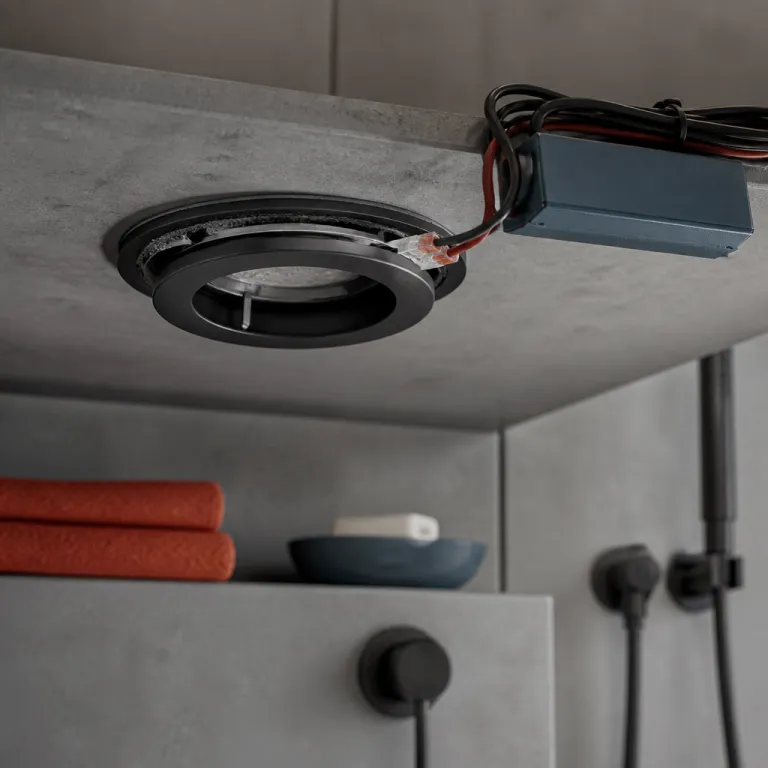
Trim style strongly influences how the ceiling reads as a surface. A white trim almost disappears in a painted white ceiling, while a black LED baffle trim can add a graphic accent line that frames the room and complements dark hardware. In wet-location zones such as directly above a shower, choose a fully gasketed trim rated for indoor–outdoor damp or wet use so steam and splashes cannot reach the LED recessed module or any low-voltage connections; manufacturers usually state this clearly in the product datasheet alongside the IP rating and maximum ambient temperature.
Smart retrofit options make upgrades easier in existing bathrooms. A modern LED retrofit downlight kit can slide into an old recessed light housing, giving you dimmable and tunable lighting CCT control without opening the ceiling. For a deeper smart integration, consider a 6 inch smart retrofit downlight pack that connects to Wi‑Fi and works with motion sensors, as in a typical smart retrofit downlight review that compares lumen output, CCT range and dimming performance and shows how a simple retrofit can modernise both the bathroom and the control experience.
Canless, low profile and smart: when to skip traditional recessed cans
Traditional recessed lights use metal housings, but many modern bathrooms with recessed lighting benefit from canless designs. A LED canless downlight is a thin, integrated LED ceiling module that clips directly into a small cut-out, which is especially useful when the ceiling depth is limited by ductwork or structural beams. Because each canless ceiling light includes its own junction box, electricians can often route low-voltage control wiring or smart modules more flexibly.
Smart canless fixtures pair well with advanced dimmable drivers and lighting CCT controls. When you choose a canless LED recessed light with 2700–5000 K CCT adjustment, you can fine-tune the colour temperature for each bathroom zone, using cooler lighting values near the mirror and warmer settings near the bath. Many homeowners now compare traditional cans with canless ceiling lights before a renovation, and resources such as a detailed guide on whether canless lights are the smartest ceiling lighting upgrade help clarify when a canless approach is the better technical choice.
Moisture and safety ratings remain non-negotiable, even with sleek canless designs. Any recessed light installed over a shower or within the wet-location perimeter must carry an appropriate ingress protection rating and be explicitly listed for indoor–outdoor damp or wet use. When you combine a smart, low-profile LED canless downlight with the correct trim and a sealed junction box, you gain both a minimalist ceiling and long-term reliability in a demanding bathroom environment.
Layering smart controls, dimmable scenes and CCT in the bathroom
Smart bathrooms with recessed lighting work best when you think in scenes rather than individual switches. A morning scene might raise all ceiling lights to full output with a cool CCT, while an evening scene could dim the recessed lights to 30 percent and warm the colour for relaxation. Motion-activated low-voltage night lighting near the floor or under the vanity can then guide safe movement without waking your eyes.
To build these scenes, start with dimmable LED recessed fixtures that support both brightness control and tunable lighting CCT. Many smart LED retrofit kits and LED ceiling modules now integrate directly with voice assistants, so you can adjust a single recessed light or a group of recessed lights by name. For readers comparing smart bulbs with integrated fixtures, a detailed smart bulb test that lists lumen output, CCT range and standby power use shows how schedule and timer features translate into everyday bathroom convenience.
Wall controls still matter, even in a voice-controlled bathroom. A clean keypad near the bathroom door can call up a pre-programmed list of scenes, while a secondary control near the shower adjusts only the wet-location downlight. When every ceiling light, wall accent and even mirror backlight participates in these scenes, the bathroom feels coherent instead of like a patchwork of separate lights.
Balancing aesthetics, colour and price in recessed bathroom lighting
Designing bathrooms with recessed lighting is always a balance between aesthetics, performance and price. A simple grid of white LED recessed downlights might be cost-effective, but adding one black LED trim over a freestanding bath or a pair of wall washers near textured tiles can dramatically elevate the room. When you compare specifications, look beyond the headline price and examine lumen output, CCT range, dimming compatibility and wet-location ratings together.
Colour consistency is critical in compact spaces where surfaces sit close together. Choose LED ceiling fixtures from the same manufacturer and product family so the white tone of each recessed light matches across the bathroom, especially when you mix 3–4 inch LED downlights with larger 6 inch recessed modules. If you plan to use both indoor–outdoor rated fixtures and standard ceiling lights in adjacent areas, confirm that their lighting CCT options overlap so you can maintain a unified visual temperature.
Smart shoppers often create a comparison list before ordering. That list should include whether each ceiling light is canless or uses a traditional housing, whether it supports LED retrofit upgrades, and whether the trim options include both white and black finishes. By weighing these factors against your budget, you can decide where a premium architectural downlight with detailed datasheets on CCT, colour rendering index and beam angle is justified and where a simpler recessed lighting solution will perform perfectly well.
Technical details that make or break smart recessed bathroom projects
Behind every elegant bathroom with recessed lighting lies a set of technical decisions. Electricians must size circuits for the total wattage of all recessed lights, including any low-voltage drivers hidden above the ceiling. They also need to respect clearance rules around insulation, especially when using non-IC-rated recessed light housings in older buildings.
Product selection goes beyond aesthetics and smart features. Check that any LED recessed module you choose for a shower carries both a wet-location rating and a clear statement about indoor–outdoor suitability, because some products are only safe in covered outdoor areas. When you specify an architectural lighting brand, verify that the CCT range in kelvins, dimmable driver type and trim compatibility match the control system you plan to use, and confirm that the manufacturer’s datasheet lists suitable IP ratings and maximum driver load.
Maintenance planning protects your investment over time. Integrated LED ceiling modules last far longer than traditional light bulbs, but you should still ensure that each ceiling light or downlight can be accessed without damaging tiles or plaster. By documenting the exact model numbers, CCT settings and trim finishes in a simple list stored with your bathroom plans, you make future LED retrofit work or fixture replacement straightforward instead of stressful.
Key figures on smart recessed lighting in bathrooms
- According to the International Energy Agency (IEA), switching from halogen or incandescent light bulbs to LED recessed fixtures can cut lighting energy use by up to 75 percent in residential bathrooms, especially when combined with dimmable controls and occupancy sensors; this figure is based on typical efficacy values for LED versus legacy lamps reported in IEA efficiency studies.
- Field studies summarised by the Illuminating Engineering Society (IES) show that vertical facial illuminance at the mirror improves by more than 30 percent when wall-mounted lights are added to ceiling downlight-only layouts, which supports more accurate grooming and makeup application; these findings are reflected in IES lighting design recommendations for residential bathrooms.
- Market research from several European lighting associations indicates that more than half of new bathroom projects now specify at least one wet-location-rated recessed light over the shower, reflecting growing awareness of moisture safety requirements and ingress protection ratings; individual association reports typically cite adoption rates between 50 and 70 percent.
- Smart lighting manufacturers report that scenes using tunable CCT are activated far more often than static presets, suggesting that homeowners value the ability to shift from cool to warm light in the same bathroom during a typical day; usage statistics published in product white papers often show tunable scenes accounting for the majority of app interactions.
FAQ about smart bathrooms with recessed lighting
How many recessed lights do I need in a small bathroom ceiling ?
For a bathroom of around 4 square metres with a standard 2.4 metre ceiling, two to four 3–4 inch recessed or 6 inch recessed downlights usually provide even coverage. Space each recessed light roughly 1 to 1.2 metres apart and keep them at least 60 centimetres from walls to avoid harsh scallops. Always adjust the layout for mirrors, the shower area and any natural light; for example, a 1.8 × 2.2 metre room might use three 4 inch downlights at about 700 lumens each, giving roughly 500–600 lux on the floor.
Can I put recessed lighting directly over a shower ?
Yes, but only if the recessed light is specifically rated for wet-location use. Look for fixtures that state both wet location and indoor–outdoor suitability, with sealed trims and gaskets that protect the LED module and wiring. Installers must also follow local electrical codes regarding low-voltage or mains wiring in the shower zone.
Are canless LED ceiling lights reliable in bathrooms ?
Modern LED canless ceiling lights are designed for long life, provided you choose models with proper moisture ratings and quality drivers. In bathrooms with recessed lighting, canless fixtures are especially useful where ceiling depth is limited or where you want a very clean look. Always confirm that the canless downlight is compatible with your dimmable controls and offers the CCT range you need.
Should I choose warm or cool CCT for bathroom recessed lighting ?
Cooler CCT values around 4000 kelvin help with tasks such as shaving or makeup, while warmer tones around 2700 to 3000 kelvin feel more relaxing for baths. Many smart LED recessed fixtures now offer adjustable lighting CCT, so you do not have to choose a single value. Using tunable CCT modules lets you set different scenes for morning and evening in the same bathroom.
Is smart recessed lighting worth the higher price in a bathroom ?
Smart recessed lighting usually costs more upfront than basic fixtures, but it can reduce energy use and improve comfort through dimming, scheduling and motion sensing. In bathrooms with recessed lighting, features such as automatic night lights, voice control in the shower area and precise CCT tuning often justify the extra price. Over time, the long life of integrated LED modules and the flexibility of scenes can offset the initial investment.
