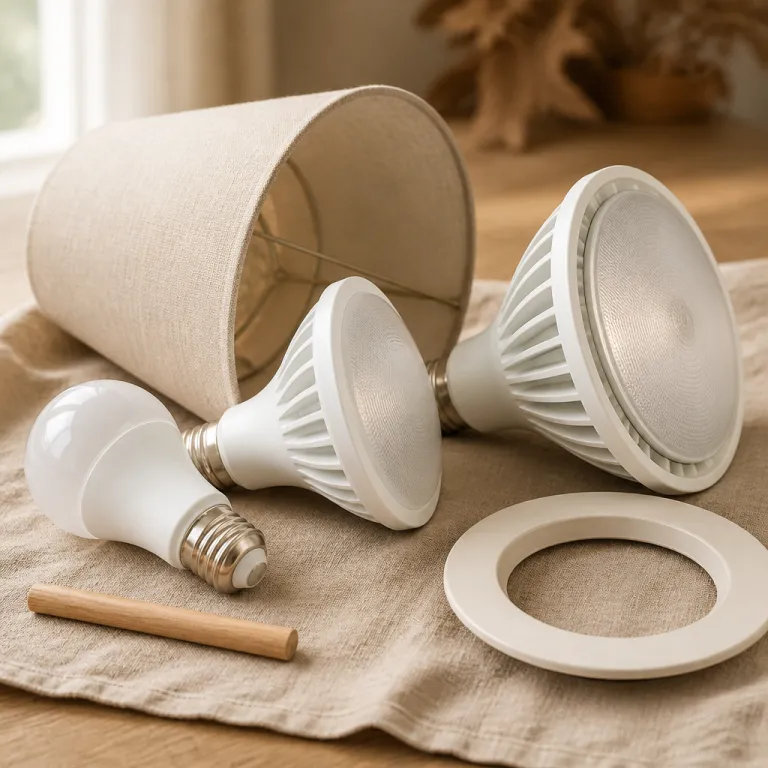
Why smart bulb shapes matter more than you think
Most people buy a smart bulb by screwing an A19 into every socket. That habit works for a table lamp, but it fails badly in recessed lighting, outdoor flood fixtures and narrow track lights where the wrong bulb shape ruins both comfort and efficiency. When you treat a smart light as a one size fits all gadget, you waste money on bulbs popular in marketing lists but poorly matched to your actual fixtures and rooms.
The core of any smart bulb shapes BR30 A19 fitting guide is understanding three things. You need to match bulb size and bulb shape to the fixture opening, align the bulb base or pin base with the socket type, and choose the right beam spread so the light lands where you live rather than in your eyes. When those three elements line up, smart bulbs feel invisible in the best way, because the lighting just works and your led light output feels balanced and calm.
In practical terms, that means treating each light bulb as part of a system. A19, BR30 and PAR38 are not marketing names but shape codes that describe the diameter and optical design of the bulb, and those codes exist because different fixtures need different light distributions. Once you read the code on your existing light bulbs and measure the fixture diameter, you can group your fixtures by type and build a simple series of rules that ensure every new smart bulb fits on the first try.
Energy efficiency sits quietly underneath all these choices. A well matched led bulb in the right recessed lighting can run at a lower brightness while still feeling brighter than a mismatched light bulb blasting light sideways into trim. That is why any serious smart light buying guide treats bulb sizes and shapes as the starting point for saving energy, not an afterthought after you pick colors and apps.
A19: the standard smart bulb that is not always standard
A19 is the classic pear shaped light bulb most people picture first. In a smart bulb shapes BR30 A19 fitting guide, A19 sits at the center because it is the most common shape in table lamps, floor lamps and many semi flush fixtures, yet it is also the most misused in recessed cans and directional fixtures. The A in the bulb shape code means arbitrary, while the 19 refers to a diameter of about 60 millimetres, which is small enough for shades but often too narrow to fill wide ceiling bowls evenly.
Most A19 smart bulbs use an E26 bulb base in the United States, which is the screw base you already know from traditional led bulbs and incandescent lights. That E26 base makes A19 the default smart light upgrade for renters and first time buyers, because you can swap a single bulb without touching switches or wiring, and almost every brand offers a series of A19 led light options from soft white to full color. The risk is that this convenience tempts you to use the same type bulbs in recessed lighting or outdoor flood fixtures where an A19 bulb size creates glare and hot spots instead of smooth, wide coverage.
In our long term testing, A19 smart bulbs from Philips Hue, TP Link Kasa and Linkind Matter series bulbs all performed reliably in open fixtures and shaded lamps. When we moved those same smart bulbs into recessed fixtures, the bare bulb shape pushed light sideways into the trim, wasting output and creating bright rings on the ceiling instead of even task lighting on the counter. If you see the led light source directly when you stand under a can, that is a sign the bulb shape is wrong for that fixture, even if the bulb base technically fits.
For energy efficiency, A19 led bulbs shine in enclosed or shaded fixtures where you want diffuse ambient lighting. You can run a 9 watt A19 smart bulb at 40 to 60 percent brightness and still feel comfortable in a bedroom or hallway, especially when you pair it with automation schedules that dim late at night. For a deeper look at how automation affects real world consumption, read this analysis of energy savings from smart lighting schedules, which shows why the smartest bulb is often the one that turns itself off.
BR30 and PAR38: getting recessed and outdoor lighting right
BR30 and PAR38 shapes exist to solve problems that A19 cannot handle in recessed lighting and outdoor flood fixtures. A BR30 smart bulb has a bulged reflector shape with a diameter of about 95 millimetres, designed to sit flush with recessed trim and throw a wide, soft beam straight down. A PAR38 bulb is larger at roughly 120 millimetres in diameter, with a more focused beam that suits outdoor security lights, high ceilings and some track fixtures where you want punch rather than gentle wash.
In a smart bulb shapes BR30 A19 fitting guide, the key rule is simple. Use BR30 led bulbs in standard 12 to 15 centimetre recessed cans for kitchens, living rooms and hallways, and reserve PAR38 par bulbs for exterior fixtures, tall garages and wide eave mounts where distance and weather resistance matter more than subtlety. When you cram an A19 or undersized bulb sizes into a recessed can meant for BR30, the light bounces around inside the fixture, causing glare at the edge and leaving the floor dimmer than the wattage suggests.
We tested Philips Hue White and Color BR30, Feit Electric BR30 smart bulbs and several Linkind Matter compatible BR30 models in typical 15 centimetre recessed fixtures. The BR30 bulb shape filled the trim cleanly, and the reflector pushed the led light downward in a smooth cone, which meant we could run each smart bulb at 50 percent brightness and still match the task lighting of a full brightness A19. By contrast, PAR38 series bulbs from Cree and Sengled felt oversized in those same fixtures, with the bulb size protruding past the trim and creating harsh edges on walls, which is a sign you should step back to BR30 for indoor use.
Outdoors, PAR38 smart bulbs finally make sense. Their larger bulb shape and tighter beam help you cover driveways and yards with fewer fixtures, and the thicker housing tolerates weather better than many BR30 lights. For buyers tracking long term costs, this is also where you see the gap between theory and reality, as explained in this piece on why many smart bulbs have not yet paid for themselves, which argues that matching shape, brightness and schedules is essential if you want your smart light investment to deliver real savings.
Beyond A19 and BR30: candles, GU10 and decorative shapes
Once you move past the main smart bulb shapes BR30 A19 fitting guide, a second tier of shapes appears in chandeliers, sconces and track lighting. Candle or B11 bulbs use a slim, tapered bulb shape that fits tight glass shades and multi arm fixtures, while Edison or ST19 bulbs use an elongated decorative shape that shows off filaments in open pendants. Both rely on the same E12 or E26 bulb base standards, but their bulb sizes and glass forms change how the light spreads and how the fixture looks even when the lights are off.
Smart bulbs in these categories remain less common than A19 or BR30, and that scarcity matters if you want a consistent ecosystem. Philips Hue and Govee offer candle led bulbs with E12 bases, but color options and lumen output often lag behind their A19 series bulbs, which means your chandelier might end up dimmer or less saturated than your main lamps. Decorative ST19 smart bulbs exist from brands like Feit and Sylvania, yet they sometimes sacrifice advanced features such as Matter Smart support or high color rendering to hit a price point, so you need to read the product code and spec sheet carefully.
GU10 bulbs sit in a category of their own because they use a two prong pin base instead of a screw base, and they lock into place with a twist in track and accent fixtures. The GU10 smart bulb market is thinner than A19 or BR30, which limits your choice of ecosystems and protocols, especially if you want Linkind Matter or other Matter Smart certified options that work across platforms. In our testing, GU10 smart light bulbs from Philips Hue performed well in directional fixtures, but the smaller bulb size and tight beam made them poor substitutes for BR30 in recessed cans, where they created bright spots on counters and left the rest of the room under lit.
For energy and brightness planning, treat these specialty shapes as targeted tools. Use candle led light bulbs where aesthetics and sparkle matter more than raw lumens, and reserve GU10 par bulbs for art, shelves and tight beams rather than general room lighting. If you want a deeper ecosystem comparison for assistants and protocols, this guide to top smart lights compatible with Google Assistant is a useful complement to any shape focused buying framework.
How to measure, match and avoid returns
The most practical part of any smart bulb shapes BR30 A19 fitting guide is the measurement routine you follow before ordering. Start by removing one existing light bulb from each group of fixtures and reading the shape code, base type and wattage printed on the neck, then note whether the bulb uses an E26 screw base, an E12 candelabra base or a GU10 pin base. Next, measure the fixture opening diameter with a simple ruler, because that number tells you whether a BR30, PAR38 or smaller A19 bulb size will sit flush or protrude awkwardly.
Once you have those données, create a simple table that maps each fixture group to a recommended bulb shape and series. For example, kitchen recessed lighting with 15 centimetre cans usually pairs best with BR30 led bulbs, while porch floods with wide, exposed housings often need PAR38 type bulbs to avoid visible gaps and shadows. Table lamps and bedside fixtures almost always accept A19 light bulbs, but you still need to check shade diameter and height so the bulb sizes do not peek over the top and cause glare when you sit down.
Protocol and ecosystem choices layer on top of this physical matching. Matter Smart compatible smart bulbs such as Linkind Matter A19 and BR30 models reduce lock in by working with multiple platforms, while Wi Fi only series bulbs from budget brands may limit future flexibility even if the initial price looks attractive. If you plan to mix led bulbs from different brands, keep at least one fixture per room on the same series so color temperature and brightness tracking stay consistent, because mismatched led light output can make a room feel patchy even when the fixtures are technically full.
Finally, think about brightness and schedules as part of the fitting process. A correctly sized smart bulb in the right fixture often lets you run at lower brightness, which cuts energy use more than chasing tiny efficiency gains between led light bulb models. For a person seeking information who wants to avoid returns and frustration, this step by step matching framework turns a chaotic bulb aisle into a clear set of choices, where each light, base and shape has a defined role in your home.
Energy efficiency and brightness: getting the most from each shape
Energy efficiency in smart light systems depends less on the raw led efficiency and more on how you use each bulb shape. A smart bulb shapes BR30 A19 fitting guide helps you right size brightness so you are not blasting a 1600 lumen PAR38 into a small hallway where a 800 lumen A19 would feel calmer and more efficient. When you match bulb sizes and fixture types carefully, you can run lower brightness scenes that still feel bright because the light lands exactly where you need it.
Think of each shape as a tool with a specific beam and task. A19 light bulbs excel at ambient lighting in shaded fixtures, BR30 led bulbs are ideal for recessed lighting over counters and sofas, and PAR38 par bulbs suit long throws over driveways and yards where you want strong pools of light. Candle and GU10 smart bulbs fill in the gaps for accent and decorative lighting, but they rarely replace the main trio for general illumination, especially when you care about even brightness and low glare.
Automation is the quiet multiplier for all these choices. Schedules that dim BR30 smart bulbs to 30 percent after midnight or that group outdoor PAR38 lights into a single scene for motion based activation can cut real energy use without sacrificing safety or comfort. Matter Smart support and platforms like Linkind Matter hubs make it easier to coordinate these scenes across brands, so your mixed series bulbs behave as one coherent lighting system instead of a patchwork of isolated apps.
From a cost perspective, the most efficient smart bulb is the one that spends the most hours at a comfortable, reduced brightness rather than at full blast. Matching bulb shape, bulb base, size and fixture type lets you design those lower brightness scenes confidently, because you know each light is doing the job it was built for. Over time, that alignment between shapes, fixtures and schedules turns a pile of smart bulbs popular in online lists into a genuinely efficient, comfortable and reliable smart light environment in your home.
FAQ
How do I know whether I need a BR30 or an A19 smart bulb?
Check the fixture first, not the packaging. If the light sits in a recessed can with a wide circular opening around 12 to 15 centimetres, a BR30 led bulb usually fits best and throws light straight down without glare, while table lamps, floor lamps and most open shades are designed around the smaller A19 bulb shape with an E26 base.
Can I use a PAR38 smart bulb indoors in place of a BR30?
You can screw a PAR38 into many E26 fixtures, but the larger diameter and tighter beam often create harsh edges and protruding bulbs in standard recessed lighting. Reserve PAR38 par bulbs for tall ceilings, garages and outdoor fixtures where distance and coverage matter more than subtle indoor aesthetics.
Why does my smart bulb stick out of the recessed trim?
When a bulb sticks out of recessed trim, the bulb size and shape are usually mismatched to the can diameter. An A19 or small reflector in a can designed for BR30 or PAR38 will sit too high, exposing the light source and causing glare, so you should measure the opening and choose a bulb shape with a matching diameter.
Are GU10 smart bulbs a good choice for general room lighting?
GU10 smart bulbs use a pin base and narrow beam that work well for accent and track lighting but rarely for whole room illumination. In most homes, GU10 fixtures highlight art, shelves or counters, while A19, BR30 and sometimes PAR38 led bulbs handle the broader, softer light needed for comfortable everyday spaces.
Do Matter compatible smart bulbs really save more energy?
Matter compatible smart bulbs such as some Linkind Matter models do not inherently use less electricity than other led bulbs, but they make it easier to run consistent schedules and scenes across brands. That coordination helps you keep lights dimmed or off when not needed, which delivers more real world savings than small efficiency differences between bulb series.